

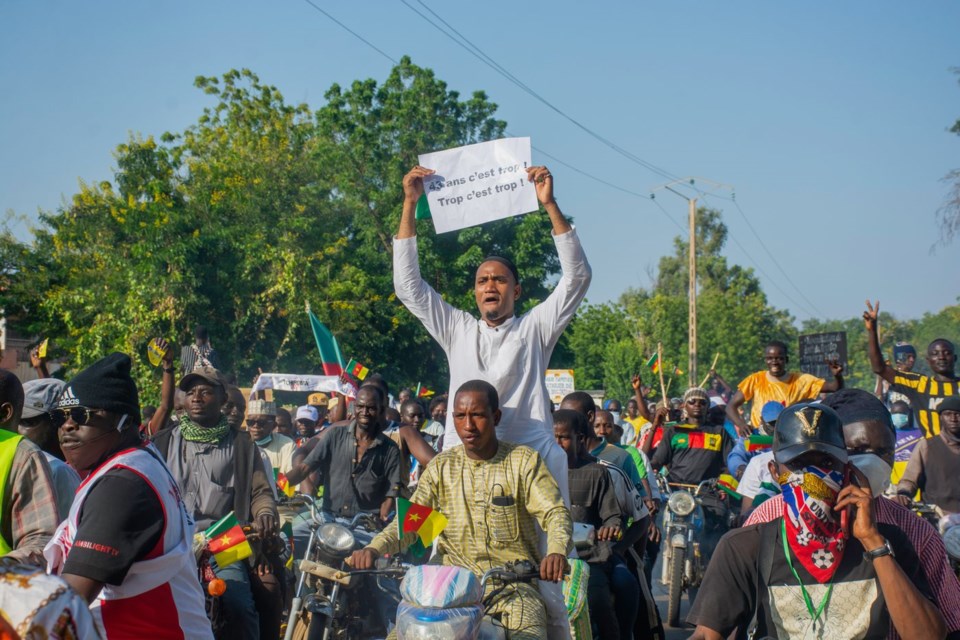
Cameroon’s 92-year-old president, Paul Biya, has been declared the winner of the country’s October 12 election, extending his already 43-year rule in a result marred by deadly protests, accusations of vote manipulation, and deep frustration among the nation’s youth.
The Constitutional Council announced on Monday that Biya won with 53.66% of the vote, defeating his former ally turned rival, Issa Tchiroma Bakary, who received 35.19%. Voter turnout was reported at 57.7%. The court’s declaration came just a day after violent clashes erupted across several cities, leaving at least four protesters dead and more than 100 arrested.
Biya, the world’s oldest sitting president, has ruled Cameroon since 1982, making him one of Africa’s longest-serving leaders. His decision to seek another term sparked widespread outrage, particularly among younger citizens who accuse him of clinging to power while the nation sinks deeper into corruption, poverty, and conflict.
In Garoua, Tchiroma’s hometown, the opposition candidate alleged that security forces fired on civilians, killing two people. “Shooting point-blank at your own brothers — I can’t help but wonder if you’re mercenaries,” Tchiroma wrote on social media. “Kill me if you want, but I will liberate this country by any means necessary.”
No official comment has been issued by the authorities, though regional governor Samuel Dieudonne Ivaha Diboua confirmed that members of the security forces were injured in the unrest. He said 105 protesters had been detained. Videos circulating online showed demonstrators confronting police and barricading major roads in Douala, Garoua, and Maroua as tear gas filled the air.
The protests follow weeks of tension leading up to the vote, with opposition parties accusing Biya of manipulating the electoral process and disqualifying stronger challengers. The government claimed it had arrested individuals plotting violent attacks ahead of election day.
For many Cameroonians, particularly the young, the results reinforced a sense of hopelessness. “I am ready to stake my life to defend my vote,” said 27-year-old trader Oumarou Bouba in Maroua. “I voted for Tchiroma because I want change.” Another voter, 28-year-old hotel worker Sani Aladji, said, “Nothing will change. We’re tired of corruption. We don’t even have roads.”
More than 70% of Cameroon’s nearly 30 million people are under 35 — most of them have never known another leader. Biya’s prolonged stay in power, enabled by a constitutional amendment removing term limits, has come to symbolize the growing divide between Africa’s aging political elite and its restless youth.
Despite being an oil-producing nation, Cameroon continues to face widespread economic hardship. The World Bank estimates that 57% of young workers are in informal or unstable jobs. Meanwhile, Biya’s government has struggled to contain mounting crises — from Boko Haram attacks in the north to a violent separatist conflict in the English-speaking regions, which has killed nearly 7,000 people and displaced over a million.
“Many young people across the country and in the diaspora had hoped for change, but those hopes have been dashed,” said Dr. Emile Sunjo, a political analyst at the University of Buea. “Cameroon could potentially slide into anarchy.”
As Biya celebrates yet another term, the mood across much of the country is one of anger, exhaustion, and fear — that the man who has ruled Cameroon for generations may preside over its deepest unraveling yet.