

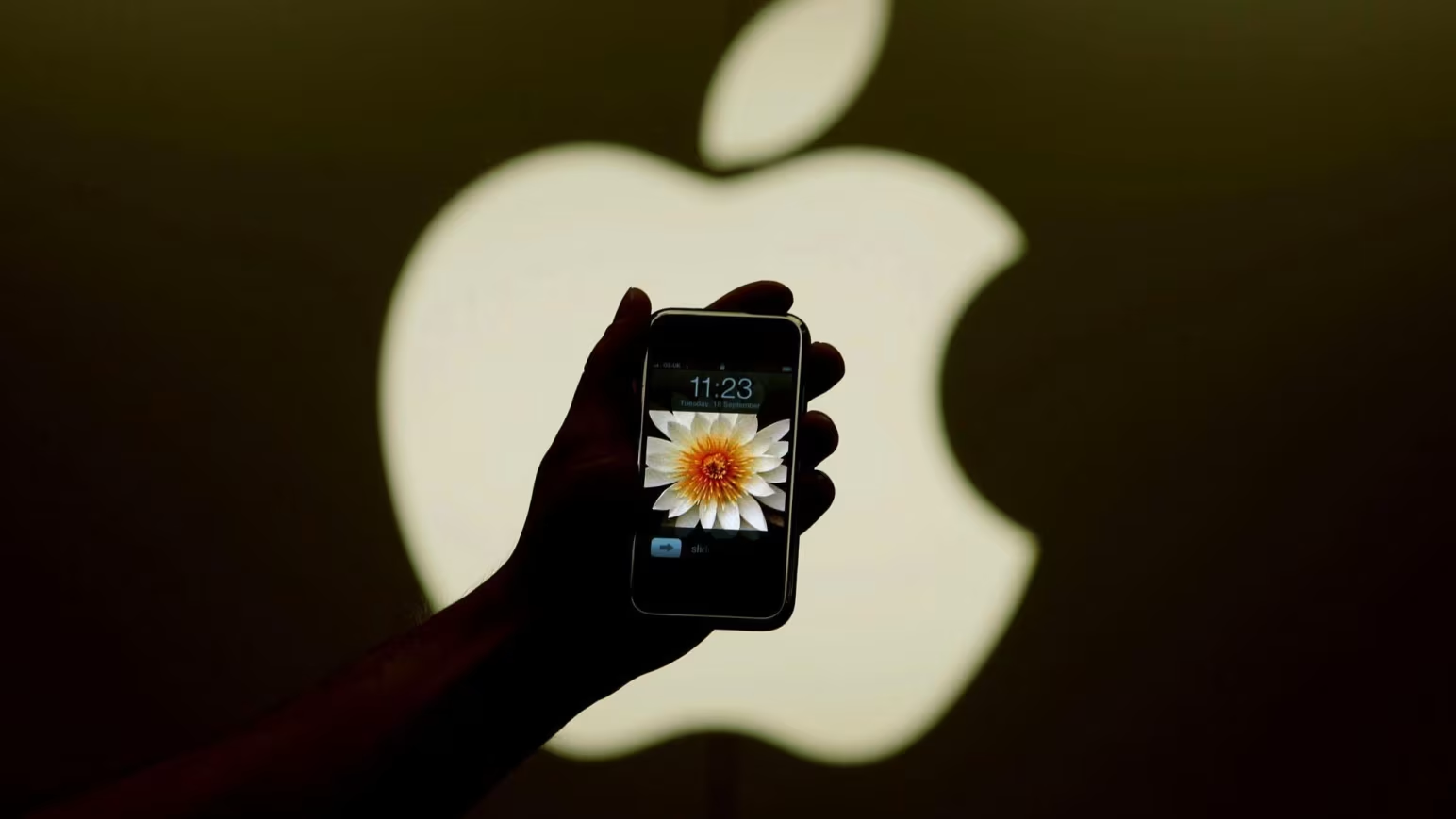
Cupertino: As Apple marks its 50-year milestone, one product continues to stand above all others—the iPhone—a device that not only reshaped the company’s future but also surprised the very engineers who built it.
At the time of its development, Apple was riding high on the success of the iPod, its best-selling product that had already surpassed Mac sales and was growing rapidly. Yet internally, executives recognized a looming threat: mobile phones from competitors like Motorola and Samsung were beginning to integrate music features, raising concerns that the iPod could soon become obsolete.
Rather than protect its flagship product, Apple made the bold decision to disrupt itself. Former executive Tony Fadell recalled that the company faced a defining choice—either build a phone with music capabilities or create a new kind of Apple device that combined both communication and entertainment. That decision ultimately led to the creation of the iPhone.
Developing the iPhone proved to be one of the most complex engineering challenges in Apple’s history. Teams worked relentlessly for years, often around the clock, to bring together hardware and software in ways the company had never attempted before. Early prototypes resembled an iPod with calling features, even incorporating the iconic click wheel, but those designs quickly proved impractical for tasks like texting and dialing.
Engineers had to rethink everything—from the user interface to how applications functioned—leading to the development of a smooth touchscreen experience that would eventually define modern smartphones. Every application had to be rebuilt from scratch to support touch-based interaction, making the process both demanding and unpredictable.
Even as the product neared launch, uncertainty remained high. The smartphone market at the time was dominated by established players, and the first iPhone’s premium price added to doubts about its mass appeal. Internally, many expected it to remain a niche, high-end product rather than a global phenomenon.
The response, however, exceeded expectations. Consumers embraced the device at an unprecedented scale, transforming it into one of the most influential products ever created. Today, Apple has more than 2.5 billion active devices worldwide, with the iPhone at the center of an ecosystem that includes products like the Apple Watch and AirPods.
Industry observers and former Apple engineers now view the iPhone as a defining moment not just for the company but for global technology and culture. Its design and functionality have remained largely consistent over nearly two decades, a testament to how fundamentally it changed user interaction with technology.
Looking ahead, some insiders believe Apple faces another pivotal moment as artificial intelligence reshapes the tech landscape. With increasing competition from companies like Google and emerging AI leaders, Apple may once again need to reinvent its approach to maintain its leadership.
What began as a risky internal decision to replace the iPod ultimately became the cornerstone of Apple’s legacy—an innovation that redefined an industry and surprised even those who brought it to life.