

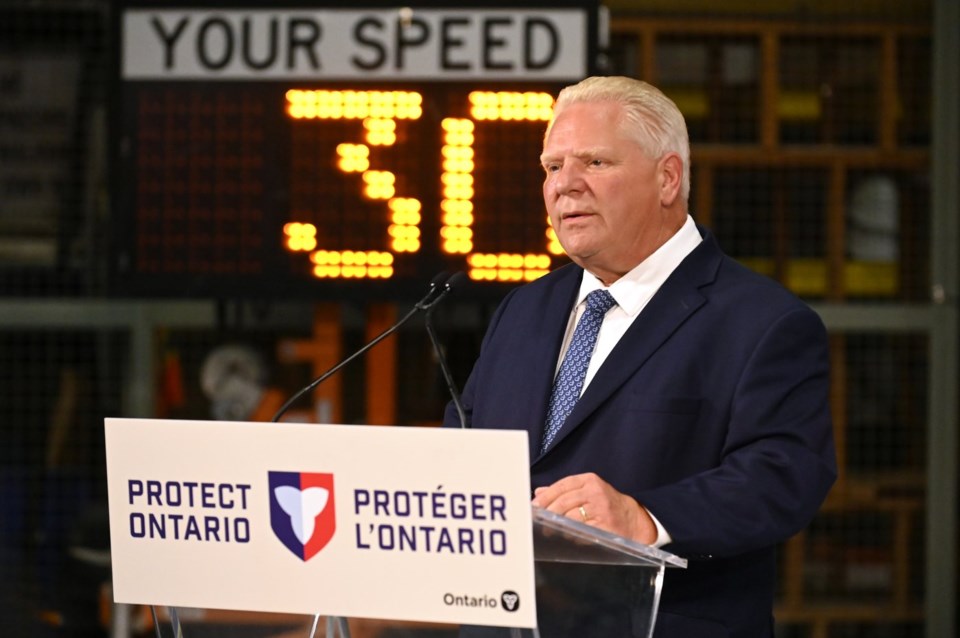
Ontario Premier Doug Ford’s government is setting aside $210 million for municipalities to install new traffic-calming measures as its province-wide ban on automated speed cameras takes effect. The reversal comes after weeks of Ford criticizing speed cameras as a municipal “cash grab,” despite evidence showing they reduce dangerous driving in school and community zones.
The ban, passed last month through a fast-tracked red tape bill that skipped public hearings, officially ends the use of speed cameras as of Friday. Ford argued the technology doesn’t slow drivers, even though multiple studies — including research from the Hospital for Sick Children — found the devices significantly reduced speeding.
More than 20 mayors across Ontario had urged the premier to modify rather than scrap the program, noting that speed camera fines paid for community safety initiatives without burdening general taxpayers. With the ban now in place, those costs shift to municipal budgets — a major concern for cities like Toronto.
Transportation Minister Prabmeet Sarkaria announced the creation of a new Road Safety Initiatives Fund. The province will immediately distribute $42 million for measures such as speed bumps, raised crosswalks, roundabouts, new signage and additional police enforcement in areas where cameras once operated. The remaining $168 million will be available early next year for municipalities that apply.
Toronto Mayor Olivia Chow warned that removing speed cameras jeopardizes essential safety programs funded entirely by camera revenue. Toronto used those funds to pay for more than 900 crossing guards — costing $31.2 million — and 18 traffic safety police officers, at an additional cost of $3.9 million.
“I don’t know how we’re going to pay for the 18 traffic cops, neither would I know how to find money for the crossing guards,” Chow told council, which unanimously voted to call on the province to reimburse the city for those expenses.
Ford’s vocal campaign against speed cameras intensified after 17 devices were cut down in Toronto in two days, an incident that fueled political momentum for the ban. But municipal leaders say eliminating a proven safety tool only forces cities to scramble for replacement measures — and Ontario taxpayers will now carry the financial load.