

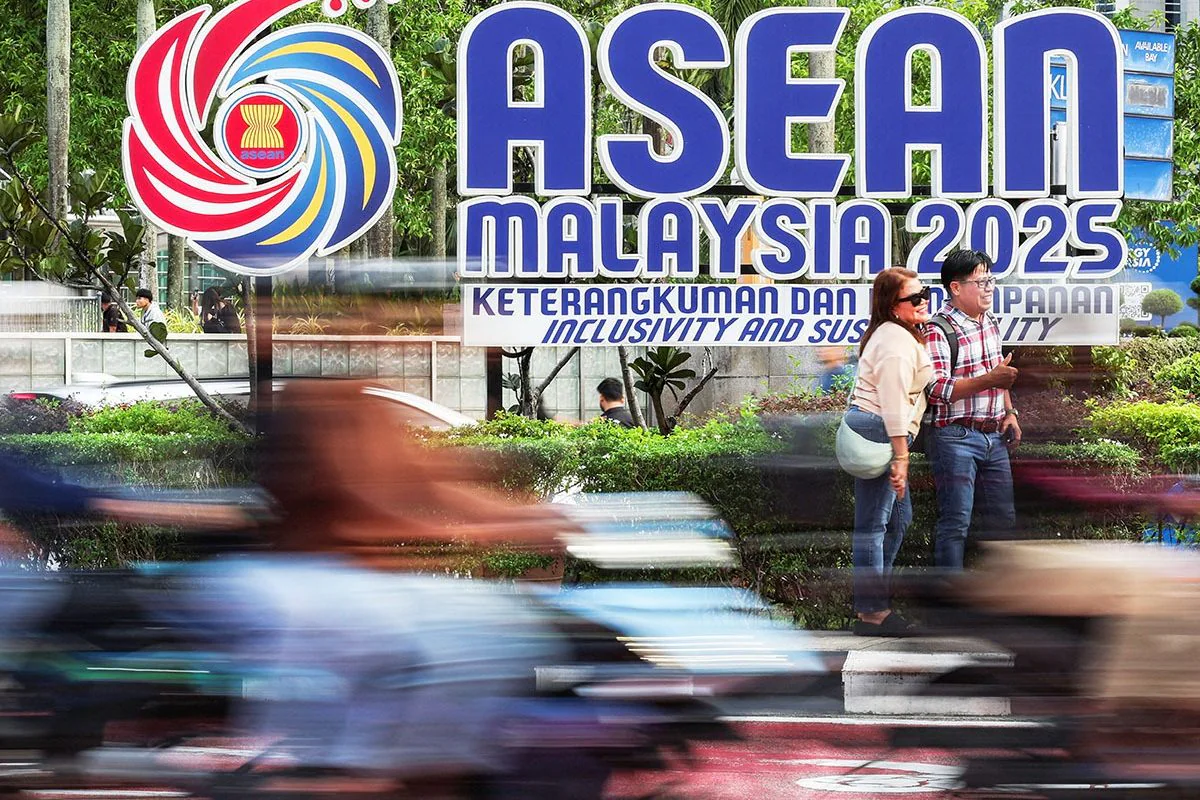
Kuala Lumpur — India’s Prime Minister Narendra Modi skipped an in-person appearance at the 47th Association of Southeast Asian Nations (ASEAN) Summit in Malaysia, opting instead to address leaders virtually. On a day when Kuala Lumpur hosted a dense lineup of presidents and prime ministers—along with headline-grabbing appearances by U.S. President Donald Trump—Modi’s absence from the room was impossible to miss, even if his message still landed online.
What happened—and why it matters
New Delhi had flagged in advance that Modi would join remotely, citing Deepavali timing while ruling out a face-to-face with Trump. That decision inevitably blunted the power of the sidelines: no unscripted pull-asides, no corridor choreography, and fewer opportunities for India to shape outcomes in real time. In major summits, the “hallway economy” is half the diplomacy.
Did anyone feel his absence?
- Regional optics: With Trump in Kuala Lumpur and multiple leaders staging bilateral photo-ops, the visual narrative privileged those physically present. Modi’s virtual remarks reinforced India’s standard talking points about ASEAN centrality and cultural linkages, but lacked the handshake moments that drive momentum and media.
- ASEAN insiders: Diplomats privately value India’s presence when tensions rise—over tariffs, supply chains, and contested waters—because New Delhi can be a swing convener. Not being in the room trimmed India’s convening leverage this week, especially on trade-adjacent conversations where the U.S., China, and middle powers compared notes. (Inference based on on-the-record participation dynamics reported for attendees.)
- Media cadence: Local and international outlets gave more oxygen to leaders on site and to breaking developments (Trump’s tariff talk; Thai-Cambodia détente). In that current, a streamed Indian address had less stickiness than a sequence of in-person bilaterals.
Impact on Modi’s position at home and abroad
- At home: The domestic political cost is limited. India’s policy toward ASEAN is institutionalized and bipartisan; a single virtual appearance won’t shift voter sentiment, especially with the Deepavali rationale and a crowded external agenda. Still, critics will say India forfeited chances to soften tariff headwinds with Washington and to advance supply-chain hedging conversations with Southeast Asian partners.
- Abroad: Among ASEAN and Indo-Pacific partners, the choice reads as tactical, not strategic. India’s line—ASEAN as a “main pillar” of Act East—was reiterated, preserving continuity. But relationships grow on repetition: fewer handshakes this week means more catching-up at APEC or later ministerials.
What the world saw
- Continuity from India: Modi’s virtual speech stressed rules-based engagement and deep cultural ties with ASEAN, a familiar but welcome signal for a region wary of great-power whiplash. The message landed; the medium muted it.
- A crowded stage: Kuala Lumpur became a magnet for competing economic and security narratives—tariffs, rare earths, sea-lane stability—shaped heavily by leaders who showed up. In that scrum, visibility favored presence.
About this ASEAN Summit
Malaysia is hosting the 47th ASEAN Summit and related meetings from Oct. 26–28, 2025, with leaders from the ten member states and partners attending. The agenda centers on economic resilience, trade frictions, regional security, and institutional housekeeping—including a landmark step for Timor-Leste, which advanced to full membership status on Oct. 26, further expanding the bloc to eleven.
Bottom line (and what to watch next)
Modi’s absence from the Kuala Lumpur rooms closed the door on high-value, spur-of-the-moment diplomacy but did not alter India’s strategic trajectory in Southeast Asia. The costs are mostly opportunity costs: fewer bilateral touchpoints in a week when others banked them. If India follows up briskly—through foreign-minister sprints, trade-facilitation working groups, and leader-level meets at APEC—the gap will close fast.
The world read Modi’s virtual appearance as continuity without choreography—steady policy, lighter presence. ASEAN carried on, enlarged and busier, with its center of gravity favoring leaders who turned up. India’s influence wasn’t dented; it was under-exercised. The next set of meetings will show whether New Delhi converts this week’s missed handshakes into quick, concrete deals.