

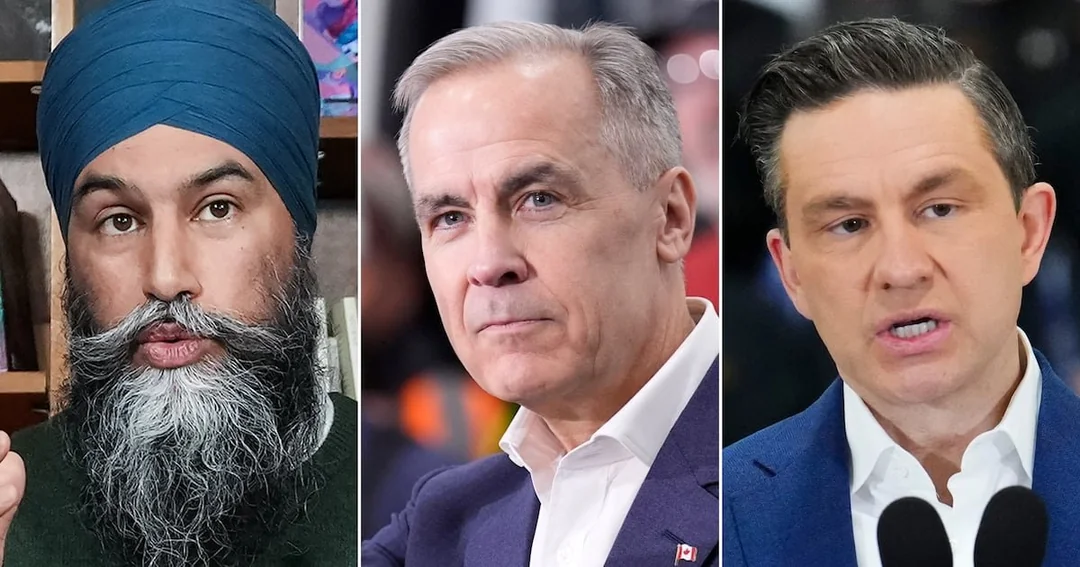
With the French and English-language federal leaders’ debates set to begin this week in Montreal, Canada’s party leaders spent Tuesday unveiling major policy promises and sharpening their rhetoric—while the White House stirred controversy by reviving talk of Canada becoming the “51st state.”
U.S. President Donald Trump’s administration has reintroduced the provocative idea amid escalating trade tensions, most recently referencing Canada’s defence spending as a rationale. White House Press Secretary Karoline Leavitt said Tuesday, “The United States has been subsidizing Canada’s national defence, and [President Trump] believes Canadians would benefit greatly from becoming the 51st state.” The comment, quickly dismissed by Canadian officials, landed at a sensitive moment in the campaign.
On the trail in Quebec, Liberal Leader Mark Carney announced a new initiative aimed at retraining mid-career workers. His proposed $15,000 “Upskilling Benefit” would help Canadians employed in key sectors like construction and healthcare gain access to further training—part of a broader Liberal strategy to build a modern, resilient workforce.
Conservative Leader Pierre Poilievre, also campaigning in the Montreal area, focused his messaging on protecting seniors from financial fraud. He pledged a crackdown on sophisticated scams that target vulnerable populations, promising steeper fines and tougher prison sentences for fraudsters.
NDP Leader Jagmeet Singh used his platform to call out both the Liberals and Conservatives for what he described as backing down on tax fairness. Singh criticized the two parties for “quietly shelving” a proposed capital gains tax increase that was expected to target Canada’s wealthiest investors.
Outside the campaign trail, the issue of gun control also surfaced in a poignant moment. Survivors and graduates of Montreal’s École Polytechnique—site of the tragic 1989 mass shooting—spoke out regarding the major parties’ firearm policies. Their reflections added emotional weight to an already heated conversation, particularly in Quebec, where gun control remains a deeply personal and politically charged topic.
With only days left before voters head to the polls, and tensions with the United States casting a shadow over economic and defence issues, the stakes are rising for each of the leaders set to take the debate stage this week.