

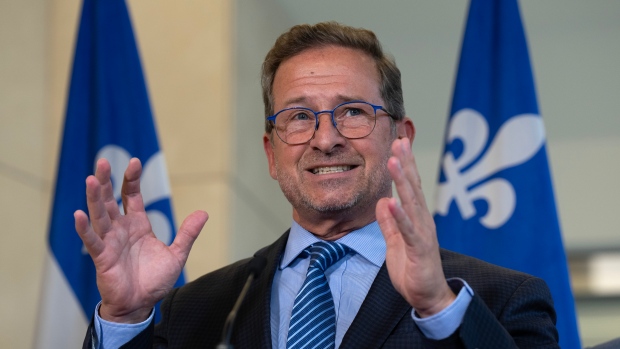
The Trudeau government faces a crucial decision in the coming weeks, as the Bloc Québécois demands $16 billion to boost pension benefits for seniors under 75. The Bloc has set an October 29 deadline for the government to approve the funding, threatening to initiate talks with opposition parties to bring down the Liberal minority government if the demand isn’t met.
Prime Minister Justin Trudeau’s political strategy in recent years has focused on addressing the concerns of millennials and generation-Z Canadians, who feel their financial struggles are greater than those of previous generations. While Trudeau has championed policies for “fairness across generations,” the Bloc’s push for increased old age security (OAS) for seniors risks diverting resources away from these younger voters.
“We don’t see an obvious political benefit for the Liberals to spend more on seniors at this time,” said Andrew Perez, a Liberal strategist. According to Perez, seniors are one of the few voter demographics where the Liberals remain competitive, but younger voters—who were key to Trudeau’s initial rise in 2015—have increasingly shifted their support to Conservative Leader Pierre Poilievre.
Tyler Meredith, former economic adviser to Trudeau, emphasized the challenge posed by the Bloc’s demand. “It’s hard for any party to oppose more money for seniors, but the real issue is how to implement it and the significant cost,” he explained. The Liberal government’s 2022 decision to raise OAS payments for those over 75 already added to deficit spending, and further expanding the benefit would cost an estimated $16 billion over five years.
For the Trudeau government, which is already grappling with high deficit spending, adding another $16 billion to the budget would be tough, especially with other urgent priorities like housing and healthcare still unresolved. Meredith noted, “It’s not necessarily unfair across generations, but it may not be the best use of public funds.”
Finance Minister Chrystia Freeland has committed to fiscal restraint amid rising inflation concerns. “We are in ongoing discussions with both the Bloc and the NDP regarding economic measures for seniors,” Freeland said, while noting the need to balance fiscal responsibilities.
The Bloc’s push for increased pension benefits stems from its criticism that the current system discriminates against seniors under 75. However, Laval University economist Stephen Gordon pointed out that older seniors tend to be in greater financial need. “Seniors over 75 are less likely to work and more likely to have exhausted their savings,” he said, adding that seniors generally have lower poverty rates compared to other age groups.
While the Bloc demands immediate action, the Liberals are also facing other pressing deadlines, including the need to table their fall economic statement. This will outline their broader spending and economic outlook before the end of the year, a crucial document as confidence motions in Parliament could further destabilize the government.
With the clock ticking, Trudeau’s government must now weigh the political and economic risks of rejecting the Bloc’s pension proposal, knowing that it could trigger an election before the new year.