

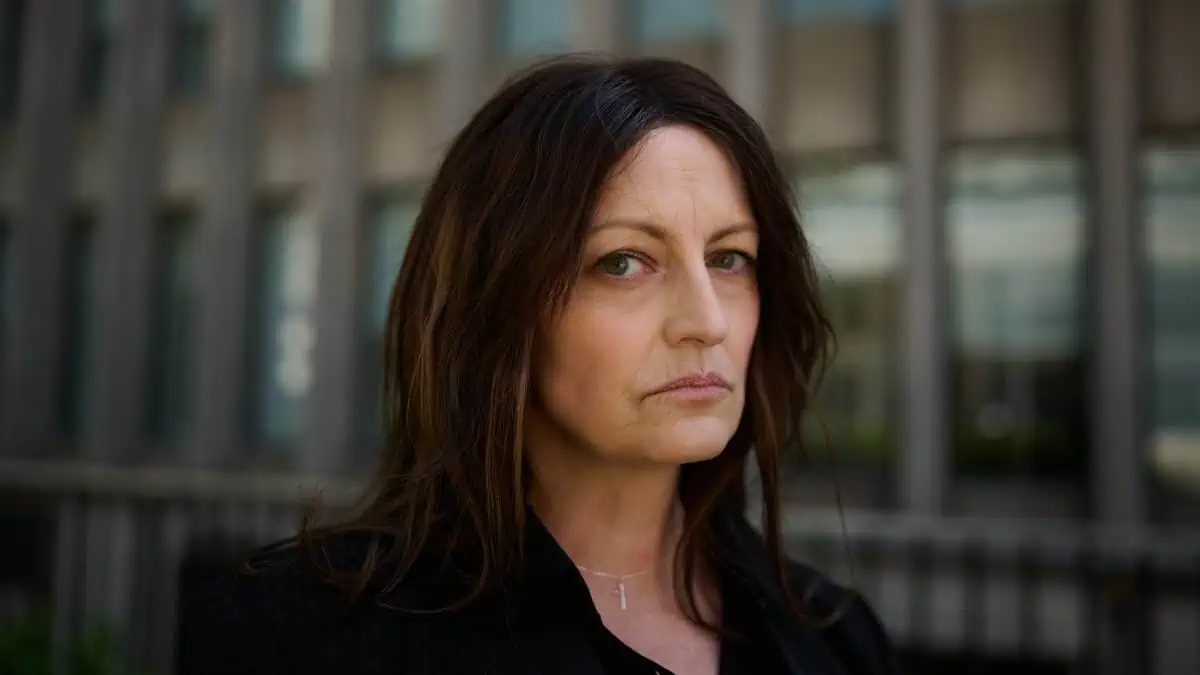
TORONTO — An Ontario judge has rejected an urgent request from a Toronto woman seeking access to medical assistance in dying solely on the basis of mental illness, but has ordered the federal government to respond to her broader constitutional challenge to Canada’s MAID law.
Claire Brosseau, a 49-year-old former actress and comedian, sought a constitutional exemption that would have allowed her to apply for MAID despite current federal legislation excluding people whose sole underlying medical condition is a mental illness.
Ontario Superior Court Justice Carissima Mathen acknowledged that Brosseau has presented credible and compelling evidence of decades of suffering. However, the judge ruled that granting an individual exemption could have significant consequences and would involve broader questions about Parliament’s authority to establish policy on one of Canada’s most sensitive social and legal issues.
Brosseau expressed disappointment following the ruling, arguing that the decision leaves her with continued suffering and raises questions about whether Canadians living exclusively with severe mental illnesses are being afforded the same autonomy and rights as people suffering from other serious medical conditions.
Her lawyers told the court that Brosseau has experienced persistent mental anguish since childhood, with her condition becoming increasingly severe over approximately 35 years. She has reported receiving treatment for bipolar disorder, an eating disorder, substance use disorder and post-traumatic stress disorder.
According to Brosseau, she has undergone numerous treatments, including electroconvulsive therapy, cognitive behavioural therapy and rehabilitation, and continues to receive care from two psychiatrists. She maintains that despite those efforts, her suffering has not been meaningfully relieved.
Canada first legalized MAID in 2016, initially limiting eligibility in part to people whose natural deaths were reasonably foreseeable. Parliament expanded the legislation in 2021 to include some people suffering intolerably from serious and incurable illnesses or disabilities even when their deaths were not reasonably foreseeable.
Mental illness as the sole underlying condition, however, was temporarily excluded from eligibility. That exclusion has subsequently been extended several times, meaning Canadians currently cannot qualify for MAID solely because of a mental disorder.
While dismissing Brosseau’s request for an immediate exemption, Mathen ordered the Attorney General of Canada to respond to a separate constitutional challenge Brosseau launched in August 2024.
That case argues that excluding people whose sole underlying condition is mental illness from MAID eligibility violates rights protected by the Canadian Charter of Rights and Freedoms.
The constitutional case had not yet proceeded to a hearing, prompting Brosseau and her lawyers to seek urgent relief through the separate motion.
Mathen has now directed Brosseau and the federal attorney general to schedule the next steps in the Charter challenge within 14 days, potentially accelerating a case that could have wider implications for Canada’s MAID laws.
The judge acknowledged that the lengthy legal process itself could have serious consequences for Brosseau, noting that she could face significant harm while litigation continues for months or even years. At the same time, Mathen said the court must consider Parliament’s responsibility to make policy decisions involving sensitive social questions and determine how the Charter rights involved should be interpreted.
Brosseau’s lawyer, Michael Fenrick, argued during the July hearing that allowing his client to seek an assessment for MAID represented what he described as the only meaningful option remaining after years of unsuccessful treatment. Her legal team maintained that without access to MAID, Brosseau faces the prospect of continuing intolerable suffering.
The federal government opposed the requested exemption.
A Department of Justice spokesperson said the government recognizes the difficult circumstances surrounding Brosseau’s case but agrees with the court that the legal requirements for granting a special exemption were not satisfied.
Joseph Cheng, senior counsel for the Attorney General of Canada, told the court that the government was not disputing the seriousness of Brosseau’s suffering. Instead, its opposition centred on the legal principles involved and the wider implications of allowing an individual exemption while Parliament continues to consider the future of MAID eligibility for people with mental illnesses.
The issue remains politically and legally contentious. A special parliamentary committee recommended in June that people seeking MAID solely because of mental illness should remain excluded indefinitely. The federal government has not yet announced whether it will adopt that recommendation.
Dying With Dignity Canada CEO Helen Long said the ruling was disappointing from her organization’s perspective but noted that the judge’s direction to move the constitutional case forward adds urgency to resolving the broader legal questions surrounding MAID access.
Brosseau’s legal team says it intends to continue with the Charter challenge, which could ultimately determine whether Canada’s exclusion of people suffering solely from mental illness is constitutionally permissible.
The case now shifts from Brosseau’s unsuccessful request for an individual exemption to a potentially significant Charter battle over equality, personal autonomy, protection of vulnerable Canadians and Parliament’s authority to determine who should qualify for medical assistance in dying.