

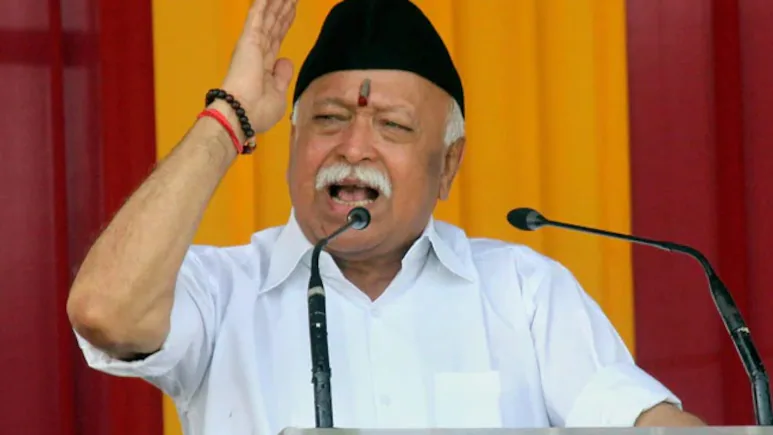
More than 100 Canadian community organizations and civil liberties groups have urged the federal government to reject political pressure to block Rashtriya Swayamsevak Sangh chief Mohan Bhagwat from entering Canada, arguing that any decision on his admissibility should be based on credible evidence, established law and due process.
The appeal was made in a letter addressed to Prime Minister Mark Carney, Public Safety Minister Gary Anandasangaree, Immigration Minister Lena Metlege Diab and Foreign Affairs Minister Anita Anand. It comes amid calls from NDP MPs Jenny Kwan and Heather McPherson, as well as other organizations, for Bhagwat to be prevented from entering Canada.
The groups supporting the visit say Bhagwat’s proposed trip is of significant interest to Canada’s Hindu community and argue that serious allegations against him should not be treated as fact unless they are backed by clear and independently verifiable evidence.
The letter challenges claims that Bhagwat has promoted hate, encouraged violence against religious minorities, engaged in intimidation or maintained links with criminal or terrorist organizations. The signatories say that if Canadian authorities possess credible information supporting such allegations, it should be assessed through the appropriate legal and governmental process.
The organizations also questioned warnings that Bhagwat’s visit could create public disorder or threaten public safety. They asked for specific evidence showing that either Bhagwat or the RSS has been responsible for social disorder in Canada or that his presence would create a genuine security risk.
According to the signatories, immigration and public safety decisions should not be influenced by political rhetoric, speculation or pressure campaigns. They warned that excluding Bhagwat without substantiated evidence could leave many Canadian Hindus with the impression that their community and institutions are being subjected to a different standard.
The letter places the controversy within Canada’s broader commitments to multiculturalism, religious freedom, freedom of expression and equality before the law. It argues that Canadians of Hindu heritage should enjoy the same rights to peaceful association, cultural expression and equal treatment as every other community.
At the same time, the organizations acknowledged that political criticism and peaceful protest are legitimate parts of Canadian democracy. Their concern, they said, is that disagreement with a visiting leader should not automatically become grounds for denying entry unless Canadian law provides a clear and evidence-based reason.
The signatories also cautioned that the campaign against Bhagwat could be viewed by some members of the Hindu community as reflecting anti-Hindu prejudice. They stressed that neither individual political representatives nor advocacy organizations should be portrayed as speaking for all Canadians or all Canadian Hindus.
Supporters of the appeal describe Bhagwat’s public message as focusing on cultural identity, community service, social harmony and engagement among communities. They urged politicians and community leaders to avoid language that could deepen tensions among Canada’s diverse population.
Among the organizations listed in support of the letter are the Canada India Foundation, Canada India Global Forum, Canadian Arya Samaj, Brampton Hindu Society, Hindu Society of Canada, Hindu Mission of Canada, Hindu Sabha Temple, Hindu Swayamsevak Sangh and VHP Canada, along with numerous temples, cultural associations and community organizations.
The controversy has therefore developed into a broader debate about how Canada should balance immigration and public safety concerns with freedom of religion, pluralism and due process.
For the organizations supporting Bhagwat’s proposed visit, the principle is straightforward: any decision to admit or exclude a foreign visitor should be determined by Canadian law and verified evidence rather than political pressure.
Their message to Ottawa is that Canada should favour dialogue over division and due process over unproven allegations as it considers the proposed visit.