

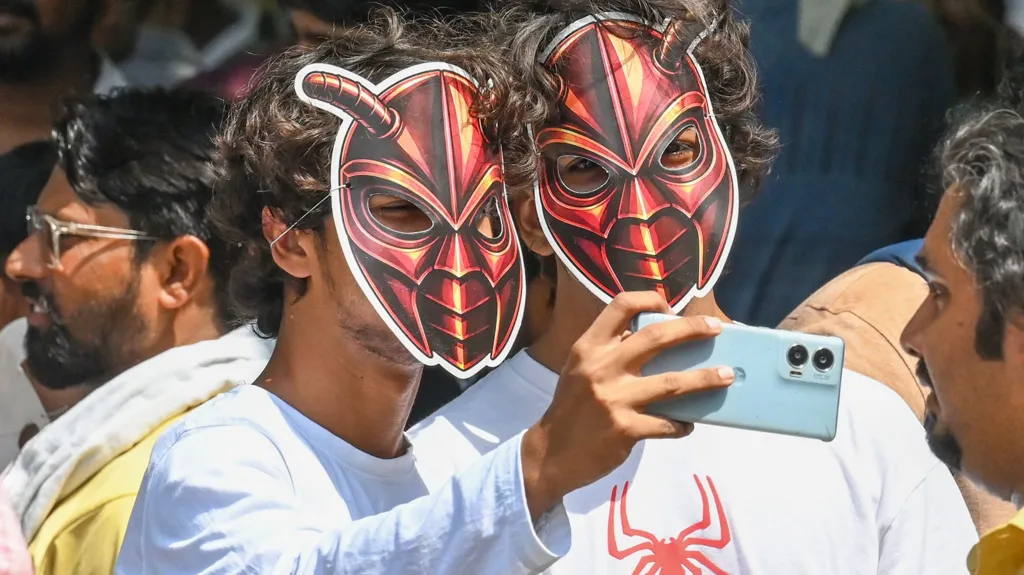
New Delhi, July 23: A major youth-led demonstration in India’s capital has sparked not only political debate but also a wave of viral social media content, as protesters used humour, memes and short videos to document their experiences following a police crackdown.
The protest, organized by the Cockroach Janta Party (CJP)—a youth movement that began over allegations of examination paper leaks and recruitment irregularities—drew tens of thousands of demonstrators demanding the resignation of Education Minister Dharmendra Pradhan.
The minister has rejected the demands, accusing opposition groups of exploiting students for political purposes.
As protesters marched toward Parliament earlier this week, police used tear gas and baton charges to disperse crowds after tensions escalated. Authorities also temporarily suspended mobile internet access around the protest site.
Police said several officers were injured during the clashes, while protesters alleged that many demonstrators were beaten during the operation.
Once internet services were restored, thousands of videos, photographs and memes quickly appeared across social media platforms, particularly Instagram.
Many participants combined serious accounts of the day’s events with humour, posting videos ranging from “fit check” fashion clips recorded before the march to satirical reviews of tear gas and light-hearted commentary about fleeing police.
Twenty-year-old Chhavi, who attended the demonstration, told the BBC that humour became a way to cope with fear.
She had jokingly recorded a video before the protest saying she might be beaten by police. Hours later, after experiencing the crackdown, she continued documenting events.
“I was scared and overwhelmed,” she said. “It was either laugh in the face of fear or cry.”
Researchers who study digital culture say the online response reflects how younger generations increasingly experience political participation.
Professor Joyojeet Pal of the University of Michigan noted that for many young people, politics exists alongside everyday social media activity rather than as a separate sphere.
Similarly, digital anthropologist Payal Arora said smartphones have transformed ordinary citizens into real-time chroniclers of political events, allowing participants to preserve their experiences as they unfold.
Experts emphasized that humour should not be mistaken for indifference.
According to Nishant Shah, Director of the Digital Narratives Center at the Chinese University of Hong Kong, humour has long been part of protest movements because it builds solidarity, eases tension and helps people endure difficult experiences.
One engineering student, identified only as Manit, joked online that he had completed his daily fitness goal while running from police during the protest.
Another participant shared a video of tear gas with a caption referencing a well-known local joke familiar to Delhi residents.
For many participants, the memes were not intended to trivialize the violence but rather to reclaim the narrative and ensure the events would be remembered.
The demonstrations also illustrate how modern protest movements increasingly blend street activism with digital storytelling, allowing participants to communicate their experiences directly to wider audiences through social media.
While the political demands of the protesters remain unresolved, the online response has highlighted the evolving role of humour, memes and personal videos as powerful tools of civic engagement among a generation that has grown up in the digital age.