

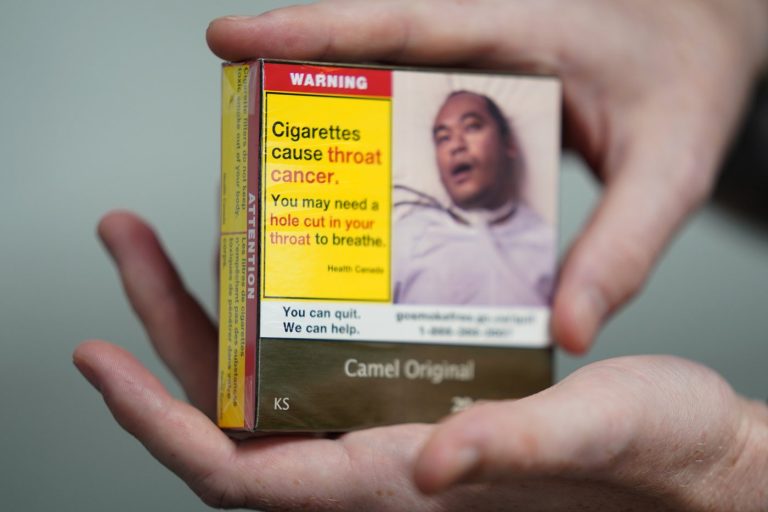
Ottawa, July 22: Canadians purchasing cigarettes will soon see a new series of graphic health warnings on tobacco products as Health Canada rolls out updated packaging aimed at further reducing smoking rates across the country.
Beginning August 1, 2026, manufacturers will be required to display one of 13 new graphic warning images on cigarette packages. The updated labels include powerful depictions of the health consequences of smoking, including lung, throat, mouth and tongue cancers, a baby exposed to second-hand smoke, bloody urine linked to kidney cancer, and other smoking-related diseases.
This marks the fourth generation of graphic health warnings introduced by Health Canada since Canada became the first country in the world to mandate picture-based cigarette warnings in 2001.
The federal government hopes the updated warnings will help achieve its goal of reducing tobacco use to less than five per cent of the population by 2035.
According to Health Canada, smoking rates have declined significantly over the past two decades. Tobacco use dropped from 29 per cent in 2001 to an estimated 13 per cent in 2024, while approximately 300,000 Canadians quit smoking between 2023 and 2024.
Despite this progress, tobacco remains Canada’s leading preventable cause of illness and premature death, contributing to approximately 48,000 deaths every year.
The new warning labels will appear on cigarettes, little cigars and cigarette tobacco for the next two years before rotating with previous warning sets. Other tobacco products will carry the warnings for three years.
Health Canada is also introducing updated messages inside cigarette packages, highlighting the health benefits of quitting smoking and making the information more visible by placing it on the upper inside flap rather than on less noticeable areas of the package.
Among the returning images is the well-known photograph of Barb Tarbox, an Alberta woman who died from lung cancer in 2003 after smoking for many years. Another reused image depicts bloody urine, illustrating the link between smoking and kidney cancer. Health Canada said both images were retained after research showed they remained among the most effective at influencing smokers.
In addition to package warnings, Canada continues to require health messages printed directly on individual cigarettes, including statements such as “Tobacco smoke is toxic” and “Cigarettes harm children.” Canada became the first country in the world to mandate such cigarette-stick warnings in 2024.
Public health experts say the graphic warnings continue to play an important role in discouraging tobacco use, particularly among young people.
Professor David Hammond of the University of Waterloo’s School of Public Health Sciences said the warnings remain effective but argued they should be accompanied by stronger public policies.
He pointed to the United Kingdom’s decision to permanently ban tobacco sales to anyone born on or after January 1, 2009, beginning in 2027, describing it as an “endgame” strategy that could virtually eliminate smoking among future generations.
Health Canada said it is monitoring international developments, including the United Kingdom’s policy, but confirmed that Canada has no current plans to introduce a similar generational tobacco ban.
Other public health advocates have suggested additional measures, including increasing the minimum legal age for purchasing tobacco products to 21 nationwide, expanding smoke-free policies and limiting tobacco sales to reduce accessibility.
Health Canada believes regularly rotating warning labels helps prevent smokers from becoming accustomed to the images and encourages both current smokers and young people to pay attention to the serious health risks associated with tobacco use.
While smoking rates in Canada are now at historic lows, health experts emphasize that continued education, regulation and public health initiatives will be essential to achieving the country’s long-term goal of becoming a largely smoke-free nation by 2035.