

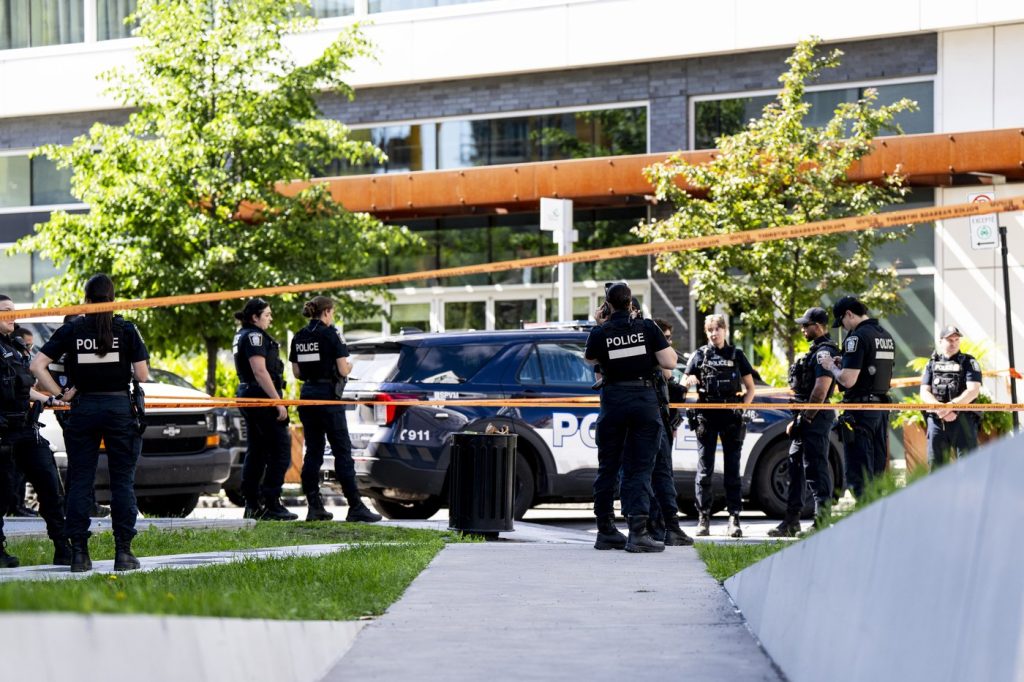
The recent deaths of three Canadian police officers within two weeks have deeply saddened communities across the country, but a criminology expert says the overall risk faced by officers today remains lower than it was in previous decades.
Montreal police officer Mohamed Lamine Benredouane, 34, was fatally shot while responding to a 911 call involving an active shooter at a hotel in the city’s Côte-des-Neiges district. A civilian also lost their life, and the suspect was killed during the incident. Another officer sustained injuries.
Earlier this month, two Ontario officers were killed in separate incidents. Ontario Provincial Police Constable Tarun Bali, 29, died while attempting to stop a fleeing vehicle in Hearst, while Toronto Police Constable Marc Pinizzotto, 43, was shot and killed during the execution of a search warrant connected to investigations into several shootings. Suspects in both cases have been charged with first-degree murder.
Despite the tragic losses, University of Ottawa criminology professor Justin Piché says the incidents do not indicate a growing trend. After examining police fatalities over the last 64 years, he found that current figures remain within historical averages, especially considering the significant growth in the number of police officers across Canada since the early 1960s.
According to his research, 416 Canadian police officers have died while on duty since 1962, averaging approximately six to seven deaths annually. The highest number of fatalities occurred in 1962 and 1968, when 16 officers died in each year, followed by 1964 with 15 deaths.
The study found that workplace accidents account for the majority of police fatalities, representing 58 per cent of all on-duty deaths. Motor vehicle crashes are the leading cause, responsible for 160 fatalities, while intentional gunfire ranks second with 149 deaths.
Although 2023 recorded eight police deaths, including six resulting from violence, no officers died in the line of duty during 2024 or 2025.
Piché noted that while policing carries significant public attention and symbolism, several other occupations—including fishing, mining, forestry and construction—experience higher rates of workplace fatalities. He emphasized that recognizing these statistics does not diminish the sacrifices made by police officers, but highlights that policing, compared with many other professions, has become considerably safer than it was several decades ago.
The recent losses have nevertheless renewed appreciation for the risks undertaken daily by law enforcement officers and have prompted tributes across Canada to honour those who made the ultimate sacrifice in the line of duty.