

A major diplomatic breakthrough has emerged in the Middle East as the United States and Iran have reportedly reached a peace agreement aimed at ending more than three months of conflict and restoring stability to one of the world’s most strategically important regions.
The agreement, which is expected to be formally signed in Switzerland later this week, would bring an end to military operations between the two countries and pave the way for the reopening of the Strait of Hormuz, a critical maritime route through which a significant portion of the world’s oil and natural gas supplies pass. The closure and disruption of this waterway during the conflict sent shockwaves through global energy markets and contributed to economic uncertainty across many countries.
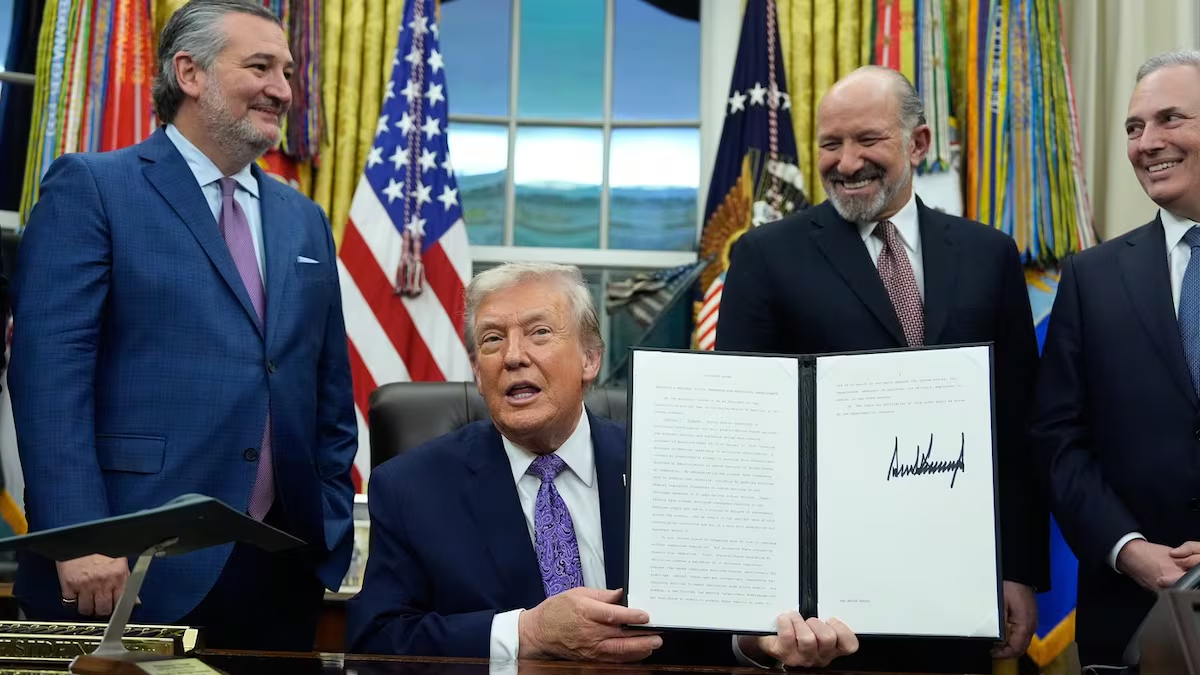
Confirmation of the agreement came from both Pakistan, which played a key mediating role in the negotiations, and U.S. President Donald Trump. Announcing the breakthrough, Trump declared that restrictions on Iranian ports would be lifted and international shipping could resume normal operations. His message emphasized the importance of restoring global energy flows and reducing economic pressure created by the conflict.
The war began in late February when joint U.S. and Israeli military strikes targeted key locations in Iran. Among those killed was Iran’s Supreme Leader, Ali Khamenei, an event that dramatically escalated regional tensions. Iran responded with missile and drone attacks against Israel and several Gulf nations allied with the United States, while also exerting pressure on shipping through the Strait of Hormuz.
Although a ceasefire was reached in April, tensions remained high as negotiations continued behind the scenes. The United States subsequently imposed a naval blockade on Iranian ports, further increasing pressure on Tehran. Multiple rounds of talks followed, involving mediators from Pakistan, Qatar, and other regional stakeholders.
Under the reported agreement, both sides have committed to an immediate and permanent cessation of military operations. The arrangement is also expected to facilitate future technical negotiations on broader issues, including regional security and Iran’s nuclear program. However, many details remain unclear and have yet to be officially released.
One of the most sensitive issues remains Iran’s stockpile of highly enriched uranium. International agencies estimate that Iran possesses hundreds of kilograms of uranium enriched to levels significantly above civilian requirements. While Tehran maintains that its nuclear program is intended solely for peaceful purposes, Western nations continue to express concerns about its potential military applications.
The future of Iran’s nuclear material remains uncertain. Various proposals have been discussed, including transferring the stockpile to another country or placing it under enhanced international supervision. No final agreement on this aspect has yet been publicly announced.
The deal also comes amid continuing tensions involving Israel and the Iran-backed Hezbollah movement in Lebanon. Iran has reportedly sought broader guarantees regarding developments in Lebanon, while Israel has continued military operations against Hezbollah positions. In a reminder of the fragile security situation, Israeli forces carried out airstrikes in Beirut’s southern suburbs on the same day that news of the peace agreement emerged.
The agreement has generated mixed reactions internationally. Supporters view it as a crucial step toward preventing a wider regional war and stabilizing energy markets. Critics, including some political figures in both Israel and the United States, argue that the arrangement may not adequately address concerns regarding Iran’s missile capabilities, regional influence, and nuclear ambitions.
For Iran, the deal could provide significant economic relief through the easing of sanctions and renewed access to international energy markets. For the United States, it offers an opportunity to conclude a costly and potentially prolonged conflict while restoring stability to a region that remains central to global security and economic interests.
While many questions remain unanswered, the agreement represents the most significant diplomatic development in the Middle East in recent years. If successfully implemented, it could mark the beginning of a new phase in U.S.-Iran relations and provide a foundation for broader efforts to reduce tensions across the region.
The coming days will be closely watched as diplomats work to finalize the details and transform the announced framework into a durable and lasting peace agreement.