

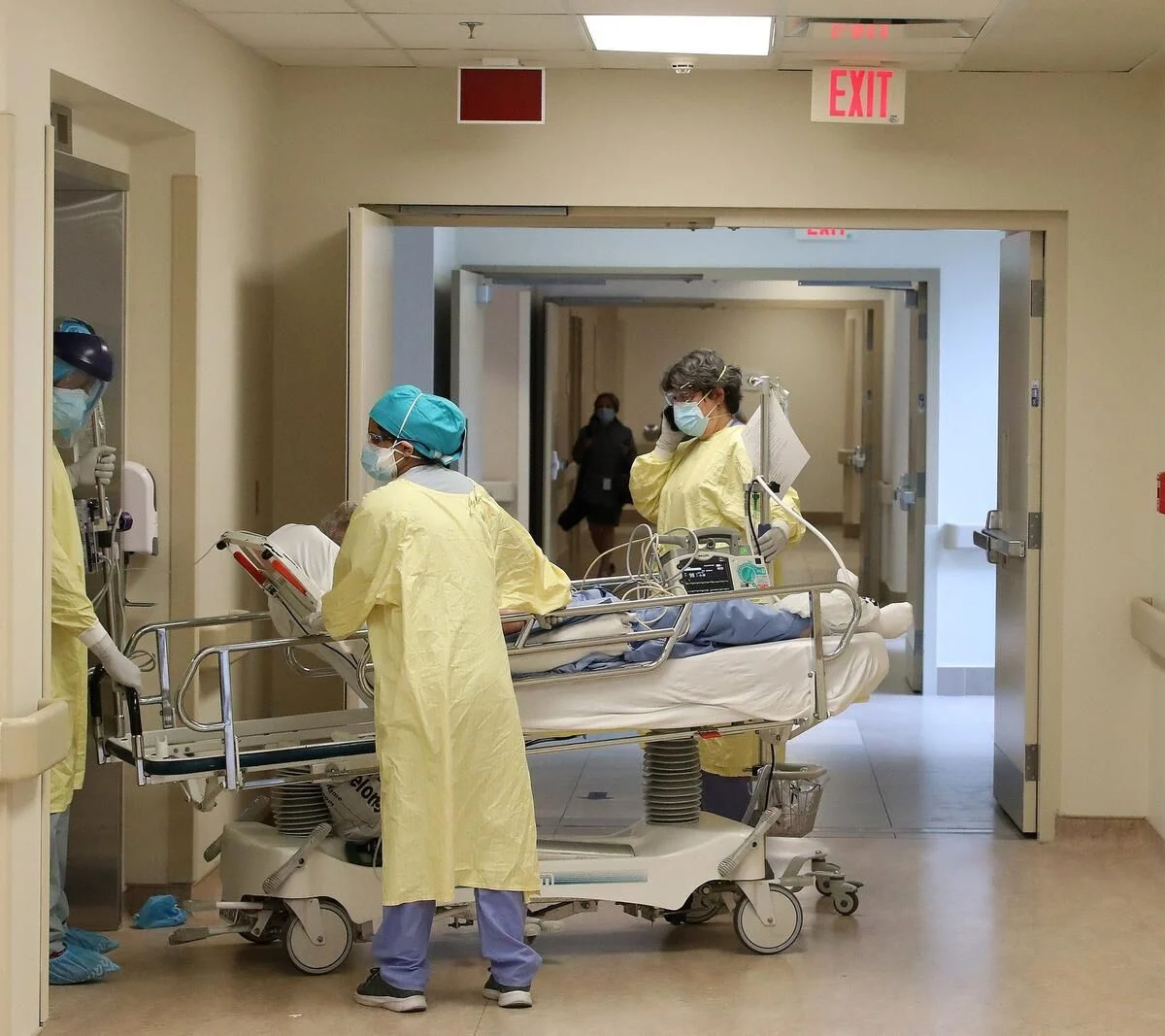
BRAMPTON – The ongoing challenge of hallway medicine in Brampton was brought back into sharp focus this week after a city councillor shared a deeply personal experience that highlights the growing pressure on the city’s overstretched health-care system.
During a recent city council meeting, Wards 1 and 5 Regional Councillor Rowena Santos revealed that her sister spent several days on a hospital gurney in a hallway at Brampton Civic Hospital after being admitted through the emergency department. The experience, she said, demonstrates that despite years of advocacy and promises of additional health-care infrastructure, overcrowding remains a serious problem for residents.
Santos told council that her sister was admitted to Brampton Civic Hospital on May 29 and remained in a hallway for several days before finally receiving a proper inpatient space. She described the hospital as being in a state of gridlock throughout the entire period and emphasized that a city of more than 800,000 residents should not be forced to rely on a single hospital and emergency department.

Her comments reignited concerns over the continued delays surrounding Brampton’s long-promised second full-service hospital, a project many residents view as essential to addressing chronic overcrowding and improving access to health care.
The province first announced funding in 2021 to transform Peel Memorial Urgent Care Centre into a full-service hospital. At that time, construction was expected to begin in 2023, with completion targeted for 2027. However, years later, major construction has yet to commence, raising frustration among municipal leaders and residents alike.
Although groundbreaking ceremonies for early site preparation and enabling works took place in 2024, the project has experienced repeated delays. Brampton Mayor Patrick Brown told council that city officials had previously been informed full construction would not begin until 2027, a timeline the city strongly opposed. Following discussions with the provincial government, Brampton was later assured that major construction would begin this summer. However, concerns have now emerged that work could be pushed back yet again, potentially until the fall.
The delays are particularly troubling given Brampton’s rapid population growth and ongoing hospital capacity challenges. City council declared a health-care emergency in 2020 due to severe overcrowding at Brampton Civic Hospital, one of Canada’s busiest emergency departments. Since then, Brampton’s population has surged dramatically, increasing demand for hospital services while available capacity has remained largely unchanged.
Health officials acknowledge the pressures facing local hospitals. The William Osler Health System, which operates Brampton Civic Hospital and Peel Memorial, stated that hospitals across Ontario continue to experience significant emergency department and inpatient capacity challenges. While the use of hallways and other unconventional spaces for patient care is not ideal, officials noted that such measures have become increasingly common throughout the health-care system as hospitals struggle to accommodate growing patient volumes.
Despite these challenges, Osler says it remains committed to providing safe, compassionate, and high-quality care while working with government and health system partners to expand capacity and improve access to services.
The planned Peel Memorial Hospital expansion is expected to play a critical role in easing pressure on Brampton Civic Hospital. The new facility will include 242 inpatient beds, specialized treatment areas, and a second 24-hour emergency department, significantly increasing health-care capacity for one of Ontario’s fastest-growing cities.
Osler officials confirmed that early construction activities began in 2025, including site access improvements and infrastructure work needed to support future phases of development. The organization says it continues to collaborate closely with Infrastructure Ontario, the Ministry of Health, Mayor Brown, and Brampton City Council to advance the project.
However, neither provincial officials nor Osler have provided a firm opening date for the new hospital. Given the project’s delays and the time required for full construction, many observers believe the facility may not be completed until the early 2030s.
Frustrated by the uncertainty, Brampton City Council has approved renewed lobbying efforts aimed at urging the province and health authorities to move the project forward without further delays. Municipal leaders argue that every year of delay places additional strain on patients, families, and frontline health-care workers who continue to cope with overcrowded facilities and long wait times.
For many residents, the issue extends beyond statistics and construction timelines. Stories like the one shared by Councillor Santos serve as a reminder that hallway medicine remains a daily reality for patients in Brampton. As the city continues to grow at a record pace, local leaders are intensifying calls for immediate action to ensure residents receive the timely and dignified health care they deserve.