

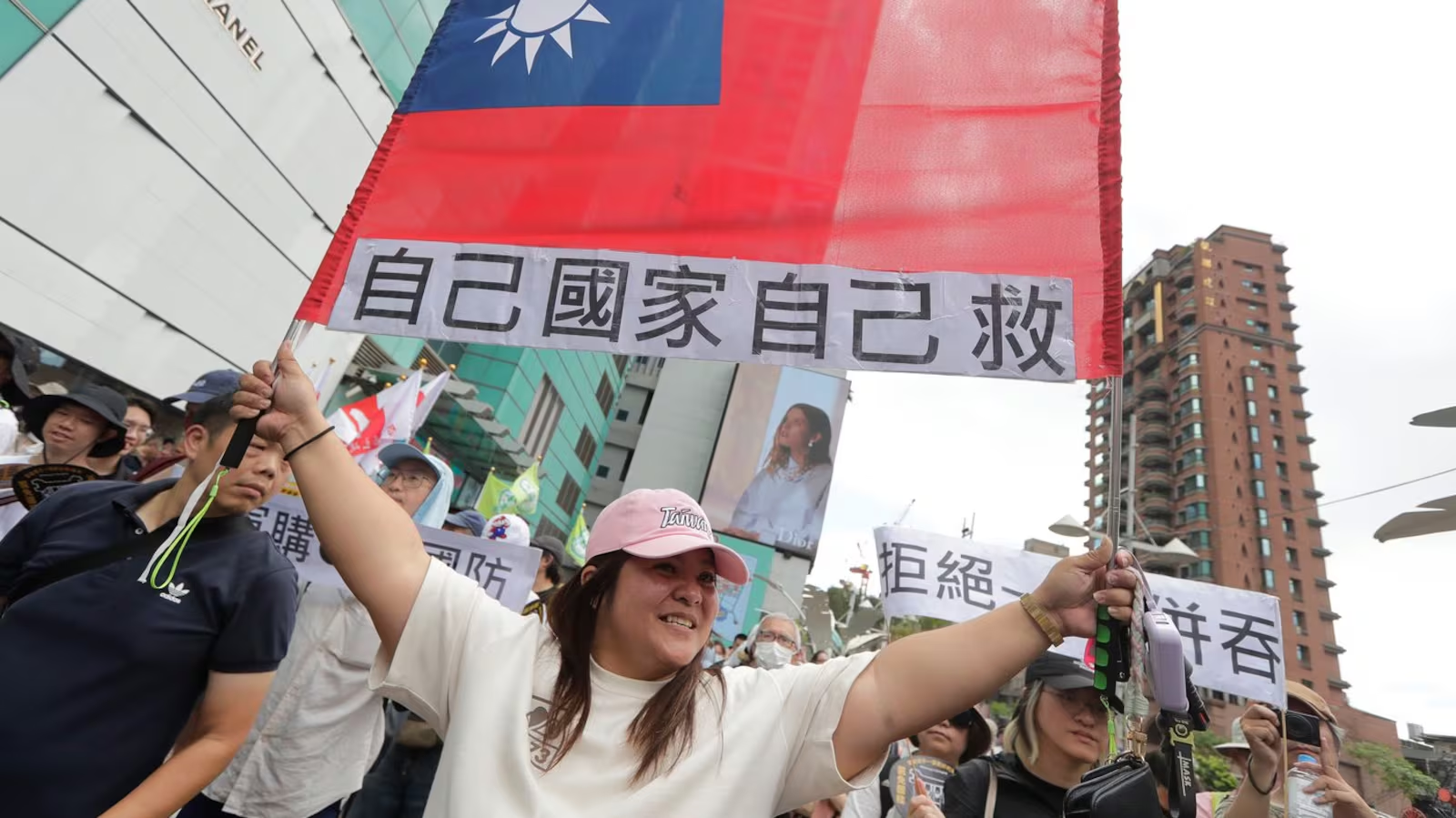
OTTAWA – A delegation of Canadian parliamentarians is preparing to travel to Taiwan later this year despite strong objections from Beijing, setting the stage for another chapter in the increasingly complex relationship between Canada, Taiwan, and China.
Liberal and Conservative members of Parliament belonging to the Canada-Taiwan Parliamentary Friendship Group are expected to visit Taiwan during the week of October 11. The trip comes at a time of heightened geopolitical tensions in the Indo-Pacific region and follows public warnings from Chinese officials that such visits undermine efforts to improve relations between Ottawa and Beijing.
The announcement has drawn renewed attention to Canada’s delicate balancing act between maintaining diplomatic relations with China while deepening economic, cultural, and parliamentary ties with Taiwan. Although Canada officially recognizes the People’s Republic of China under its longstanding one-China policy, Canadian parliamentarians have continued to engage with Taiwan through trade, cultural, and democratic exchanges.
Liberal MP Judy Sgro, who chairs the Canada-Taiwan Parliamentary Friendship Group, emphasized the importance of maintaining parliamentary exchanges with Taiwan, describing the island as a vibrant democracy and an important partner in the region. She said such visits help strengthen mutual understanding, foster cooperation, and promote democratic values at a time when global democratic institutions face growing challenges.
The planned visit comes months after China’s ambassador to Canada publicly criticized parliamentary engagement with Taiwan, arguing that Canadian legislators hold official positions and that such visits negatively affect bilateral relations between Canada and China. Despite those concerns, organizers of the trip insist that parliamentary friendship groups operate independently and do not require government approval for their activities.
The issue has gained additional international attention following Beijing’s recent decision to bar several New Zealand lawmakers from entering China after they visited Taiwan. The move has been widely viewed as a warning to politicians in democratic countries considering similar engagements with the self-governing island.
Relations between Canada and China have experienced significant ups and downs over the past decade, ranging from disputes over trade and foreign interference allegations to disagreements on human rights issues. Earlier this year, Prime Minister Mark Carney visited China in an effort to stabilize and recalibrate relations between the two countries, leading some observers to question whether parliamentary visits to Taiwan might complicate diplomatic efforts.
A similar situation emerged earlier this year when two Liberal MPs shortened a planned Taiwan visit shortly before the Prime Minister’s trip to Beijing. At the time, concerns were raised that overlapping visits could create confusion regarding Canada’s foreign policy priorities. However, supporters of parliamentary engagement argue that democratic exchanges should continue regardless of broader diplomatic considerations.
Foreign policy experts say Taiwan remains an increasingly important partner for Canada in areas such as trade, technology, scientific research, and democratic governance. They point out that both jurisdictions face common challenges, including disinformation campaigns, foreign interference, cybersecurity threats, and the need to strengthen democratic resilience.
The visit also highlights ongoing efforts to expand economic cooperation between Canada and Taiwan. Several parliamentarians have continued to advocate for stronger trade ties and have questioned delays surrounding a proposed trade cooperation framework that has yet to be finalized despite years of discussion.
Conservative foreign affairs critic Michael Chong recently visited Taiwan himself, describing the trip as a demonstration of support for democratic partners in the region. His visit drew criticism from China, which maintained that such engagements violate the spirit of the one-China policy.
As preparations for the October delegation move forward, supporters argue that parliamentary diplomacy plays an important role in fostering international understanding and strengthening relationships with like-minded democratic partners. They contend that open dialogue, people-to-people connections, and legislative exchanges remain essential tools in an increasingly uncertain global environment.
While Beijing continues to voice its opposition to official interactions with Taiwan, Canadian lawmakers involved in the upcoming visit say they remain committed to building relationships that promote democratic values, economic cooperation, and mutual understanding. The planned trip is expected to draw close international attention as Canada continues to navigate one of the most sensitive and strategically important issues in global diplomacy.