

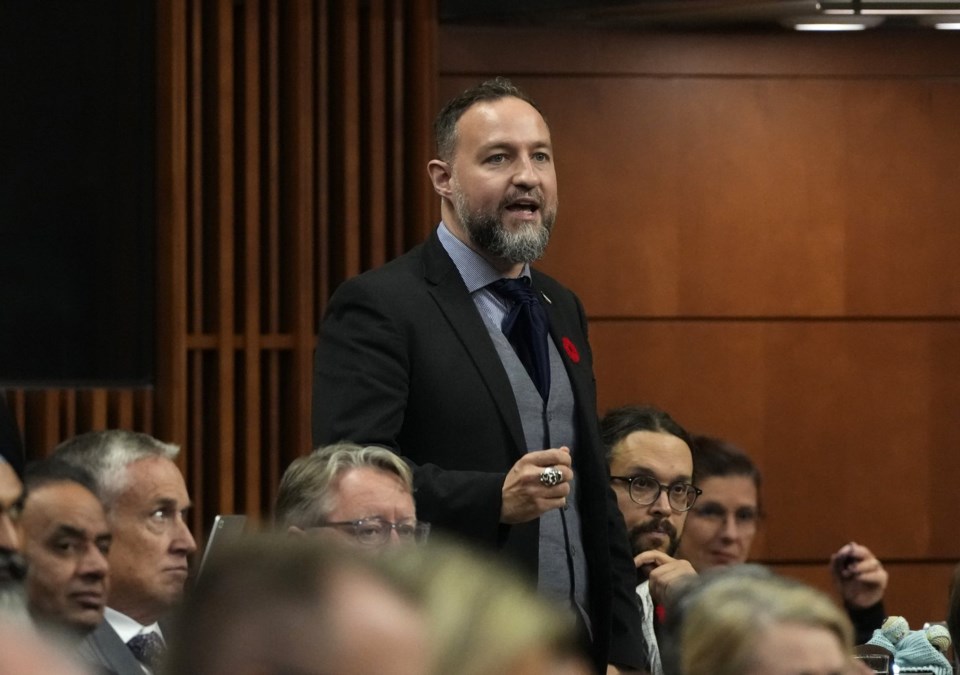
A significant political shift is unfolding in Quebec as longtime Bloc Québécois MP Simon-Pierre Savard-Tremblay has announced his departure from the federal political arena to pursue a seat in Quebec’s provincial legislature under the banner of the Parti Québécois.
The move underscores the close ideological ties between the Bloc Québécois and the Parti Québécois, two sovereigntist parties that operate at different levels of government but share the common objective of promoting Quebec’s interests and advancing the province’s autonomy.
Savard-Tremblay officially left the Bloc Québécois caucus on Wednesday and is now listed as an Independent Member of Parliament on the House of Commons website.
According to sources within the Parti Québécois, the three-time federal MP is expected to become the party’s candidate in the riding of St-Hyacinthe for Quebec’s provincial election scheduled for October 5, 2026.
The development was first reported by Radio-Canada and was later confirmed by sources familiar with the decision.
Although Parti Québécois officials have not formally announced Savard-Tremblay’s candidacy, the party confirmed that leader Paul St-Pierre Plamondon will be in St-Hyacinthe on Friday to introduce a candidate seeking the party nomination, fueling widespread expectations that Savard-Tremblay will be unveiled as the party’s choice.
Sources indicate that he plans to formally resign from the House of Commons when Parliament breaks for the summer, ending a federal political career that began in 2019.
During his time in Ottawa, Savard-Tremblay established himself as one of the Bloc Québécois’ prominent voices on economic, trade, and Quebec sovereignty issues.
He was first elected in 2019 and subsequently re-elected twice in the federal riding of St-Hyacinthe—Bagot—Acton, located east of Montreal.
His departure represents a loss for the Bloc Québécois caucus at a time when the party continues to play a significant role in federal parliamentary debates and minority government dynamics.
For the Parti Québécois, however, the recruitment of an experienced federal parliamentarian is viewed as a strategic gain as the party seeks to strengthen its position ahead of the fall provincial election.
The move also highlights renewed momentum within Quebec’s sovereigntist movement, with the Parti Québécois hoping to capitalize on growing support under St-Pierre Plamondon’s leadership.
Political analysts note that transitions between the Bloc Québécois and the Parti Québécois are not uncommon, given the ideological alignment between the two organizations. However, it remains relatively rare for a sitting federal MP to leave Parliament mid-term to pursue provincial office.
The announcement comes as Quebec’s political landscape becomes increasingly competitive ahead of the October election, with major parties positioning candidates and refining their platforms on issues including affordability, healthcare, language protection, economic development, and Quebec’s constitutional future.
Savard-Tremblay’s candidacy is expected to draw significant attention in the St-Hyacinthe region, where he has built strong name recognition over three successful federal election campaigns.
His decision to move from Ottawa to Quebec City reflects a belief that his political objectives may now be better pursued at the provincial level, where debates surrounding Quebec nationalism and autonomy remain central themes.
As the provincial election campaign begins to take shape, the Parti Québécois will likely present Savard-Tremblay as a high-profile addition capable of strengthening the party’s credibility and electoral prospects.
For voters in St-Hyacinthe and across Quebec, his transition marks another noteworthy chapter in the evolving relationship between federal and provincial sovereigntist politics, while adding fresh intrigue to what is already shaping up to be a closely watched provincial election campaign.