

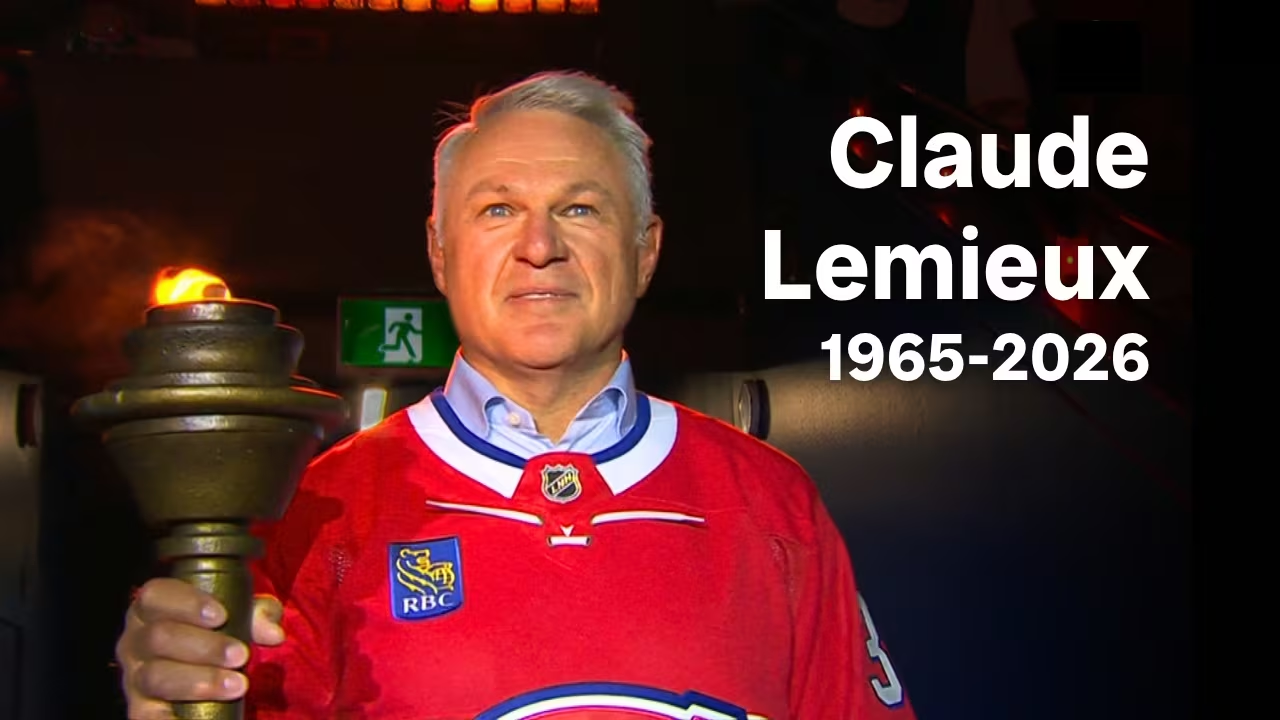
The hockey world is mourning the sudden death of Claude Lemieux, one of the National Hockey League’s most intense playoff performers and controversial competitors, who has died at the age of 60.
Lemieux, a four-time Stanley Cup champion remembered equally for his clutch playoff heroics and relentless on-ice battles, passed away just days after appearing before fans at Montreal’s Bell Centre during the Canadiens’ playoff run.
The former NHL star carried a ceremonial torch onto the ice Monday prior to Game 3 of the Eastern Conference Final between the Montreal Canadiens and the Carolina Hurricanes, making news of his death all the more shocking for teammates, fans, and members of the hockey community.
Authorities in Lake Park, Florida confirmed that deputies responded to an apparent suicide early Thursday morning at a furniture showroom co-owned by Lemieux and his wife, Deborah. According to the Palm Beach County Sheriff’s Office, Lemieux was found by his son after not returning home.
Born in Buckingham, Quebec, Lemieux entered the NHL with the Montreal Canadiens in 1983 and quickly established himself as a gritty, fearless winger capable of elevating his game during the playoffs.
He helped Montreal capture the Stanley Cup in 1986 during his rookie season before later winning additional championships with the New Jersey Devils in 1995 and 2000, and with the Colorado Avalanche in 1996.
Lemieux’s finest individual playoff performance came in 1995 when he scored 13 goals in 20 playoff games for New Jersey and captured the Conn Smythe Trophy as the NHL’s playoff MVP.
Throughout his 21-season NHL career, Lemieux developed a reputation as one of hockey’s greatest “big-game” players. His 80 career playoff goals rank among the highest totals in NHL history, placing him alongside legendary names such as Jean Beliveau and Maurice Richard.
NHL Commissioner Gary Bettman described Lemieux as “one of the greatest big-game players in hockey history.”
But while his playoff performances earned admiration, Lemieux also became one of the league’s most notorious agitators — a player whose aggressive style frequently crossed the line and fuelled some of hockey’s fiercest rivalries.
One of the earliest controversies occurred during the 1986 Stanley Cup Final when Lemieux bit Calgary Flames player Jim Peplinski during a post-game brawl, prompting Peplinski’s famous remark: “I didn’t know they allowed cannibalism in the NHL.”
Perhaps his most infamous moment came a decade later during the heated rivalry between Colorado and Detroit, when Lemieux slammed Kris Draper violently into the boards during the 1996 Western Conference Final.
Draper suffered severe facial injuries, including a broken jaw and orbital bone, while Lemieux received only a two-game suspension — an incident that intensified one of the NHL’s greatest rivalries of the modern era.
Despite the animosity he often generated on the ice, many former opponents later described Lemieux as a very different person away from hockey.
Former Detroit Red Wings enforcer Darren McCarty, who had numerous battles with Lemieux during the Avalanche-Red Wings rivalry years, expressed heartbreak over the news.
“Sad day: another brother gone,” McCarty said in a video message while encouraging anyone struggling emotionally to seek help and support.
Former Canadiens teammate Chris Nilan said he was stunned by the news after seeing Lemieux at the Bell Centre earlier in the week.
“He looked great; he seemed great,” Nilan said, describing Lemieux as “an incredible playoff performer, a great teammate, tough as nails.”
Lemieux finished his NHL career with 379 goals, 407 assists, and 1,777 penalty minutes in 1,215 regular-season games while playing for Montreal, New Jersey, Colorado, Phoenix, Dallas, and San Jose.
After retiring, he briefly returned to the NHL with the San Jose Sharks during the 2008-09 season at age 43 before retiring permanently in 2009.
Internationally, Lemieux also represented Canada, winning gold medals at the 1985 World Junior Championship and the 1987 Canada Cup.
In a poignant reflection captured during the 2025 documentary series “Toujours Canadiens,” Lemieux spoke openly about what mattered most to him later in life.
“Happiness,” he said when asked what he wished for his children. “Being happy is not about winning the Stanley Cup or money. Being happy is to be comfortable in your own skin, to have a good partner, to be there for your kids.”
The Canadiens, NHL Alumni Association, former teammates, rivals, and fans across North America have all expressed deep sadness over his passing.
For many hockey fans, Claude Lemieux will forever remain one of the most unforgettable playoff warriors in NHL history — a player who thrived under pressure, embraced confrontation, and left a lasting mark on the game through both brilliance and controversy.