

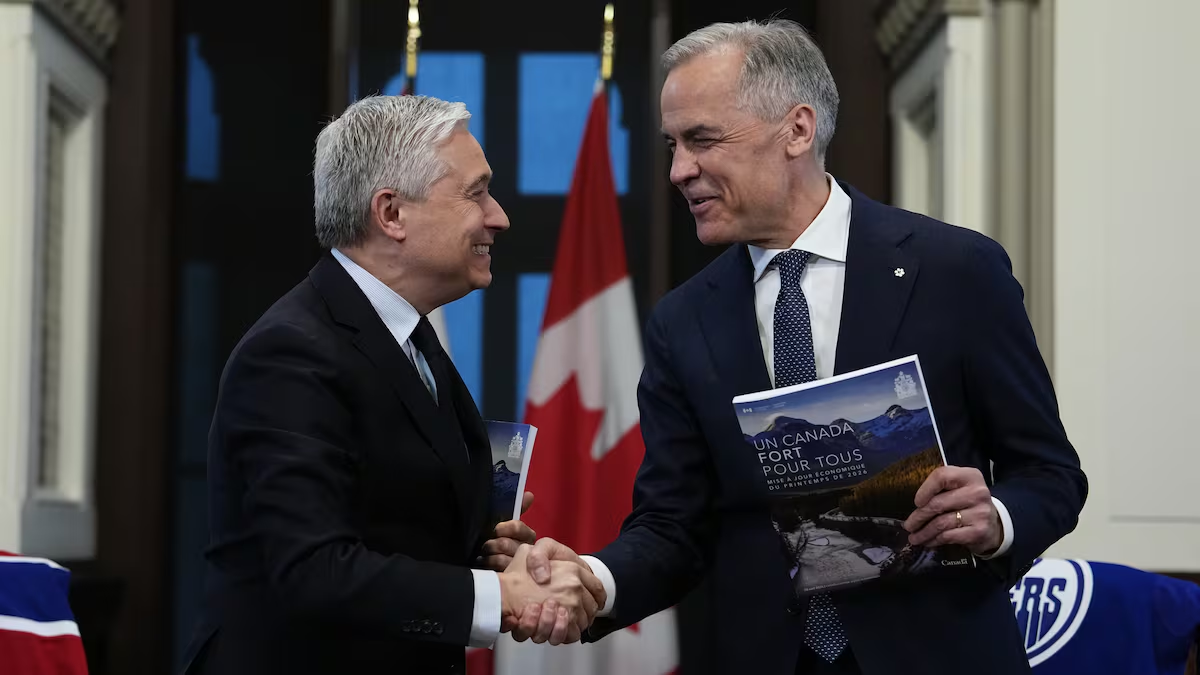
Prime Minister Mark Carney has used the federal spring economic update to launch a major spending plan centred on training workers and accelerating nation-building projects, while signalling that recent deficit improvements may be short-lived.
The government’s new fiscal blueprint, titled Canada Strong For All, commits billions in fresh spending aimed at skilled trades, infrastructure, sports, defence and economic growth. While Ottawa reported a lower-than-expected deficit for the last fiscal year, projections show deficits remaining high for years to come.
The headline announcement is a new workforce strategy called Team Canada Strong, designed to recruit and train between 80,000 and 100,000 skilled trades workers by 2030-31. The plan includes apprenticeship grants, wage subsidies, mobility tax credits, employer incentives and training bonuses. Ottawa is allocating $5.9 billion over five years to support the initiative.
The move reflects Carney’s broader promise to build more homes, expand major projects and strengthen Canada’s economic independence in a time of global uncertainty.
Another key initiative is the creation of a national sovereign wealth fund that would invest alongside the private sector in strategic projects. The government says it will also make the Employee Ownership Trust tax exemption permanent, allowing more workers to own a direct stake in businesses.
In sports, Ottawa pledged $755 million to improve access to recreation, expand infrastructure and support athletes from grassroots levels to elite competition.
On defence, the update includes $2 billion in continued support for Ukraine through Operation UNIFIER, plus funding for a new Defence Investment Agency.
Little New Relief for Household Costs
Despite government messaging around affordability, the update offers limited new direct support for Canadians facing higher living costs.
Measures already announced include an enhanced groceries benefit for 12 million Canadians, the temporary federal fuel excise tax pause, and a cap on non-sufficient fund banking fees at $10.
One new pocketbook measure is a planned reduction in the Canada Pension Plan contribution rate from 9.9% to 9.5% beginning January 1 next year. Ottawa says an employee earning $70,000 could save about $133 annually, with matching savings for employers.
For housing, the government extended the repayment grace period under the Home Buyers’ Plan from two years to five years for eligible RRSP withdrawals made between 2026 and 2028.
Deficits Still Large
The government says the 2025-26 deficit is now expected to be $66.9 billion, significantly lower than the $78.3 billion forecast in last year’s budget.
However, the longer-term picture remains challenging:
- 2026-27: $65.3 billion
- 2027-28: $63.1 billion
- 2030-31: $53.2 billion
Debt-servicing costs are projected to rise sharply, reaching $81 billion by 2030.
Critics argue Ottawa is using higher revenues and improved conditions to finance new spending instead of reducing borrowing more aggressively.
Pierre Poilievre accused the Liberals of worsening the country’s fiscal outlook, while Avi Lewis said the update missed a chance to tackle the cost-of-living crisis more directly.
With the Liberals now holding a parliamentary majority, the government is expected to pass its spending measures without difficulty.
The spring update shows Carney betting heavily on long-term growth through workers, infrastructure and strategic investment rather than short-term household relief. Supporters will see it as nation-building. Critics will see continued large deficits with too little immediate help for Canadians.