

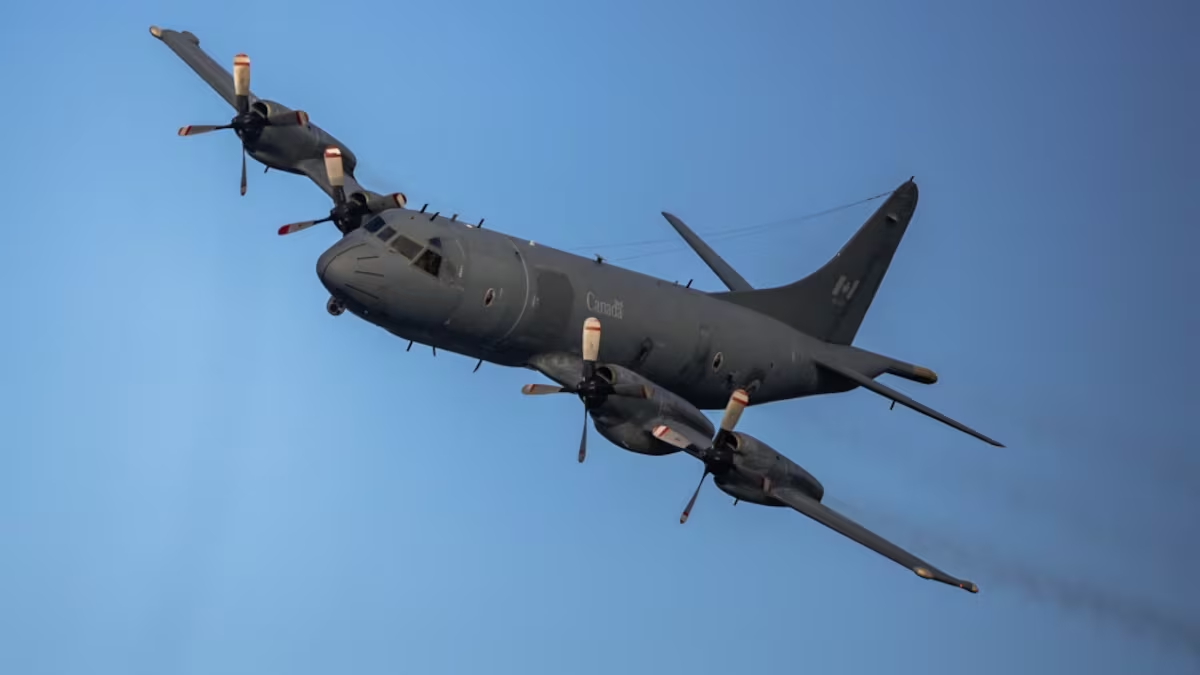
Canada’s military has carried out a new series of surveillance flights near China as part of an international mission to enforce sanctions on North Korea, but this time Ottawa is saying far less about what happened in the skies.
The recent patrols, flown by a Canadian CP-140 Aurora aircraft from a base in Japan, were conducted under Operation Neon — a long-running mission aimed at monitoring suspicious maritime activity and enforcing United Nations sanctions against North Korea. While similar deployments in past years came with public updates and details of encounters with Chinese aircraft, officials are now declining to confirm whether those intercepts occurred during the latest missions.
That shift in messaging is drawing attention. In previous operations, Canada openly reported that Chinese fighter jets had intercepted its aircraft, sometimes describing those encounters as unsafe or aggressive. This year, defence officials have cited operational security and diplomatic sensitivities for withholding details.
The patrols took place over waters in the East China Sea, a strategically sensitive region where military activity by global powers has intensified. Analysts say it would be unsurprising if Chinese aircraft closely monitored the Canadian missions, given Beijing’s consistent response to foreign military operations near its claimed sphere of influence.
The Canadian government says Operation Neon is about defending international law and helping prevent sanctions evasion linked to North Korea’s weapons programs. But the broader context is clear: the Indo-Pacific has become one of the world’s most contested geopolitical theatres, where surveillance flights, naval deployments and diplomatic messaging all carry weight.
For Canada, the silence may reflect a more cautious balancing act. Ottawa has been working to strengthen ties with Indo-Pacific allies such as Japan, Australia and New Zealand, while also managing an already tense relationship with China. Every statement — or refusal to make one — can have diplomatic consequences.
Other allies in the region have continued to publicly disclose confrontations with Chinese forces, framing transparency as part of deterrence and public accountability. Canada’s more reserved approach suggests officials may be trying to avoid escalating tensions while still maintaining military presence and commitments.
For Canadians at home, including communities in Brampton and across the country, these distant patrols can feel remote. But they connect directly to national defence, trade security, alliance commitments and Canada’s role on the global stage.
As power struggles intensify across the Indo-Pacific, Canada’s aircraft may still be flying the same missions — but its public voice has become notably quieter.