

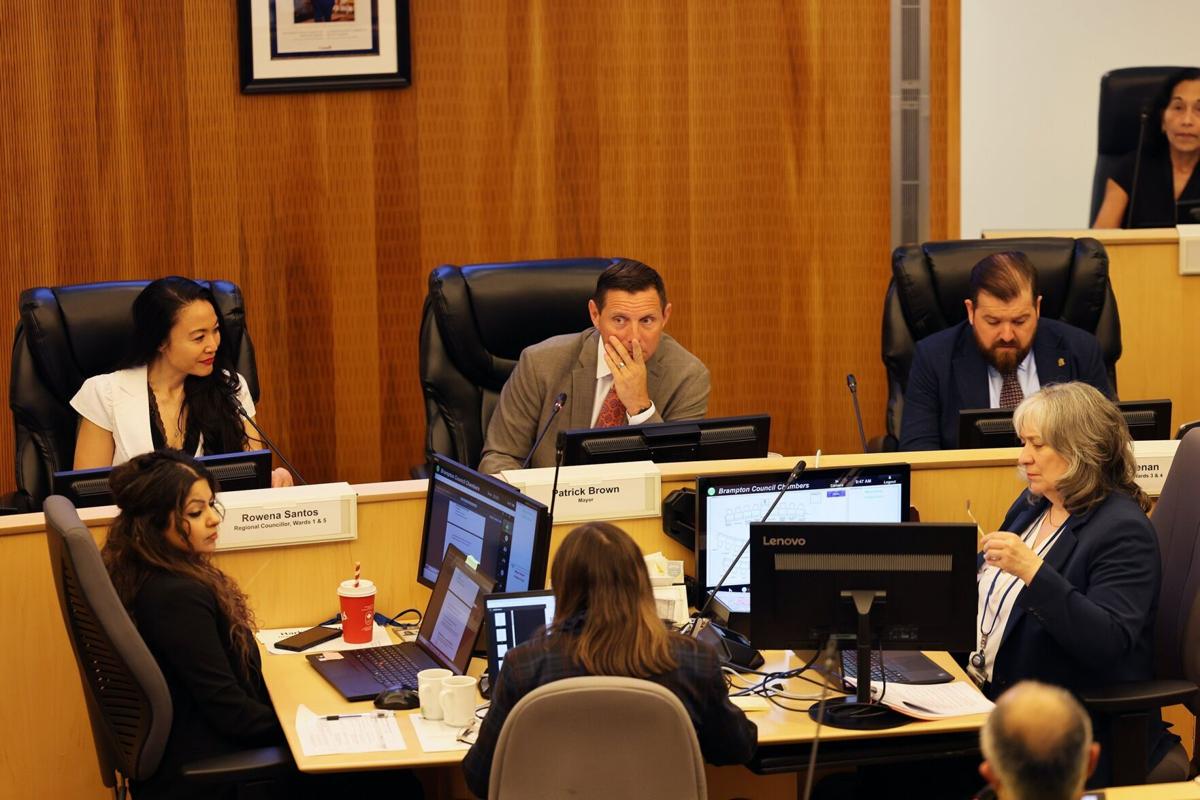
Brampton city council has withdrawn its earlier support for a controversial Israel-Palestine anti-apartheid pledge, stepping back from an issue that had sparked strong reactions across the community and placed local politics at the centre of an international debate.
In a motion passed at its April 8 meeting, council rescinded previous support for the “Apartheid-Free Network’s Community Pledge” after city staff warned of significant legal, financial and procurement concerns. The reversal came less than a month after councillors had voted in principle to support the initiative, pending further review.
The pledge called on organizations to commit to freedom, justice and equality for Palestinians while opposing what it described as apartheid, occupation and settler colonialism. Supporters viewed it as a human-rights statement and a stand against discrimination. Critics argued it was divisive, politically charged and beyond the scope of municipal government.
City staff ultimately concluded that formally adopting the pledge could create serious complications for Brampton’s obligations under trade agreements and municipal purchasing laws. According to the report, the city must comply with rules that prohibit discrimination based on supplier origin or political affiliation. Any attempt to exclude vendors or make procurement decisions based on geopolitical considerations could expose the municipality to legal challenges and financial liability.
The review also raised concerns about pension-related implications through participation in OMERS, where municipalities are part of a provincially mandated framework rather than acting independently.
The issue had drawn strong interest from many residents, particularly within Brampton’s large Muslim community, where support for Palestinian rights has become a visible civic concern. At the same time, members of the Jewish community and advocacy organizations, including Centre for Israel and Jewish Affairs, urged council to reject the motion, warning it risked division and unfairly targeting local Jewish residents.
The debate reflects a growing challenge for municipalities across Canada: how to respond when global conflicts deeply affect local communities. City councils are increasingly being asked to take moral or political positions on international issues, even though their formal responsibilities focus on local services such as housing, transit, policing, roads and recreation.
By withdrawing support through the consent agenda, council avoided a prolonged public debate and chose an administrative path forward. But the broader conversation is unlikely to disappear.
For Brampton, one of Canada’s most diverse cities, the decision underscores a difficult balancing act — respecting passionate community voices while staying within the legal limits of municipal governance. In an era where global events are felt on local streets, city halls are learning that even symbolic motions can carry real consequences.