

A sweeping change to Canada’s refugee system is sending shockwaves through immigrant communities, as the federal government begins notifying tens of thousands of asylum seekers that their claims may not be eligible for hearings. The move, led by Immigration, Refugees and Citizenship Canada, follows the recent passage of new legislation tightening the rules around when and how refugee claims can be made.
Approximately 30,000 applicants are receiving what officials describe as “procedural fairness” letters—documents that give claimants a limited window to provide additional information before a final decision is made. While the government insists these are not deportation notices, some letters go further, warning individuals that they may need to leave Canada if their claims are deemed ineligible, raising alarm among legal experts and advocacy groups.
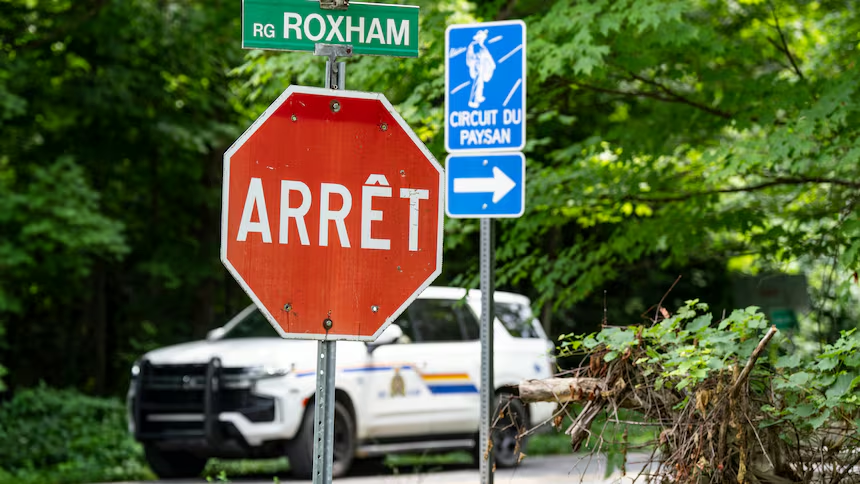
At the centre of the controversy is a provision introduced under the new law that retroactively bars certain individuals from accessing the refugee system if they waited more than a year after entering Canada to file their claim. The rule also targets some irregular border-crossers, including those who entered through routes like Roxham Road, fundamentally altering how eligibility is assessed.
Immigration lawyers argue the new process could undermine fairness by shifting decisions away from in-person hearings and toward written submissions. Critics say this removes a crucial opportunity for claimants to explain their circumstances face-to-face, potentially leading to misunderstandings or incorrect decisions. For many, the difference between a written form and a hearing is not just procedural—it can determine whether their story is fully understood.
Legal experts, including members of the Canadian Association of Refugee Lawyers, warn that the changes could also create confusion. Some applicants receiving letters may not realize they still have rights, including the ability to request a pre-removal risk assessment—an alternative process that evaluates potential dangers they may face if returned to their home country. Concerns have also been raised about vulnerable individuals being misled into leaving Canada prematurely without fully exploring their legal options.
The impact is already being felt on the ground. Lawyers report a surge in calls from worried applicants, with many unsure about their status or next steps. There are also reports of families being affected unevenly, with some members receiving ineligibility notices while others remain in the system—raising fears of separation.
The policy shift comes at a time when Canada is re-evaluating its broader immigration strategy, balancing humanitarian commitments with efforts to manage system capacity and reduce backlogs. But for critics, the speed and scope of the changes risk undermining Canada’s long-standing reputation as a fair and compassionate destination for refugees.
As the new rules take effect, the coming weeks will be critical. For thousands of claimants, the outcome of their cases will depend not only on the law itself, but on how it is applied—and whether the system can uphold both efficiency and justice in equal measure.