

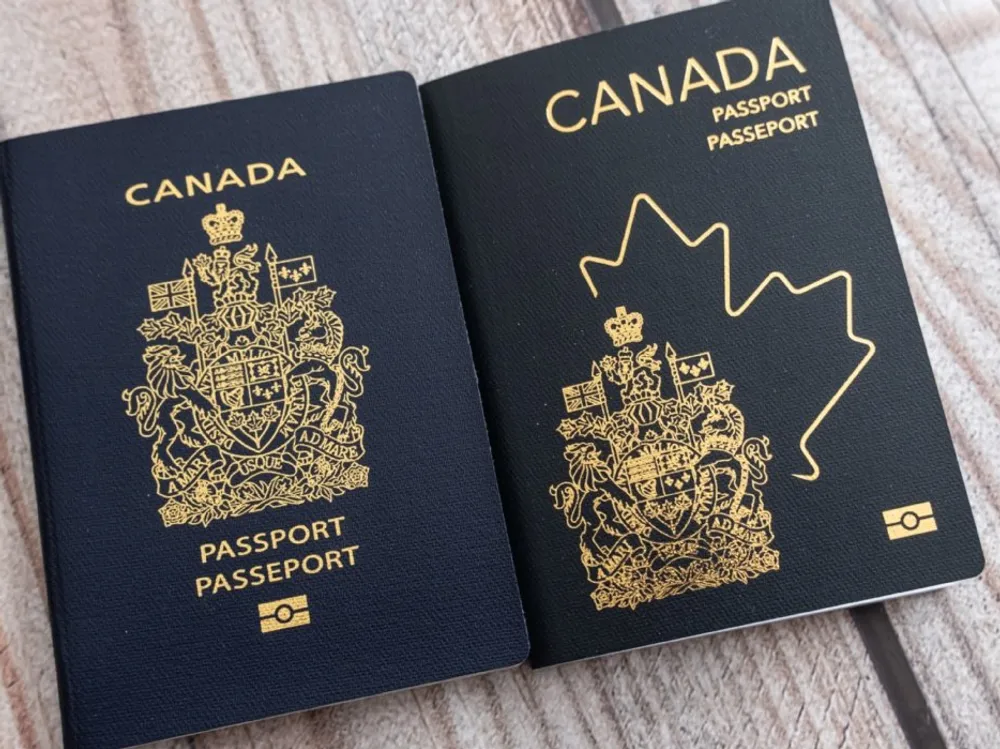
The Canadian passport has edged ahead of the United States in global mobility rankings, marking a symbolic shift in travel freedom while opening a surprising pathway for millions of Americans to potentially claim Canadian citizenship through ancestry.
According to the Henley Passport Index, Canada now ranks 7th globally, offering visa-free or visa-on-arrival access to 182 destinations. The United States follows in 10th place with access to 179 destinations. While the numerical gap is small, the development reflects changing global travel dynamics and growing advantages for Canadian passport holders.
For decades, the U.S. passport dominated international rankings and was widely considered the most powerful travel document. However, evolving diplomatic relations and shifting visa policies have gradually narrowed that lead, culminating in Canada surpassing the U.S. in 2025—a position it has maintained into 2026.
Beyond rankings, a major legislative change in Canada has added a new dimension to the story. A recent update to Canadian citizenship law has significantly expanded eligibility for citizenship by descent, removing the first-generation limit for individuals born before December 15, 2025. This change means that Americans with Canadian ancestry—even through grandparents or earlier generations—may already qualify as Canadian citizens.
Unlike traditional immigration pathways, obtaining proof of Canadian citizenship does not require residency, language testing, or a citizenship exam. Eligible individuals can apply for a citizenship certificate and subsequently obtain a Canadian passport, gaining access to broader travel opportunities and international programs.
One such advantage includes participation in International Experience Canada, which allows young Canadian citizens to work in more than 30 partner countries. By comparison, U.S. passport holders have access to significantly fewer working holiday arrangements.
The practical impact of Canada’s stronger passport is evident in specific travel scenarios. Canadian passport holders currently enjoy visa-free entry to countries such as China for short stays, along with simplified access to destinations like Papua New Guinea and Belarus, where U.S. travellers typically face stricter visa requirements.
While some of these destinations carry travel advisories, the broader trend highlights increasing flexibility and reduced administrative barriers for Canadian travellers.
The shift underscores a larger global reality: passport strength is no longer static. As countries adjust visa policies and international relations evolve, mobility advantages can change quickly. For many Americans with Canadian roots, this moment presents a unique and potentially valuable opportunity to reconnect with their heritage—and gain access to one of the world’s most powerful travel documents.