

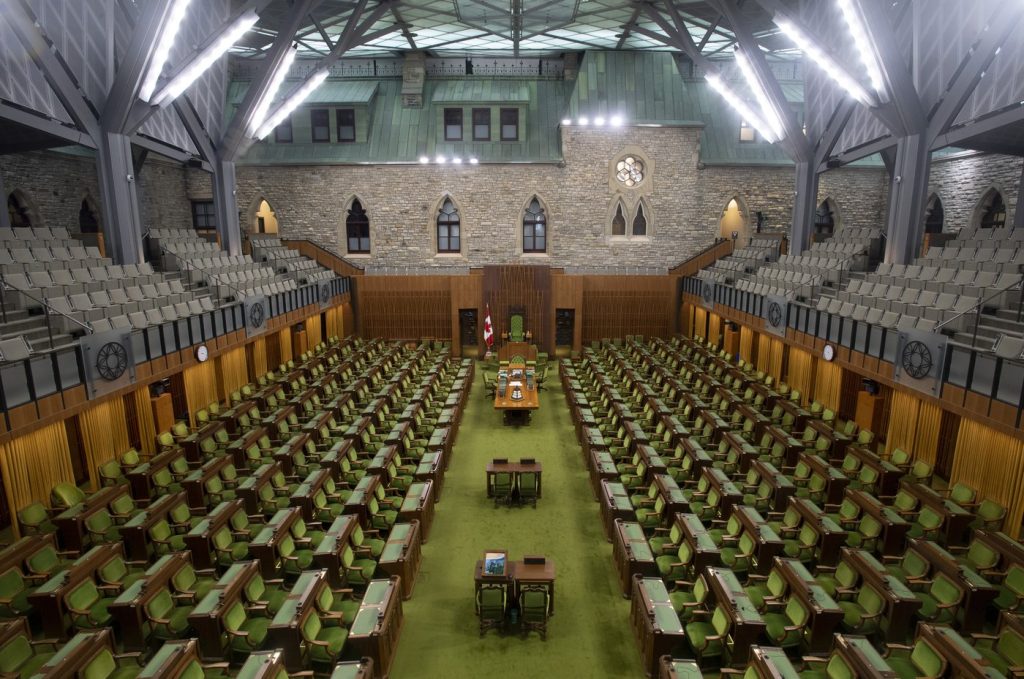
Ottawa-A little-known parliamentary rule could make 173 seats—not 172—the true threshold for a working majority in Canada’s House of Commons, raising the stakes for upcoming political developments, including a crucial byelection in Quebec.
While a simple majority in the 343-seat chamber is traditionally understood to be 172 seats, procedural realities in the House of Commons of Canada mean that a government holding exactly 172 seats may still struggle to pass legislation without additional support.
The reason lies in the role of the Speaker, currently Francis Scarpaleggia, who is typically drawn from the governing party but must remain impartial. Under parliamentary convention, the Speaker only votes in the event of a tie—and even then, follows the principle of maintaining the status quo.
This creates a significant limitation. In a scenario where the governing Liberals hold 172 seats and opposition parties hold 171, the Speaker’s inability to vote normally effectively reduces the government’s voting strength. On key votes, especially at the final stage of legislation, the Speaker would likely vote against the government to preserve the status quo, making it difficult for bills to pass without at least one opposition vote.
The situation becomes even more complex when it comes to confidence matters, such as the federal budget, which can determine whether a government remains in power. In such cases, the Speaker would face a delicate decision between preserving the existing government or adhering strictly to procedural convention, leaving room for case-by-case interpretation.
The outcome of the upcoming byelection in Terrebonne could therefore play a decisive role. If the Liberals secure the seat, they could reach 173 MPs, giving them a more stable majority. If not, they may be forced to rely on opposition support, political negotiations, or alternative strategies to govern effectively.
Experts suggest several possible paths forward, including seeking cross-party cooperation, encouraging MPs to cross the floor, or even triggering procedural resets such as proroguing Parliament to elect a new Speaker.
Ultimately, while 172 seats may appear to represent a majority on paper, the realities of parliamentary procedure mean that 173 seats could be the true number needed for a government to confidently advance its legislative agenda.