

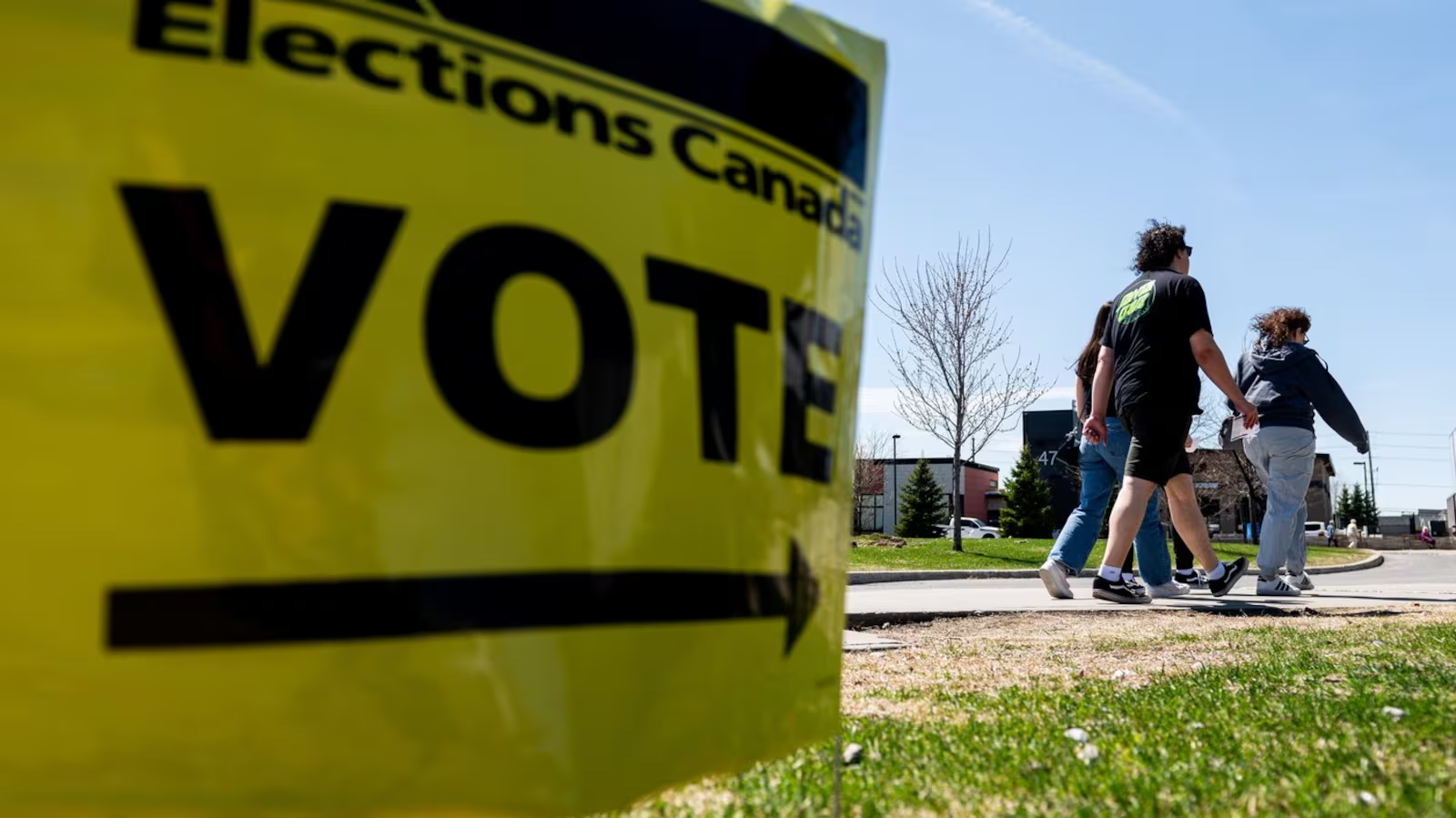
OTTAWA — Three federal byelections scheduled for April 13 could significantly reshape the balance of power in the House of Commons and influence how long the current government remains in office.
The votes will take place in two traditionally Liberal ridings in the Toronto area — Scarborough Southwest and University—Rosedale — as well as the closely contested Quebec riding of Terrebonne. The Toronto seats became vacant after former cabinet ministers Bill Blair and Chrystia Freeland stepped down, and they are widely expected to remain in Liberal hands.
The spotlight, however, is firmly on Terrebonne, where the previous election result was overturned by the Supreme Court of Canada after a mail-in ballot error. The riding, historically a Bloc Québécois stronghold, is now considered a tight race between the Liberals and the Bloc, making it a critical battleground.
If the Liberals retain the two Toronto seats, they will hold 172 seats in the House of Commons — the threshold for a majority. However, because the Speaker does not vote except in the case of a tie, the government would still need support from at least one opposition member to pass legislation. A win in Terrebonne would provide that crucial buffer, effectively giving the Liberals a working majority.
The situation is highly unusual, as Prime Minister Mark Carney’s government has already increased its numbers by attracting MPs from opposition parties. Several members from the Conservatives and NDP have crossed the floor in recent months, strengthening the Liberal position but also drawing criticism from opposition parties, who argue the moves undermine democratic norms.
A majority government would reduce the risk of defeat on key confidence votes such as budgets and throne speeches, offering greater political stability. However, it would not automatically grant the Liberals full control over parliamentary committees, where opposition parties currently maintain significant influence. Any attempt to change committee structures would likely require negotiation or procedural changes that could spark political conflict.
Despite the potential for a majority, political observers note that the situation remains fluid. Additional byelections could be triggered in the coming months, and ongoing speculation about further floor crossings continues to add uncertainty. Maintaining unity within a diverse caucus that now includes former members of other parties may also pose challenges for the government.
The outcome of these byelections could also shape the timing of the next federal election. While a majority government could last up to three years, strong polling numbers may tempt the Liberals to call an early election if conditions remain favourable.
With shifting alliances, tight races, and high political stakes, the April 13 byelections are poised to play a pivotal role in determining the direction of Canadian politics in the months ahead.