

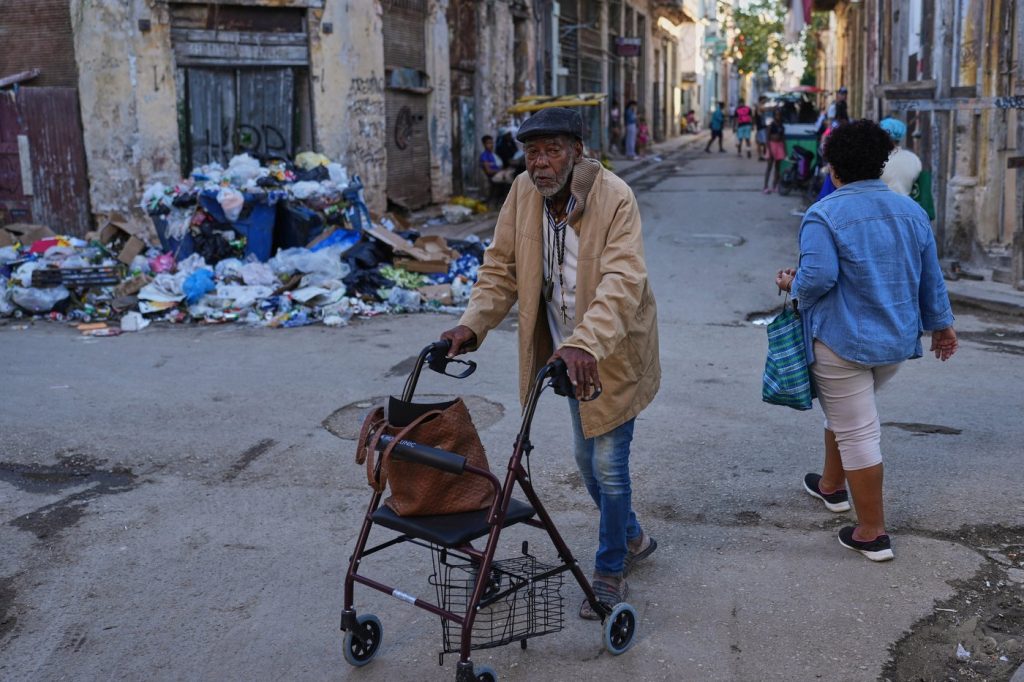
OTTAWA — Former Canadian ambassadors are warning that escalating tensions between the United States and Cuba could place Canada in a precarious diplomatic and economic position, particularly as Ottawa seeks to renew its trade relationship with Washington.
As food shortages and rolling power outages worsen across Cuba, experts say any attempt by the United States to destabilize or overthrow the island’s communist leadership could force Canada into difficult decisions that go beyond previous regional crises, including the recent U.S. intervention in Venezuela.
Former Canadian ambassador to Cuba Mark Entwistle, who served in Havana from 1993 to 1997, said Canada is uniquely exposed due to its long-standing and uninterrupted relationship with Cuba.
“Canada, more than probably any other nation, is caught in a vise grip,” Entwistle said, noting that Ottawa’s response would likely be shaped by its need to safeguard trade negotiations with the United States while upholding international law and humanitarian principles.
Global Affairs Canada has warned for more than a year about widespread shortages of food, fuel, medicine and electricity in Cuba, with rolling blackouts continuing since October 2024. In mid-January, the federal government expanded its travel advisory to include major resort areas previously exempted from such warnings.
The concerns come amid growing speculation that the Trump administration could pursue further action against Cuba following its recent military raid in Venezuela, which resulted in the capture of President Nicolás Maduro. U.S. officials, including Secretary of State Marco Rubio, have openly suggested that Cuba could be next.
Entwistle said possible U.S. actions could include a naval blockade, which would severely restrict access to energy supplies and potentially violate international law. While Cuba could seek fuel from Russia or Mexico, a cutoff of Venezuelan oil would significantly deepen the island’s humanitarian crisis.
From Havana, Queen’s University historian Karen Dubinsky described an increasingly dispirited population grappling with daily blackouts lasting up to 10 hours, shortages of groceries, and economic uncertainty.
“The U.S. actions in Venezuela have had a huge impact here,” Dubinsky said, adding that cultural life and community gatherings — once a unifying force between Cubans and visitors — are increasingly strained by basic survival needs.
Canada remains a key partner for Cuba in tourism, trade, education and cultural exchange. According to Global Affairs Canada, Canada is Cuba’s second-largest source of foreign direct investment, particularly in mining and tourism — sectors that have yet to fully recover from the pandemic.
Former ambassador Matthew Levin, who served in Havana from 2010 to 2013, said Cuba’s government is unlikely to collapse despite mounting hardship, but warned that Canadian tourists could require consular assistance if infrastructure failures or civil unrest escalate.
“Consular officials are almost certainly preparing scenarios and coordinating closely with tour operators,” Levin said, noting that while resorts are typically insulated, shortages are increasingly affecting all sectors of Cuban life.
While some Conservative MPs have urged Ottawa to take a tougher stance on Havana, Entwistle emphasized Canada’s long-standing policy of “constructive engagement,” aimed at encouraging gradual political and economic reform through sustained dialogue rather than isolation.
“There is a different future for Cuba than collapse, despair and anarchy,” Entwistle said. “And it’s in Canada’s interests — as a leader in the Americas — to ensure that future is shaped through stability, humanitarian support and diplomacy.”
As geopolitical tensions intensify across the region, former diplomats say Canada’s challenge will be balancing its values, its economic interests, and its responsibility to both Cubans and Canadians abroad.