

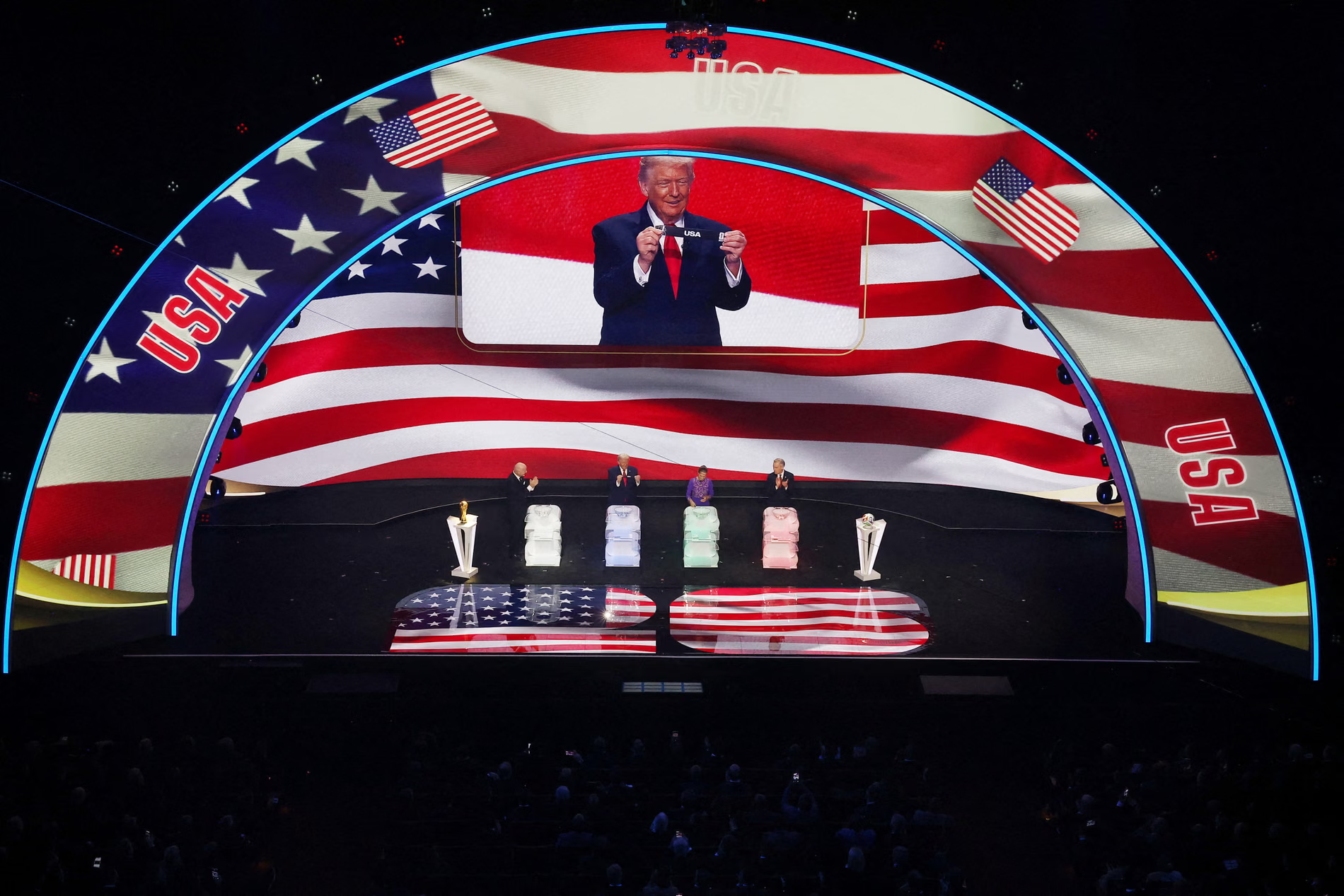
Stripping the United States of its role as a co-host of the 2026 FIFA World Cup would be deeply painful for fans, cities, and the sport itself. It would disrupt years of planning, cost billions in lost economic activity, and deny supporters the chance to experience football’s greatest spectacle close to home. It would be heartbreaking. And yet, under current conditions, it would also be justified.
For more than a decade, the United States pursued the men’s World Cup with determination, especially after losing out on the 2018 and 2022 tournaments. When hosting rights for 2026 were finally secured alongside Canada and Mexico, the moment was seen as a crowning achievement — proof that soccer had firmly embedded itself in American culture since the 1994 World Cup. The tournament was meant to showcase not only how much the U.S. had grown in the sport, but how the sport itself had helped broaden American engagement with the world.
That optimism is now colliding with a harsher reality. Sky-high ticket prices have alienated grassroots fans. Host cities are facing enormous financial burdens. FIFA’s own credibility issues remain unresolved. More troubling still are rising concerns about safety, civil rights, and the use of federal force — concerns that go far beyond sports.
Recent incidents involving fatal encounters between federal agents and civilians, widely documented and disputed by authorities despite video evidence, have raised serious questions about accountability and public safety. In parallel, deaths in immigration detention, aggressive enforcement actions, and widespread raids in major metropolitan areas have created an atmosphere of fear and instability. These same metropolitan areas happen to make up the vast majority of U.S. World Cup host cities.
Against this backdrop, calls for the World Cup to symbolize peace, unity, and global cooperation ring hollow. Hosting the world’s most watched sporting event requires not just stadiums and infrastructure, but trust — trust that visitors will be safe, that rights will be respected, and that political tensions will not spill into streets filled with fans from around the globe.
The broader geopolitical picture adds further strain. Escalating rhetoric toward allies, threats over territorial disputes, and confrontational posturing toward co-host nations undermine the very spirit of international partnership the World Cup is meant to embody. It is increasingly difficult to reconcile those actions with the responsibility of welcoming millions of visitors in a climate of openness and goodwill.
While boycotts or host changes are rare and enormously disruptive, the idea can no longer be dismissed outright. FIFA has repeatedly shown a willingness to stage tournaments in controversial environments, often prioritizing revenue over values. Yet even by those standards, the current situation raises uncomfortable questions about where the line should be drawn.
Ironically, it was the U.S. president himself who suggested last year that major sporting events should be moved if host locations are deemed unsafe or unfit. Applied more broadly, that logic makes it difficult to argue against relocating the World Cup entirely if conditions continue to deteriorate.
Removing the United States as a host would be unprecedented and devastating for fans who have waited a generation for this moment. But safety, justice, and social stability are not secondary concerns. If they cannot be reasonably assured, then the unthinkable may become necessary — not because it is desired, but because it is deserved.