

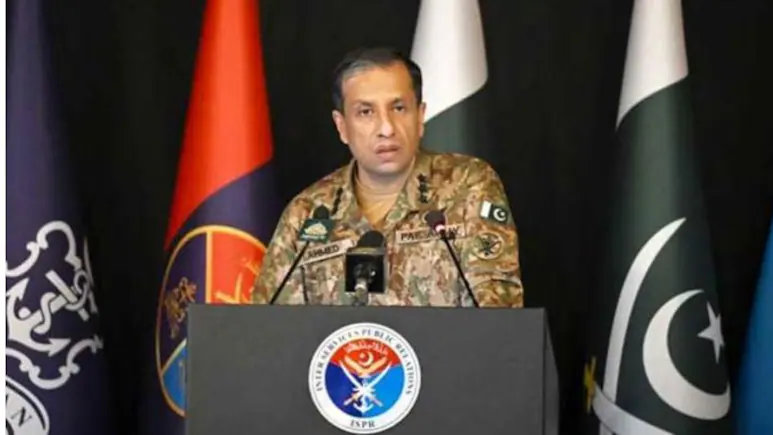
ISLAMABAD — Fresh controversy has emerged following remarks by a senior officer of the Pakistan Army, after he made provocative and colloquial comments directed at India during a recent press briefing.
Lieutenant General Ahmed Sharif Chaudhry, Director General of Inter-Services Public Relations (ISPR), departed from standard military communication norms by using an informal and mocking phrase — “Maza na karaya toh paise wapas” — which loosely translates to “If you don’t enjoy it, you’ll get your money back.” The remark was widely interpreted as an unprovoked threat and drew criticism for its tone and implications.
During the briefing, the army spokesperson claimed that Pakistan’s future security environment in 2026 would depend on how the country responds to what he described as a clear hostile intent from India. He further alleged that New Delhi does not accept Pakistan’s existence and repeated Islamabad’s long-standing but unverified assertions that Afghanistan is acting as a proxy for India.
Chaudhry stated that Pakistan’s political and military leadership was unified and resolute, asserting that the country’s destiny rests in its own hands. He added that Pakistan is prepared to face challenges “from wherever they come, alone or with others,” reinforcing the confrontational messaging.
The remarks come amid earlier claims by senior Pakistani officials, including the defence minister, alleging a conspiracy involving India, Afghanistan and the banned Tehreek-i-Taliban Pakistan (TTP) against Pakistan — accusations that have not been independently substantiated.
The army spokesman has also faced recent criticism for unprofessional conduct at a previous press conference, where he was seen winking at a journalist while responding to a question about former Prime Minister Imran Khan. That incident, referred to by critics as “wink-gate,” further intensified scrutiny of the military’s public messaging style.
The latest comments have added to regional tensions and prompted renewed debate over military communication standards, diplomatic responsibility and escalating rhetoric in South Asia.