

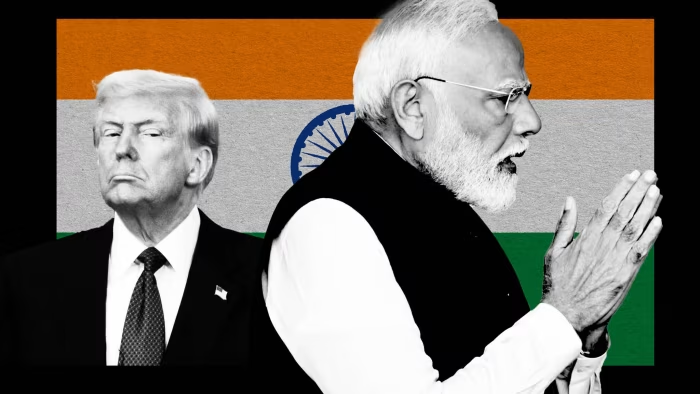
U.S. President Donald Trump has issued a renewed warning to India, saying Washington could impose higher tariffs if New Delhi continues importing oil from Russia.
Speaking to reporters aboard Air Force One on Sunday, Trump said India had already reduced its purchases of Russian oil and suggested the move was influenced by his displeasure.
“We could raise tariffs on India if they don’t help on the Russian oil issue,” Trump said. “They wanted to make me happy, basically. Prime Minister Modi’s a very good man. He knew I was not happy.”
Trump added that the United States could “raise tariffs very quickly” if it believes India is not responding to its concerns.
The remarks come amid heightened scrutiny in Washington over India’s energy trade with Russia. Indian officials have repeatedly defended their oil imports as necessary to ensure domestic energy security, particularly amid global supply disruptions.
Trade talks and diplomatic timing
Trump’s comments follow a recent phone call between him and Indian Prime Minister Narendra Modi, during which both leaders emphasized the importance of sustaining bilateral trade ties despite ongoing tariff disputes.
That conversation coincided with the launch of a new round of negotiations between Indian and U.S. officials aimed at resolving a long-standing trade impasse. Talks began earlier this year but were disrupted after the United States imposed tariffs on certain Indian imports, with rates reaching as high as 50 per cent.
Despite the tensions, Trump has also publicly praised Modi in recent weeks. In a social media post shared by the U.S. Embassy in India, Trump described India as “an amazing country” and called Modi “a great friend,” highlighting India’s strategic importance in the Indo-Pacific region.
Oil at the centre of geopolitics
The issue of oil has taken on added geopolitical significance following recent U.S. military action in Venezuela, a country with some of the world’s largest crude reserves.
Venezuela is estimated to hold more than 300 billion barrels of proven oil reserves — the largest globally, according to OPEC — representing roughly 17 per cent of global reserves. However, production has fallen to about one million barrels per day due to years of sanctions and underinvestment.
As global energy markets continue to shift, Trump’s warning underscores how oil policy, trade negotiations and geopolitics remain closely intertwined — particularly in U.S. relations with major partners such as India.