

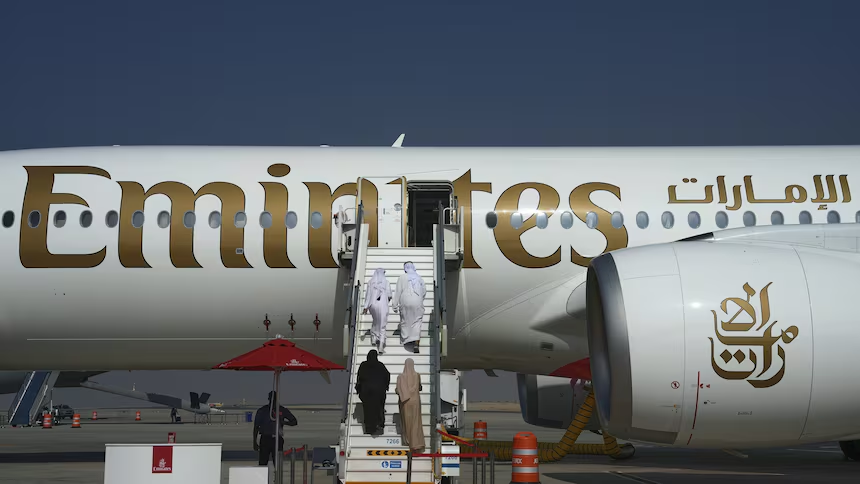
Canadian airlines may soon face increased pressure to upgrade aircraft, amenities and customer service as Ottawa opens the door to more competition from Middle Eastern carriers, aviation experts say.
The federal government has moved to loosen long-standing restrictions on flights from Saudi Arabia and the United Arab Emirates, ending limits imposed during past diplomatic disputes. The decision is expected to significantly expand the presence of airlines such as Emirates and Saudia in the Canadian market.
Aviation analyst John Gradek, a lecturer at McGill University, said Middle Eastern airlines are widely regarded as global leaders in passenger experience, particularly on long-haul routes.
“Canadian carriers are going to have to up the ante and up their game to compete,” Gradek said, noting that the added competition could push Air Canada, WestJet and Air Transat to re-evaluate service standards, cabin layouts and onboard amenities.
Parliamentary committees have previously examined concerns facing Canada’s airline industry, including limited competition, high fares, accessibility issues and passenger rights. The arrival of more foreign carriers with strong reputations for service could intensify scrutiny from travellers.
Middle Eastern airlines, particularly Emirates, have drawn widespread attention online for premium offerings such as private suites, luxury dining and onboard showers. Industry observers say those high-end products help subsidize competitive pricing in economy class.
Canada has historically limited flights from the region. In 2010, Ottawa restricted access for UAE carriers, citing concerns that airlines like Emirates were carrying Canadian passengers onward to third countries without offering reciprocal benefits to Canadian carriers. Saudi Arabia suspended flights to Canada between 2018 and 2023 following a diplomatic dispute over human rights.
Prime Minister Mark Carney has sought to reset relations with Middle Eastern partners as part of a broader strategy to diversify trade beyond the United States amid tensions with President Donald Trump. During a visit to Abu Dhabi in November, Carney secured a $70-billion investment commitment from the UAE.
Soon after, Transport Minister Steven MacKinnon announced expanded air transport agreements. Under the new terms, Saudi Arabia will be permitted up to 14 passenger flights per week to Canada, up from four, while the UAE will be allowed up to 35 weekly passenger flights, up from 21. Both countries will also be granted unlimited cargo flights. Canadian airlines will receive reciprocal access.
Gradek said the revised agreements may favour Middle Eastern carriers, which can funnel Canadian travellers through major hubs such as Dubai to destinations across Asia, Africa and the Indian subcontinent. Canadian airlines, by contrast, are more limited to routing passengers from the Middle East through Canada to the United States.
“I think the foreign airlines will get a bigger piece of the pie,” Gradek said, adding that Middle Eastern carriers’ reliance on premium cabins allows them to keep economy fares competitive.
Air Canada said in a statement that it already competes “with the best in the world” and pointed to its expanding partnership with Emirates. The two airlines agreed in November to extend their strategic partnership until 2032, allowing shared ticket sales and reciprocal loyalty rewards on select routes.
WestJet and Air Transat did not respond to requests for comment.
Ottawa has also signalled that further liberalization is coming, announcing in December that it would allow more flights between Canada and Albania as part of efforts to strengthen global air links.
As more international carriers enter the market, Gradek said Canadian travellers may benefit most — through lower fares, more destinations and rising expectations for service — even as domestic airlines face growing pressure to adapt.