

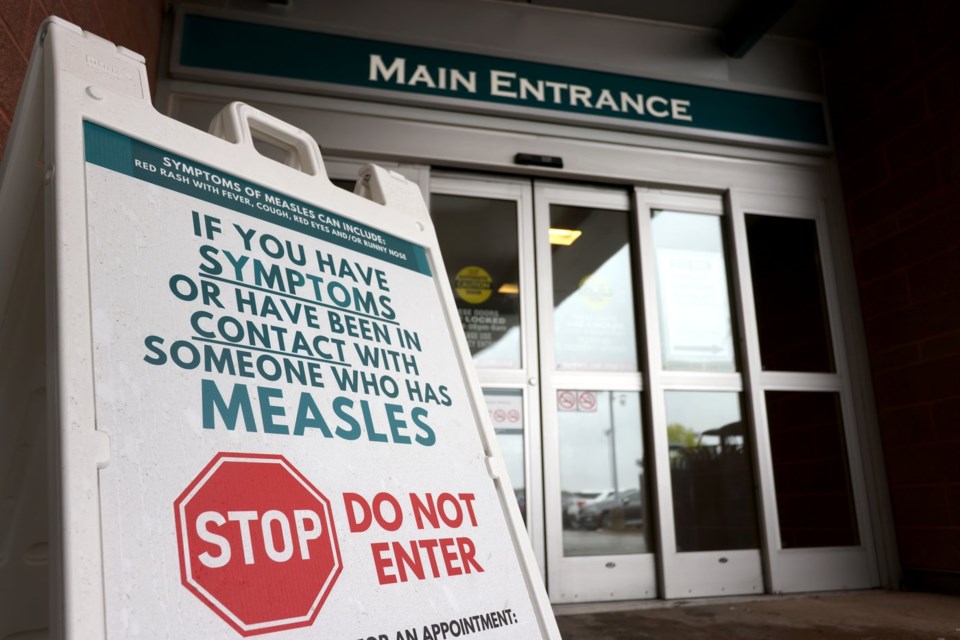
Canada on Verge of Losing Measles-Free Status After Year-Long Outbreak
TORONTO — Canada is on the brink of losing its internationally recognized status as a country free of endemic measles after a year-long outbreak that began in New Brunswick and spread across several provinces, infecting more than 5,000 people.
The country had successfully eliminated measles in 1998, maintaining that distinction for over 25 years — meaning all cases were imported and no sustained community transmission occurred. But since October 27, 2024, the virus has continued to circulate domestically, including two tragic cases involving infants in Ontario and Alberta who were infected in the womb and later died.
Public health experts say the resurgence stems from declining vaccination rates, driven by misinformation, vaccine hesitancy, and disruptions to routine immunizations during the COVID-19 pandemic. The Pan-American Health Organization (PAHO) — the regional arm of the World Health Organization — will review Canada’s measles elimination status at its meeting in November.
“Unfortunately, we haven’t managed to get ahead of the virus,” said Dr. Natasha Crowcroft, vice-president of infectious diseases at the Public Health Agency of Canada. “You must demonstrate no ongoing transmission for at least 12 months and prove your systems can sustain that afterwards.”
Those systems, she added, include strong case surveillance and maintaining 95 per cent vaccination coverage — the threshold required for herd immunity against measles, one of the world’s most contagious diseases.
Countries such as Venezuela and Brazil lost their measles-free designation in 2018 and 2019 but managed to regain it after five years through extensive immunization campaigns — a timeline Canadian officials hope to improve upon.
Experts say Canada’s long success in controlling measles may have contributed to complacency. “Older generations remember how terrible measles could be — children who were deaf, fell behind in school, or worse,” said Crowcroft. “That’s something we’ve forgotten.”
Dr. Nicole Basta, an epidemiologist at McGill University, called the situation “a wake-up call for all of us.” She said the threat of measles hasn’t felt real to most Canadians for decades, adding that rebuilding trust in vaccines is essential. “We need community champions — local voices who can restore confidence and remind people that vaccines save lives,” she said.
In Calgary, Dr. Cora Constantinescu, head of a vaccine hesitancy clinic, said the outbreak has “reignited” many healthcare workers’ commitment to vaccination advocacy after years of pandemic fatigue. “I never thought I’d see a measles outbreak of this magnitude in my lifetime,” she said. “Now I’m worried about other preventable diseases like polio and whooping cough following the same path.”
The United States, which achieved measles elimination in 2000, is also battling a new outbreak but remains short of the 12-month threshold that would trigger a review.
For Canada, the loss of measles-free status would be more than symbolic — it represents a serious setback in public health progress and a warning that the erosion of vaccine confidence can undo decades of success in a single year.