

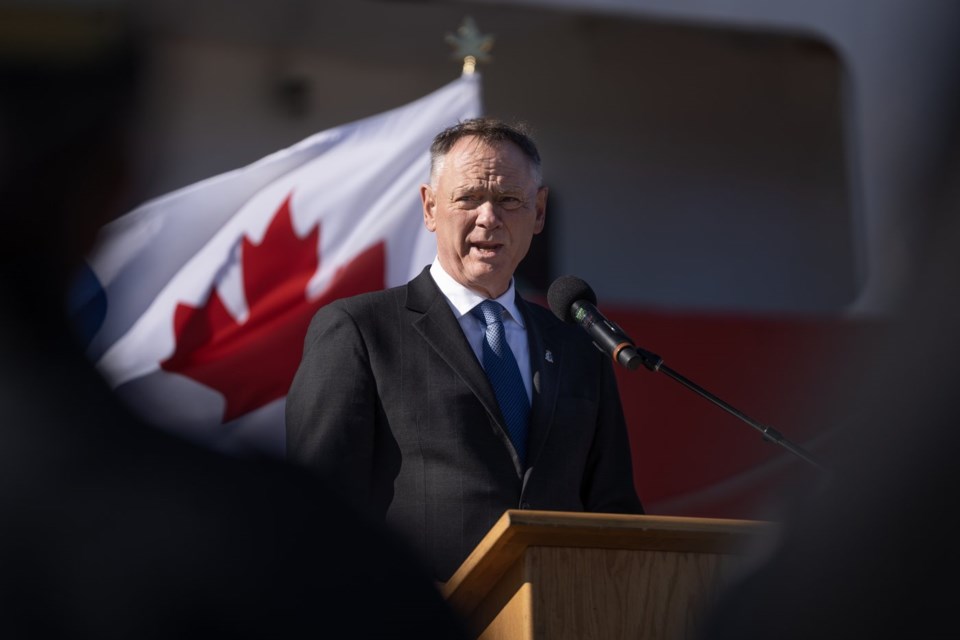
Canada’s first-ever Defence Industrial Strategy will be released sometime after the November 4 federal budget and no later than Christmas, announced Defence Minister David McGuinty on Friday. The long-anticipated plan aims to define Canada’s defence priorities, boost domestic capabilities, and strengthen the nation’s role in global security while ensuring the country’s industries are positioned to thrive in an era of emerging threats and advanced technologies.
Speaking at the Empire Club of Canada in Toronto, McGuinty emphasized that the strategy will map out national needs and sovereign capabilities, identifying which sectors offer Canada a comparative commercial advantage. He noted a focus on “dual-use technologies” that serve both military and civilian purposes—an approach that could fuel innovation while safeguarding Canadian interests.
Observers say this strategy could reshape Canada’s industrial policy in a way not seen since the Macdonald Commission of the 1980s. Defence expert Craig Stone from the Canadian Forces College explained that while such a policy could create opportunities, it will inevitably produce “winners and losers,” depending on which sectors the government designates as strategic priorities.
Industry Minister Mélanie Joly hinted earlier that the policy would define defence broadly—not just traditional military needs, but also cybersecurity, pandemics, and even climate change impacts like wildfires. This broader view aligns with Prime Minister Mark Carney’s pledge to significantly boost defence spending, first to 2% of GDP in line with NATO commitments and eventually to 5% by 2035, with 1.5% of that total covering infrastructure and resilience projects.
Experts suggest this “total defence approach” reflects lessons from Nordic countries, where civilian readiness is treated as part of national security. Laval University’s Anessa Kimball noted that projects like emergency preparedness kits for every household or civilian security training could become part of Canada’s wider resilience plan.
Still, the details of the strategy remain under wraps. Christyn Cianfarani, CEO of the Canadian Association of Defence and Security Industries, likened the current stage to having “all the ingredients on the table” without knowing whether the result will be “a vanilla or chocolate cake.” She urged Ottawa to set clear growth targets and outline key “sovereign capabilities” necessary for the nation’s defence infrastructure.
The government’s newly established Defence Investment Agency will play a key role in implementing the strategy by accelerating military procurement—traditionally criticized for being slow and overly bureaucratic. However, experts like James Fergusson of the University of Manitoba caution that reforming procurement will be difficult, given the competing interests of politicians, bureaucrats, and the military itself.
Others, including Gaëlle Rivard Piché from the Conference of Defence Associations Institute, say meaningful change is possible if there’s strong political will and clarity about Canada’s threats. “When Canada has moved fast on defence in the past, it was always in response to a clear danger,” she said, citing current challenges like Russia’s aggression in Europe.
For now, McGuinty’s announcement marks a crucial step toward a long-overdue overhaul of Canada’s defence framework. Whether it delivers a bold, future-ready plan or becomes another bureaucratic exercise will depend on how decisively Ottawa acts in the weeks following the budget.