

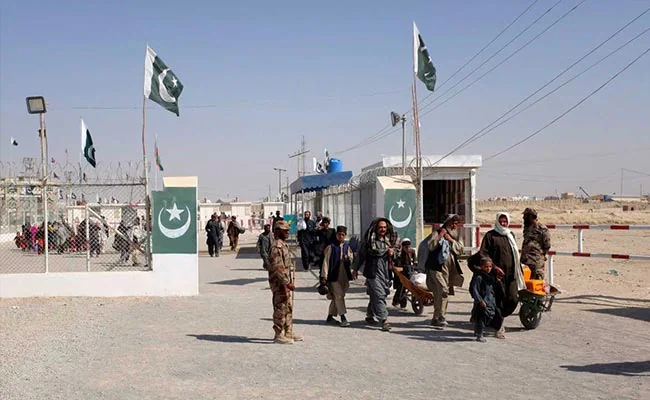
Pakistan is facing a surge in food prices as the closure of border crossings with Afghanistan drags into a second week, disrupting trade and leaving thousands of containers stranded on both sides. Tomatoes, a staple ingredient in Pakistani kitchens, have seen prices soar by more than 400 per cent since the shutdown began, reaching about 600 Pakistani rupees ($2.13) per kilogram.
The crossings were sealed on October 11 following deadly clashes and Pakistani airstrikes across the 2,600-kilometre frontier — the worst fighting between the two nations since the Taliban’s 2021 takeover of Kabul. Despite a ceasefire brokered by Qatar and Turkey last weekend, trade remains suspended.
Khan Jan Alokozay, head of the Pak-Afghan Chamber of Commerce in Kabul, said the blockade has halted all commercial movement. “With each passing day, both sides are losing around $1 million,” he told Reuters. “We have around 500 containers of vegetables for export daily, all of which have spoiled.”
Roughly 5,000 containers carrying fruit, vegetables, minerals, medicine, wheat, rice, and meat are stuck at the border, according to a Pakistani official stationed at the Torkham crossing. Shortages of tomatoes, apples, and grapes are already being felt in local markets. Apples, many of which come from Afghanistan, have also surged in price.
The closure has deepened economic pain on both sides of the frontier. Annual trade between Pakistan and Afghanistan is estimated at $2.3 billion, with agricultural goods forming a major component. Islamabad has accused the Taliban government of failing to prevent cross-border militant attacks, a charge the Taliban denies.
While a fragile ceasefire holds, border trade has yet to resume. Talks between the two sides are expected to continue on October 25 in Istanbul, but for now, essential goods — and the livelihoods tied to them — remain stuck at the border.