

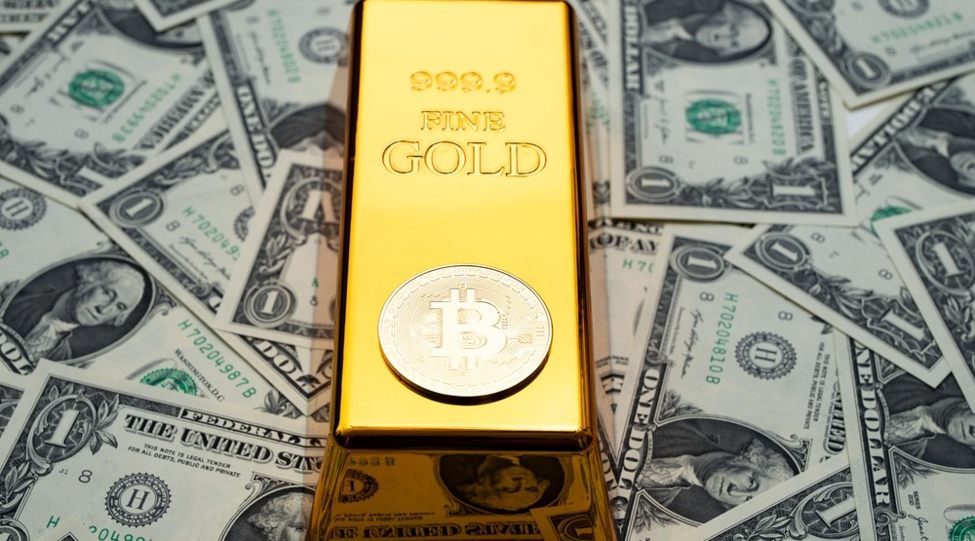
Gold prices collapsed by more than 5% on October 21, 2025, in their steepest one-day drop since August 2020, triggering a ripple effect across global markets that dragged Bitcoin and other risk assets lower.
The precious metal plunged from a record $4,381 per ounce to an intraday low of $4,082, erasing billions in market value and ending an extraordinary rally that had seen gold surge 60% this year. Bitcoin also slid 2% to $108,342, testing key support at $108,000 as investors rushed to lock in profits amid one of the highest-ever gold–Bitcoin correlations at 0.85.
Why Gold Fell So Sharply
Analysts say the selloff was a long-overdue technical correction after weeks of parabolic gains. Suki Cooper of Standard Chartered called it “a necessary cool-off” following record inflows of $34.2 billion into precious metals over ten weeks. The U.S. dollar’s 0.4% rise added further pressure by making gold more expensive for overseas buyers, while optimism over renewed U.S.–China trade talks dampened demand for safe-haven assets.
Seasonal factors also played a role, with physical buying from India — the world’s second-largest consumer — tapering off after the Diwali festival, traditionally a peak gold-buying period. The correction extended to other metals: silver tumbled 8.7%, and platinum fell as much as 7%, marking a broad pullback across the sector.
Bitcoin Caught in the Crossfire
Bitcoin’s slide mirrored gold’s decline due to their increasingly synchronized trading behavior. As investors dumped gold, algorithmic and institutional traders offloaded crypto positions too. “This correlation shows Bitcoin is being treated as a parallel store of value rather than a risk asset,” noted Paul Howard of Wincent.
Despite the dip, analysts see Bitcoin’s 200-day exponential moving average near $108,000 as critical support, maintaining a longer-term bullish structure. A break below that level could, however, open the door to a test of the $100,000 psychological floor.
The Bigger Picture
Gold’s sharp retreat follows an overheated rally that many viewed as unsustainable. Bart Melek of TD Securities said investors were simply “realizing gains after an extraordinary run.” Still, the correction wiped out an estimated $2.1 trillion in combined market capitalization, underscoring how fragile sentiment had become at record valuations.
Technical analysts expect gold could retreat further to around $3,400, where its 200-day moving average sits, before stabilizing. Bitcoin, meanwhile, could rebound once leveraged positions are cleared, with traders eyeing it as a potential laggard recovery play once gold steadies.
In short, this week’s crash wasn’t just a correction — it was a reminder that even safe havens aren’t immune to speculative excess.