

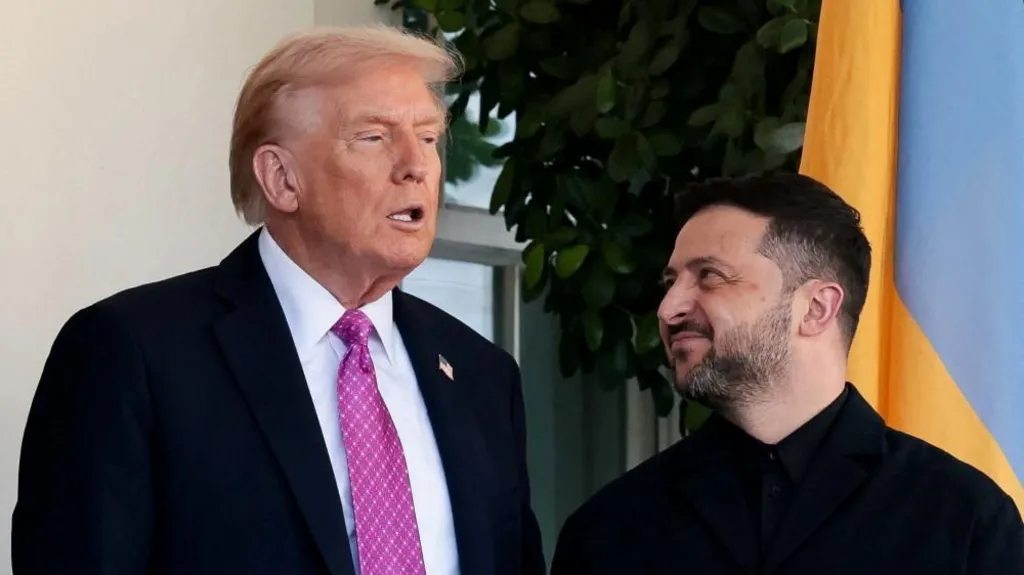
Ukrainian President Volodymyr Zelensky arrived in Washington hopeful, but left without the concrete commitments he had sought after a terse meeting with President Donald Trump. Zelensky described the exchange as “pointed,” a tone that reflected the gap between Ukraine’s urgent battlefield needs and the U.S. president’s current posture toward Moscow.
Optimism in Kyiv ran high before the trip. Ukraine’s parliamentary speaker, Ruslan Stefanchuk, called the visit “a very important historical moment,” suggesting in interviews that a breakthrough on supplying long-range Tomahawk missiles was within reach. That hope, however, unraveled in the air as news broke of a lengthy phone call between Trump and Vladimir Putin and word spread that another Trump–Putin summit was being arranged.
On the White House lawn, what greeted Zelensky was measured: a low-key reception and a meeting that did not deliver the expanded military support or long-range strike capability Kyiv had requested. Trump, speaking afterward, said he believed Putin “wants to make a deal” and urged an effective freeze of the front lines so both sides could “go home to their families.” Zelensky, while courteous and effusive in praise customary to high-stakes diplomacy, made clear he did not share that optimism: “We understand that Putin is not ready,” he told reporters.
For Ukraine, the conflict is not a bilateral spat between leaders but an existential fight against an aggressor with territorial ambitions. Kyiv wanted Tomahawk missiles to pressure Russia into meaningful talks and sought U.S. security guarantees that would enforce any future settlement. Those asks went unmet: Zelensky departed without either the long-range weapons or binding guarantees he had hoped to secure.
Back in Kyiv, the reaction reflected a mix of disappointment and resolve. Residents still repairing damage from recent strikes warned against rushing into a peace deal that might allow Russia to regroup. “If we make a peace deal now, Russia will start to prepare a new, more professional war against Ukraine, or maybe other countries,” one shop owner said as he patched shattered windows. Another local whose car was damaged by blast wave insisted that, with or without Tomahawks, Ukraine’s fate will ultimately be decided by its army and people: “The only power who decides what’s going to be next is our army,” he said.
Zelensky’s Washington visit underscored a painful reality for Kyiv: international diplomacy can shift quickly, and outcomes hinge as much on off-the-record calls and political winds as on battlefield realities. Despite the setback, Ukrainians interviewed on the ground expressed a clear determination to continue the fight — a steady defiance that suggests Zelensky will return to the diplomatic front lines undeterred.