

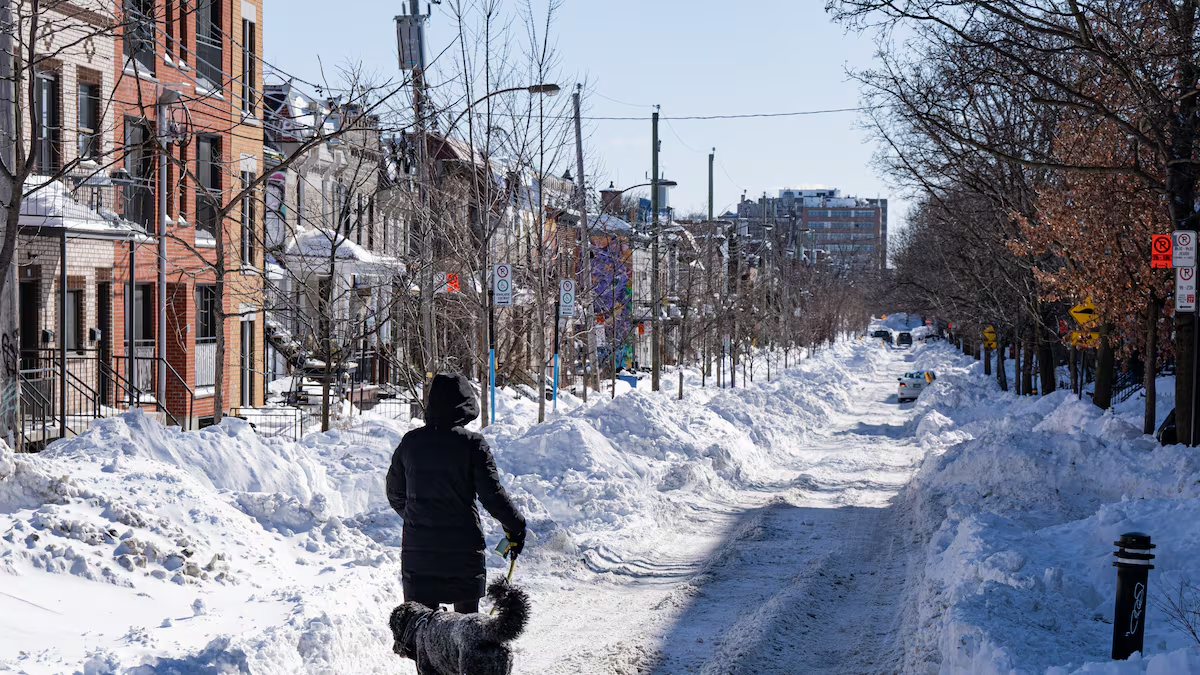
Toronto — La Niña has officially arrived, but Canadians shouldn’t expect a return to the bone-chilling winters of decades past. According to climatologist David Phillips of Environment and Climate Change Canada, the coming winter will likely be colder and snowier than recent years, but not as harsh as traditional La Niña winters due to the influence of global warming and unusual Pacific Ocean conditions.
“There’s certainly a hint that we’re going to have a winter, but I don’t think it will be as brutal or strong as it was traditionally back, say 20 or 30 years ago,” Phillips said in an interview with CTVNews.ca from Barrie, Ont.
La Niña is a major climate phenomenon characterized by unusually cool waters near the equator in the eastern Pacific Ocean, which typically triggers a chain reaction affecting global weather patterns. In Canada, La Niña winters usually bring colder-than-average temperatures, increased snowfall, and wetter conditions along the West Coast and Great Lakes.
Historically, Western Canada experiences colder conditions during La Niña, while Eastern Canada often sees a mixed bag of snow, rain, and freezing rain. The Atlantic hurricane season also tends to be more intense during La Niña periods.
However, Phillips cautioned that several factors may weaken these typical impacts.
Climate Change and the “Pacific Blob” Are Changing the Equation
Despite the presence of La Niña, Canadian winters have been, on average, 3.7°C warmer than normal since 1948, largely due to climate change. Even during recent La Niña events, winters have been noticeably milder compared to the past.
Complicating matters further is the “Pacific blob,” a massive area of warm water in the northern Pacific Ocean that Phillips described as a “marine heat wave.” The blob’s interaction with La Niña is unpredictable and could alter traditional weather patterns.
“It’s a guess as to the kind of winter that we’re going to see,” Phillips said, emphasizing the uncertainty surrounding how these two forces — La Niña and the Pacific blob — will interact.
He added that La Niña is currently weak, which may further dampen its effects this year.