

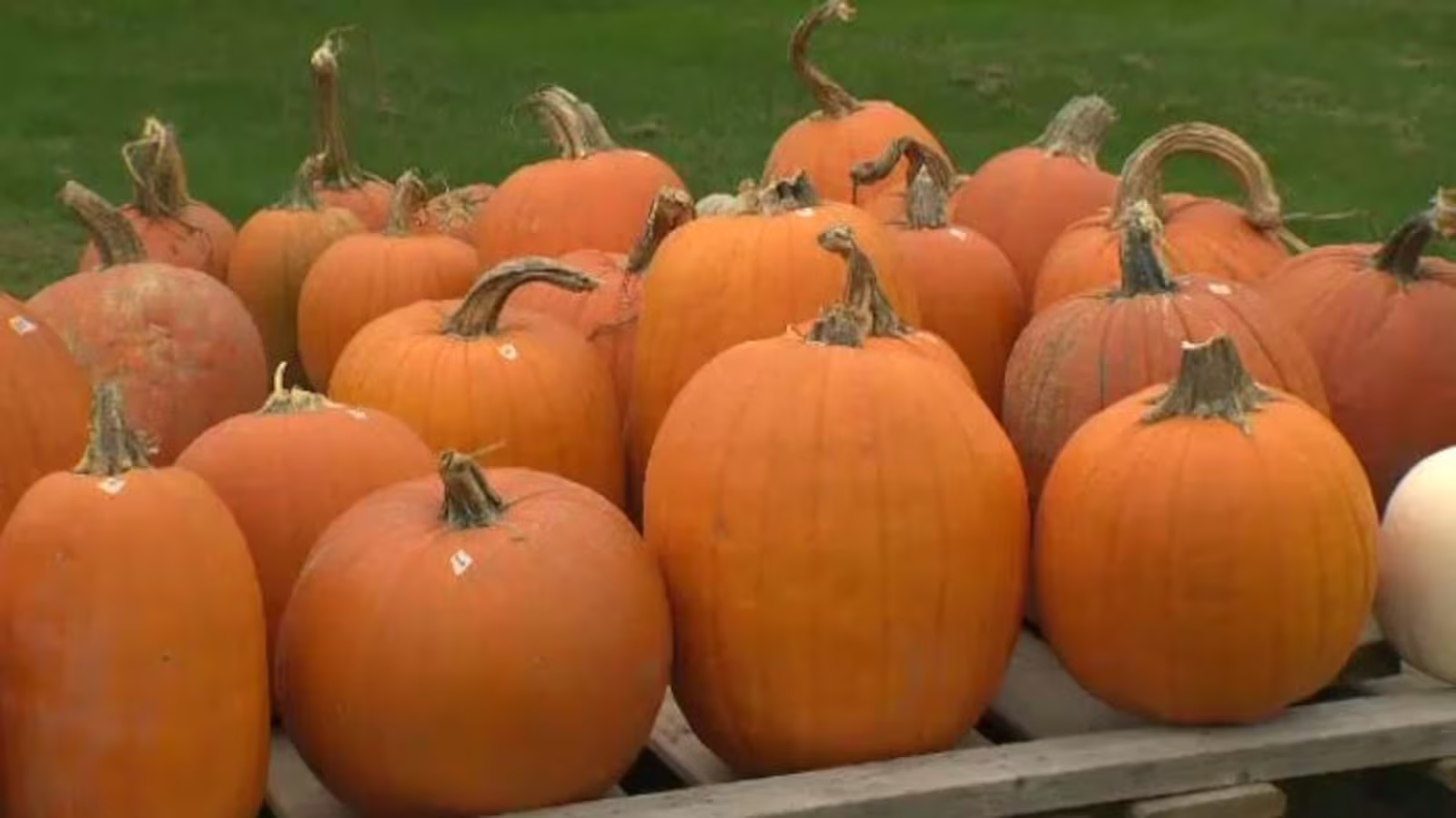
Ontario’s beloved fall tradition of pumpkin picking could be in for a disappointing season this year, as farmers across the province report one of the worst yields in decades. A summer marked by relentless heat and scarce rainfall has left fields struggling to produce their usual bounty, prompting fears of a pumpkin shortage just as Thanksgiving and Halloween approach.
For Donna Warner, who has run Warner Ranch & Pumpkin Farm in Niagara Falls for 30 years, this season has been unlike any other. “It’s too little, too late,” she said, describing how a recent spell of rain wasn’t nearly enough to rescue her crop. “You plan all winter, you buy seeds, you fertilize, get everything ready. There’s so much money and time put into it.”
Warner’s experience mirrors that of many farmers across Ontario, where yields are significantly lower and pumpkins are coming out smaller than usual. The hot, dry summer was the main culprit, compounded by regional soil differences that have determined which farms were able to hold on — and which weren’t.
In Stouffville, Connor Miller of Applewood Farm expects to sell out by Thanksgiving Monday, with only about 75 per cent of his usual harvest. He traces the shortfall back to spring’s erratic weather. “It got warm and then cold and rainy during planting, which led to seed rot,” he explained. Miller lost close to seven acres of pumpkins. Luckily, the farm’s calcified soil, which holds moisture better than sandier ground, along with decent rainfall, kept him from a total wipeout.
Interestingly, while his pumpkins have suffered, Miller said his squash crop has flourished. “Usually it’s the other way around. I’ve been reading about the pumpkin problems and it’s without a doubt because of the drought,” he said.
For Morris Gervais, who runs Barrie Hill Farms in Barrie, the issue wasn’t yield but size. “On some of our lighter, sandier ground, the pumpkins are certainly smaller than normal,” he said. “There’s lots of pumpkins there but the size isn’t what we’d like to see. Instead of large jack-o’-lantern pumpkins, we have lots of medium to small ones.”
Gervais explained that during the drought, he had to make tough choices about where to allocate his limited water supply. “I didn’t really have enough water to worry about pumpkins,” he said. “For an annual crop, if it doesn’t work out this year, you’ll plant again next year. But you don’t want to lose trees that are established for many years.”
Crops grown on heavier clay soil performed better, producing pumpkins of decent size—though they took longer to ripen than usual. “It’s not my best ever crop,” Gervais admitted, “but it’s adequate.”
With lower yields and smaller pumpkins, many farms are bracing for early sellouts and advising families not to wait until the last minute to pick up their fall favourites. For farmers, the season has been a stark reminder of how vulnerable their crops are to weather extremes — and how quickly a tradition can be disrupted when nature doesn’t cooperate.