

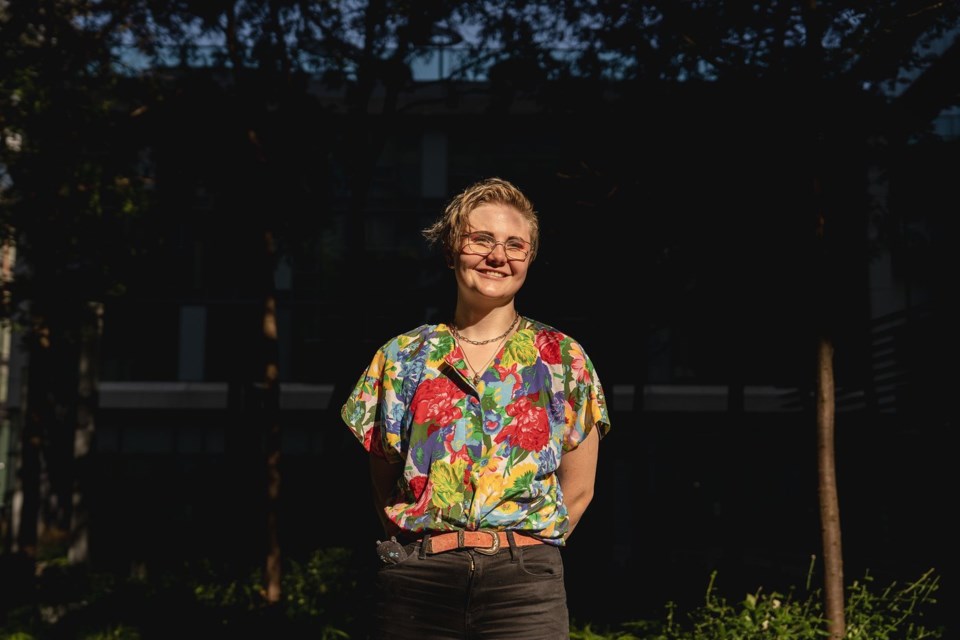
When Moira Robertson finally received her autism diagnosis at 23, she felt both relief and heartbreak. Growing up in rural Bruce County, Ontario, far from the urban hubs where most diagnostic specialists are located, she spent five painful years waiting to see an out-of-town specialist. By then, she had already missed the government-funded support that could have changed her childhood.
Robertson’s early years were marked by isolation and misunderstanding. Teachers once called the police to handle her at school. Classmates vandalized her posters, mocked her, and treated her as “different.” She experienced public meltdowns and bed-wetting well into her teens, but local health providers repeatedly turned her away.
Her story reflects a larger problem that advocates say is being overshadowed by U.S. political rhetoric, including former president Donald Trump’s talk of a “crisis” and unproven treatments. Robertson believes the focus should be on improving Canada’s capacity for early diagnosis — a step that unlocks financial, educational, and mental-health supports.
As a university student, Robertson missed out on sensory accommodations, specialized mental-health care, and assistive listening technology. Without a formal diagnosis, she was forced to fight for basic academic accommodations. Only after she was officially diagnosed did she qualify for disability tax credits and receive understanding from institutions.
“I would have had a totally different perspective on myself if I had known earlier,” she said. “Knowing I’m autistic and that my brain works differently — and that’s OK — is life-changing.”
Robertson’s family eventually paid out of pocket for a private psychologist in Guelph, but she acknowledges her privilege in being able to do so. “I’m a white girl from a middle-class family with highly educated parents who are still together. Change any one of those factors, and I might not have gotten the diagnosis at all,” she said.
Siyu Chen, diagnosed at 17 in Vancouver, says cultural and gender biases delayed her diagnosis. As a Chinese Canadian, her behaviours were not recognized through diagnostic frameworks designed around boys of Western backgrounds. Research backs this up: diagnostic criteria historically focused on boys, and a 2023 U.S. study found that girls are diagnosed up to two years later, especially those from racial or ethnic minorities.
Chen now serves as interim vice chair of the National Autism Network’s board, which advises the federal government on its Autism Strategy — the first of its kind in Canada. While Ottawa has invested $6.3 million over five years and named timely diagnosis its top priority, Chen cautions that implementation depends on the provinces and territories, which control health care and support programs. “The strategy is a milestone, yes, but it’s just words until governments act,” she said.
Advocates like Maddy Dever, a parent of four autistic children, say one key solution is training more frontline health workers to diagnose autism. Through programs like ECHO (Extension for Community Healthcare Outcomes), primary care physicians, pediatricians, and nurse practitioners are being equipped to make confident diagnoses. A 2023 study by Holland Bloorview Kids Rehabilitation Hospital found that general pediatricians can accurately diagnose autism, which could significantly reduce wait times.
Robertson now works with ECHO Ontario Autism. During one of the sessions, she saw the pediatrician from her hometown — the same doctor who couldn’t diagnose her as a child — joining to learn. He now diagnoses children in her community. “If he had had that knowledge back then, he probably would have figured it out the moment I walked into his office,” she said. “I would have known from the start, and it would have completely changed my life trajectory.”
Experts warn that wait times remain alarmingly long: a 2018 Canadian Paediatric Society survey found children wait up to two years for a diagnosis, while adults wait an average of 2½ years. With autism affecting about two per cent of Canadian children and youth — a number that has risen since the pandemic — advocates say the need for faster, more inclusive diagnostic systems is urgent.
For people like Robertson and Chen, early diagnosis isn’t just about labels — it’s about access, understanding, and a fair chance to thrive.