

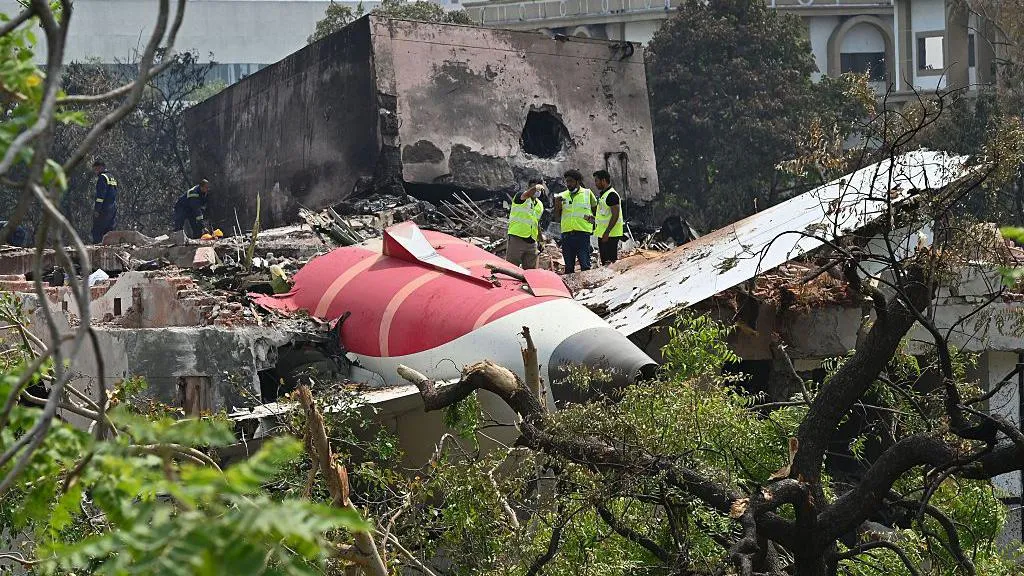
India’s Aircraft Accident Investigation Bureau (AAIB) is still assessing whether to send the black boxes from last week’s deadly Air India crash overseas for decoding, amid ongoing questions about the condition of the flight recorders and the capacity of domestic labs to handle the analysis. The crash, which occurred shortly after takeoff from Ahmedabad airport on a London-bound Boeing 787-8 Dreamliner, claimed the lives of at least 270 people—most of them passengers—making it one of the deadliest aviation disasters in Indian history.
Despite reports suggesting that the recorders would be sent abroad, possibly to the United States, the Ministry of Civil Aviation clarified that no final decision has been made. In a statement, the ministry said the AAIB will determine the location for analysis only after a thorough evaluation of technical, safety, and security considerations.
Investigators recovered both sets of Enhanced Airborne Flight Recorders (EAFRs)—commonly referred to as black boxes—on June 13 and June 16 from the wreckage. These combined units log both flight data and cockpit voice recordings and are designed to help reconstruct the aircraft’s final moments in precise detail. The Boeing 787 model used by Air India is equipped with two such sets to ensure redundancy in critical investigations.
The black boxes can provide vital insights, including the positioning of flight controls, engine thrust settings, fire suppression triggers, and communications between pilots. However, some reports indicate the devices sustained severe fire damage, possibly limiting the ability of Indian labs to extract usable data. Speculation has grown that the data may have to be analyzed in more advanced overseas facilities, particularly in the U.S., which has historically assisted in complex investigations.
Captain Kishore Chinta, a former AAIB accident investigator, told the BBC that one set of recorders could potentially be sent to the U.S. National Transportation Safety Board (NTSB) to verify or compare data retrieved in India. Although a new AAIB laboratory in Delhi was inaugurated in April, Chinta noted that it remains unclear whether the facility is fully operational for advanced EAFR data recovery and analysis.
Meanwhile, Air India’s chairman N Chandrasekaran said in an interview that one of the aircraft’s engines was newly installed, while the second had not been due for servicing until December. He added that both engines had “clean histories,” appearing to rule out prior mechanical concerns. The airline has also completed inspections on 26 of its 33 Boeing 787-8 and 787-9 aircraft, all of which have been cleared for continued service.
India’s aviation regulator had earlier directed additional safety checks across the airline’s Dreamliner fleet as a precaution. In light of the crash and related airspace restrictions in the Middle East, Air India announced it will cut back flights on 16 international routes and suspend service on three overseas destinations between June 21 and July 15. It also said it would reduce wide-body aircraft operations by 15% during this period to allow for enhanced pre-flight safety checks.
As investigations continue and questions mount over the cause of the tragedy, pressure is building on Indian authorities to ensure both transparency and rigor in the handling of critical flight data. The final decision on where the black boxes will be analyzed could shape not just the investigation’s pace but public confidence in aviation oversight.