

Trump’s Historic Move: From Pariah to Partner, Syria’s New Leader Rebranded
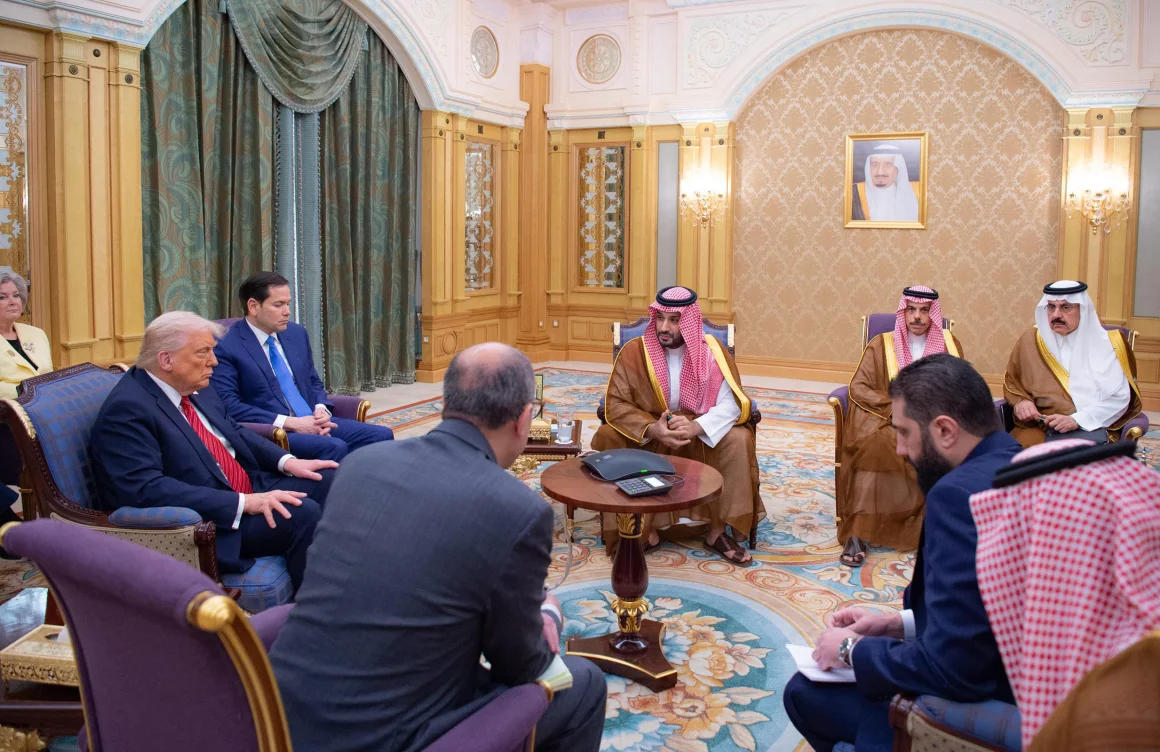
In a seismic geopolitical move, President Donald Trump met with Interim Syrian President Ahmed al-Sharaa — formerly known as Abu Mohammed al-Jolani, a U.S.-designated terrorist — in what Syria called a “historic” encounter signaling the country’s re-entry into international diplomacy.
Al-Sharaa, who led a lightning rebellion that ousted Bashar al-Assad’s decades-long regime in late 2024, once carried a $10 million U.S. bounty on his head as leader of Syria’s al-Qaeda affiliate. Now, as Syria’s interim leader, he’s shaking hands with a U.S. president who just ordered the lifting of long-standing American sanctions on the war-torn nation.
“What I do for the Crown Prince,” Trump quipped at a Riyadh summit, referencing Saudi Crown Prince Mohammed bin Salman, who had lobbied for the move. The announcement received a standing ovation from Gulf leaders, and fireworks erupted across Syrian cities.
A New Alliance Born in Riyadh
Trump’s meeting with Sharaa marks the first official U.S.-Syrian talks in 25 years, and a dramatic reshaping of American foreign policy. The White House confirmed that Trump offered support for Syria’s post-Assad reconstruction in exchange for commitments to:
- Normalize ties with Israel,
- Expel foreign militants and remnants of extremist factions,
- Assist U.S. efforts to prevent the resurgence of ISIS.
“He’s a great young attractive guy… a fighter,” Trump said after the meeting. “He’s got a real shot at pulling it together.”
The move opens the door for Gulf investment in Syria, previously hampered by the Caesar Act, a sweeping U.S. sanctions law passed in 2019. Now, Gulf nations — especially Saudi Arabia and Qatar — are poised to inject billions into Syria’s collapsed economy.
Syria’s Economic and Political Rebirth?
Since the sanctions announcement, Syria’s currency surged by 27%, and local officials declared “a new phase.” Emotional scenes played out on Arab news broadcasts, with the Syrian economy minister weeping live on air, thanking Trump and MBS for their support.
“Our dream is for Arab countries to help,” said one Damascus resident. “We’ve suffocated for decades.”
Still, concerns linger. While many Syrians celebrate the potential for economic revival, minorities and secular voices worry about theocratic leanings of Syria’s new rulers and the resurgence of militant-style governance.
Reports from human rights groups and the United Nations have raised alarm over summary executions and repression of freedoms under the new regime, particularly in former Alawite strongholds.
“People disappear for wearing shorts,” one resident said. “The sanctions lifting doesn’t mean justice for the victims.”
Israel, Iran, and the Region React
Trump’s pivot stands in stark contrast to the Biden administration, which previously refused to engage with Syria’s new leadership and worked to deepen ties between Israel and the Arab world.
Instead of facilitating Israeli-Saudi normalization, Trump’s move angered Israel and led to further military escalation. Prime Minister Benjamin Netanyahu, who had warned against lifting sanctions, responded by pushing Israeli forces deeper into Syrian territory — seizing Mount Hermon and launching hundreds of airstrikes to secure Assad-era weapons stockpiles.
“We toppled the Assad regime, Iran’s land bridge to Hezbollah,” Netanyahu said. “Now we must stop Syria from becoming a launchpad for the next October 7.”
Strategic Gains for Saudi Arabia
The Riyadh summit also signals a strategic realignment. For the first time in decades, Saudi Arabia is asserting itself as Syria’s post-war economic architect.
“Syria will not be alone,” declared Saudi Foreign Minister Faisal bin Farhan. “We will be at the forefront of Syria’s economic awakening.”
Analysts see Trump’s Syria reset as part of a broader realignment that benefits Gulf nations — especially MBS — while sidelining traditional U.S. allies like Israel.
“It’s a geopolitical gamble,” said CSIS fellow Natasha Hall. “But Trump made it from Riyadh, giving it regional legitimacy.”
With sanctions gone and Western hesitation fading, Syria may finally attract the foreign capital it needs. But whether this will lead to long-term peace or empower a problematic regime remains uncertain.
As Trump continues his “Trillion-Dollar Gulf Tour,” observers await his next moves in the UAE — and the international fallout of welcoming a former jihadist into the club of global leaders.