

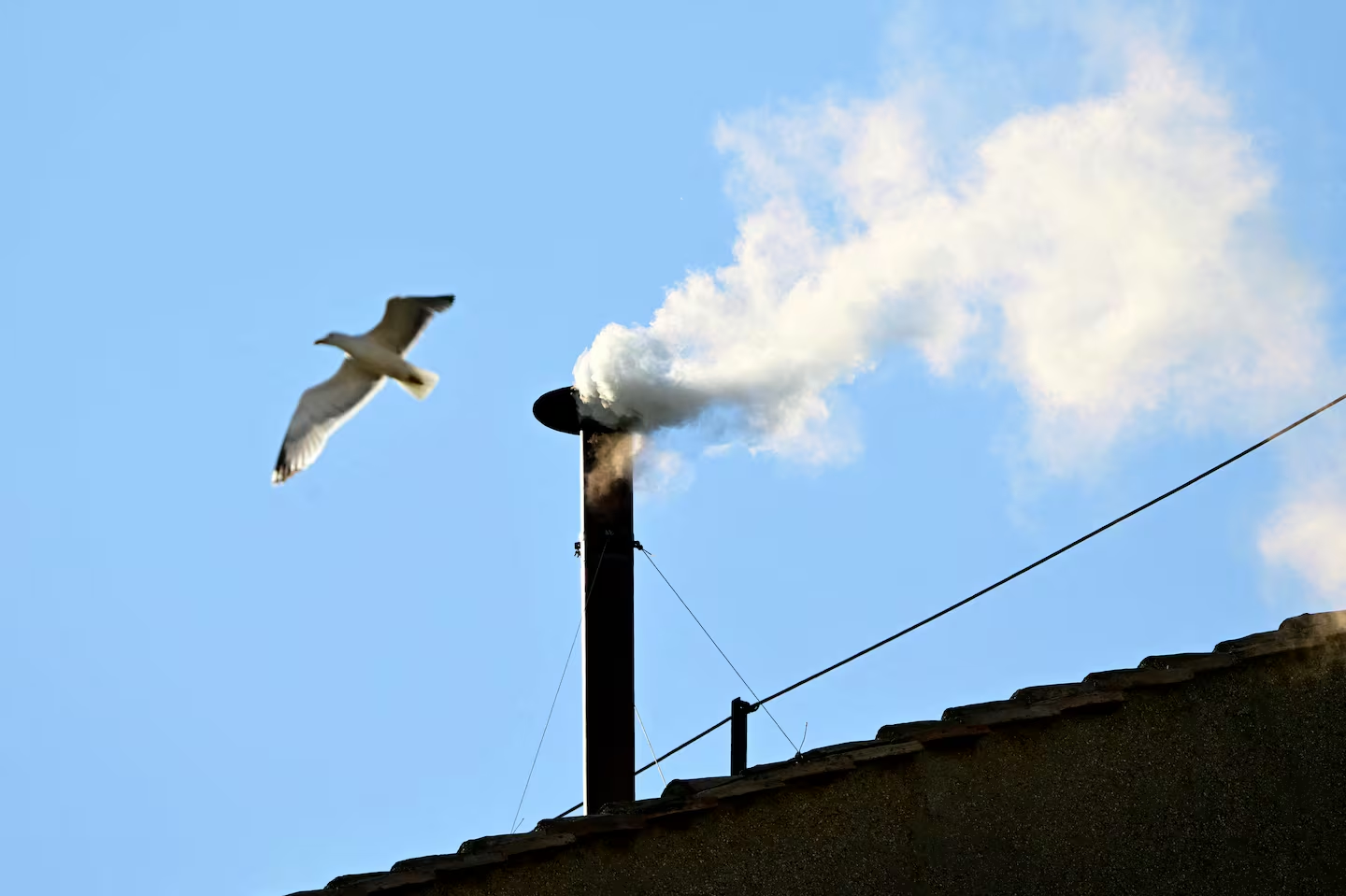
VATICAN CITY — In a historic first for the Catholic Church, Chicago-born Cardinal Robert Francis Prevost has been elected pope, taking the name Leo XIV. The announcement, made after just two days of conclave, sent white smoke billowing from the Sistine Chapel chimney on May 8, 2025, signaling to the world that a new pope had been chosen.
Pope Leo XIV, 69, a member of the Augustinian religious order and a naturalized Peruvian citizen, addressed tens of thousands gathered in St. Peter’s Square from the balcony of the Vatican, beginning his papacy with the words: “Peace be with you.” His message centered on peace, dialogue, and a return to tradition — symbolized by his choice to wear the papal red cape, which his predecessor Pope Francis had set aside in 2013.
Prevost’s path to the papacy defied long-standing expectations. For decades, the idea of an American pope had been viewed as improbable due to the geopolitical dominance of the United States. However, Prevost’s deep roots in Latin America and dual citizenship helped him transcend that taboo. He served as a missionary and later archbishop in Chiclayo, Peru, before being called to Rome in 2023 by Pope Francis to lead the Vatican’s powerful office responsible for vetting bishop appointments. He was elevated to the highest rank of cardinal in January 2025, signaling his rising influence in the Church.
The crowd erupted in jubilation when the words “Habemus Papam” echoed from the Vatican balcony. Tears flowed among nuns, and priests crossed themselves as flags from around the world waved under the Roman sky. The announcement shocked many in the square, including visiting American students who celebrated the election of the first pope from their homeland.
In his first remarks, Pope Leo XIV offered greetings in Italian and Spanish — omitting English — and paid tribute to the people of Peru. “Greetings … to all of you, and in particular, to my beloved diocese of Chiclayo in Peru, where a faithful people have accompanied their bishop, shared their faith,” he said.
The choice of the name Leo is seen as symbolically powerful. The last pontiff to bear that name, Leo XIII, was known for guiding the Church toward modernity and for his groundbreaking 1891 encyclical Rerum Novarum, which addressed the rights of workers and the responsibilities of capital during the Industrial Revolution. Observers say Leo XIV’s selection of the name signals a continued focus on social justice — a core value of both Pope Francis and the Augustinian order from which Prevost hails.
As a former prior general of the Order of St. Augustine, Prevost led a global community known for its emphasis on humility, community living, and service to others. His theological foundation is shaped by the legacy of St. Augustine of Hippo, a towering figure in early Christian thought.
Since returning to Rome, Prevost had remained relatively low profile but held significant influence within the Vatican. He was entrusted with implementing key reforms initiated by Francis, including expanding the bishop selection process to include female voices — a move widely seen as revolutionary within the hierarchy.
President Donald Trump called the moment “a great honor for our country,” adding that Americans were “a little bit surprised and we’re happy.” Meanwhile, church bells rang in Peru’s capital of Lima, where ordinary citizens expressed pride in the pope they consider one of their own.
As Pope Leo XIV begins his papacy, Catholics around the globe are watching closely to see how he will shape the Church in a time of great social and spiritual challenge. His election marks not only a historic shift in papal nationality but also a reaffirmation of the Church’s commitment to dialogue, service, and unity in an increasingly complex world.