

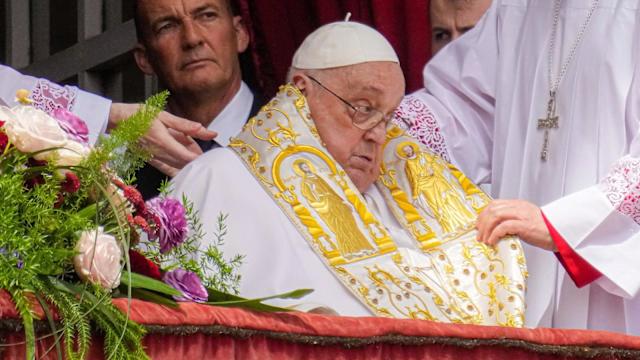
Pope Francis, the first pontiff from the Americas and one of the most transformative figures in modern Catholicism, has passed away at the age of 88. Known globally as the “People’s Pope,” Francis was a trailblazer in the Vatican who reshaped the Church’s tone and priorities while drawing both admiration and critique.
The announcement was made from the chapel of Domus Santa Marta—Francis’s humble residence—by Cardinal Kevin Farrell. Church bells echoed across Rome as Farrell solemnly declared, “At 7:35 this morning, the Bishop of Rome, Francis, returned to the home of the Father. His entire life was dedicated to the service of the Lord and of his Church.”
Born Jorge Mario Bergoglio in Buenos Aires, Argentina, Francis was elected the 266th pope on March 13, 2013. His election followed the unprecedented resignation of Benedict XVI and marked several firsts: the first Jesuit pope, the first from Latin America, and the first non-European in over a millennium.
Eschewing tradition, Francis wore a simple white cassock and kept his iron cross instead of donning the opulent red velvet of his predecessors. He quickly signaled a Church more focused on humility, outreach, and inclusion.
Francis’ papacy was defined by his bold embrace of the marginalized. He held masses with the poor, reached out to LGBTQ+ Catholics, denounced clericalism, and called for environmental protection—often at odds with conservative factions within the Church.
Among Francis’s most significant international actions was his 2022 visit to Canada, where he delivered a long-awaited apology to survivors of residential schools.
“I am deeply sorry,” he said during a speech in Maskwacis, Alberta, “for the ways in which many Christians supported the colonizing mentality that oppressed Indigenous peoples.” His heartfelt words came after years of calls from Indigenous leaders and just months after the discovery of unmarked graves on former school sites.
Though some felt the apology fell short, many—including former Assembly of First Nations Chief Phil Fontaine—called the gesture “momentous.” Francis later acknowledged that the abuses amounted to genocide, a rare admission from the Vatican. In 2023, under his leadership, the Church formally repudiated the Doctrine of Discovery, a centuries-old justification for colonial land seizures.
The pontiff’s health had been declining, exacerbated by past lung issues and a recent bout of pneumonia. After a hospitalization in February 2025, his final public appearance came on Easter Sunday, when he blessed thousands in St. Peter’s Square and greeted the crowd with a surprise ride in the popemobile.
That brief but powerful farewell mirrored his 12-year papacy: intimate, symbolic, and people-centered.
Francis was celebrated for modernizing aspects of Church policy, including changing stances on the death penalty and nuclear weapons. Yet his openness on issues like LGBTQ+ inclusion and women’s roles in the Church sparked resistance.
Critics, especially in the U.S., accused him of authoritarianism and pushing a progressive agenda. American Cardinal Raymond Burke, a leading conservative critic, was dismissed from his Vatican role by Francis and remained a vocal opponent until the end.
Despite the tension, Francis remained steadfast. At the 2023 Synod, he welcomed women and laypeople to vote on Church matters—an unprecedented shift. “Everyone, everyone, everyone,” he said, declaring that the Church must open its doors wider.
Remembered Worldwide
From Buenos Aires to the Vatican, tributes are pouring in. Leaders across faiths, survivors of abuse, and everyday people who felt seen under his papacy mourn a man who defied convention in pursuit of compassion.
In his own words, Francis once said: “My people are poor, and I am one of them.” That humility, perhaps more than any doctrine, defined his place in history.