

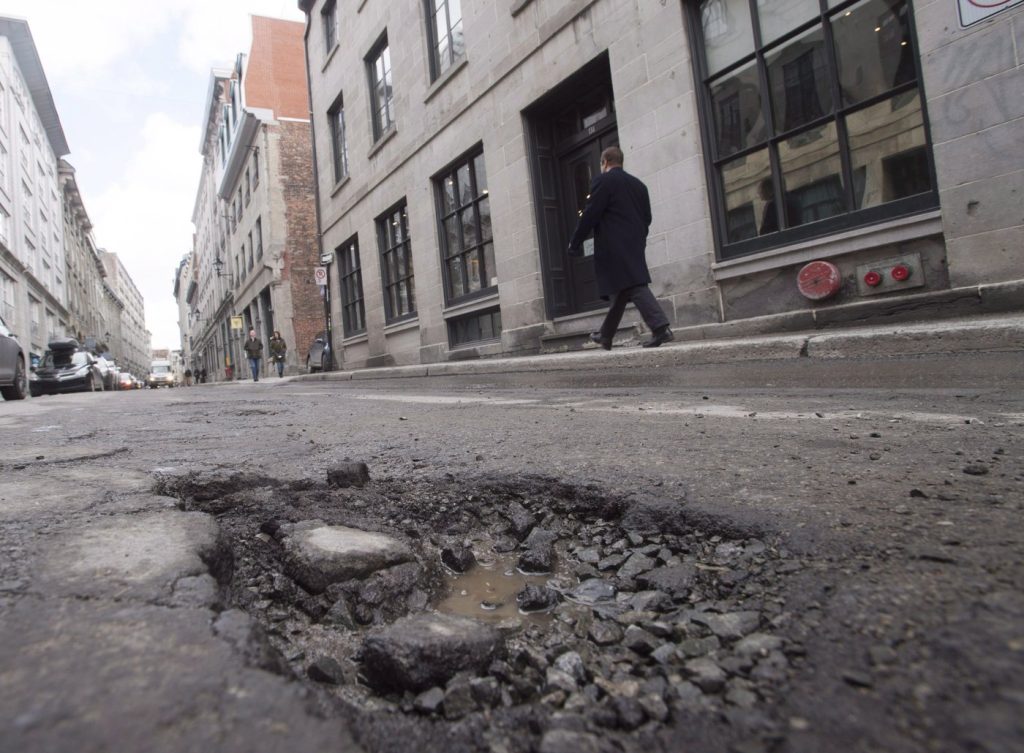
Ontario’s spring thaw is revealing more than just sunshine and warmer days—it’s also exposing a wave of potholes causing trouble for drivers across the province. For Mike Sanders, owner of Aaron’s Taxi in Sudbury, navigating damaged roads has become part of daily life. “It’s an unfortunate way of life,” he said, reflecting on the toll that the province’s rough roads have taken on his fleet. His taxis often travel the city’s busiest thoroughfares, where potholes are difficult to avoid, especially in the curb lane. “You end up with a tremendous amount of damage to the components of the vehicle,” he said, citing wear on tires, rims, and suspension systems. Compounding the issue, he added, is a decline in the durability of affordable, after-market parts.
Pothole season is a well-known challenge in Ontario, particularly in years with frequent freeze-thaw cycles. This spring, the repeated pattern of warm days followed by freezing nights has been especially pronounced. Water seeps into road cracks during the thaw and then freezes, expanding beneath the surface. The upward pressure and passing vehicle weight eventually cause the pavement to crack and break apart, forming potholes.
Dan Thibeault, director of linear infrastructure for Greater Sudbury, confirmed the city has patched a higher-than-average number of potholes so far this year. March alone saw 14 freeze-thaw cycles, and road salt was applied 26 days out of 31—up from 16 days in 2024. Salt accelerates the thawing process but also allows more moisture to penetrate roads, contributing to the pothole problem.
Toronto is seeing similar impacts. According to the city’s data, more than 108,000 potholes have been filled in 2025 to date, up from just over 95,000 at the same time last year. Vincent Sferrazza, Toronto’s director of operations and maintenance, attributed the increase to the same weather patterns and said the city has made a more proactive push to address the issue. Crews are being dispatched to repair damage before potholes are even reported, he said, and the city has invested in additional equipment dedicated to road repair. About 250 seasonal workers are employed during the winter and early spring months to keep roads maintained.
Sferrazza emphasized the city’s commitment to equity in road repair. Neighbourhoods with more seniors, new immigrants, people with disabilities, and high volumes of cyclists and pedestrians are prioritized, in part because residents there may be less likely to use the city’s 311 reporting system.
The worsening pothole problem is also reflected in the nominations for the Canadian Automobile Association’s annual “Worst Roads” campaign. According to Teresa Di Felice, assistant vice-president with CAA, 83 per cent of nominations so far cite potholes as the primary concern. Hamilton’s Barton Street East—already crowned Ontario’s worst road in both 2022 and 2023—remains a strong contender this year.
Di Felice pointed out that potholes aren’t just a nuisance—they’re expensive. “There’s general wear and tear that happens over bad roads, but potholes in particular… if you hit one at a good speed, damages can range from $500 to $2,000,” she said. The financial impact affects everything from tires to steering and alignment, making Ontario’s bumpy roads more than just an inconvenience—they’re a costly hazard.
This report by The Canadian Press was first published April 17, 2025.