

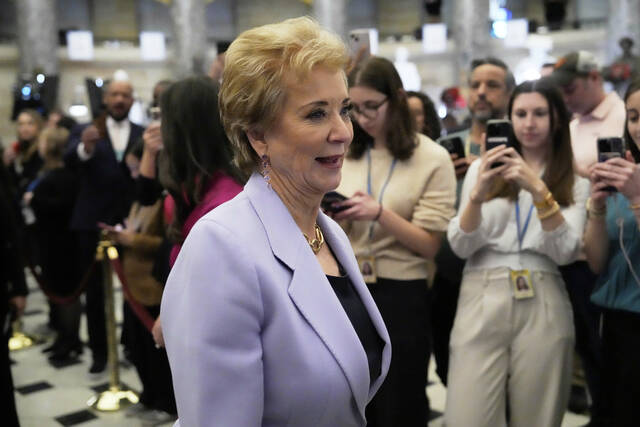
President Donald Trump is gearing up to sign an executive order today, Thursday, March 20, 2025, aimed at dismantling the U.S. Department of Education, a move that would make good on a fiery campaign promise to axe an agency long in the crosshairs of conservative critics. A White House official, speaking anonymously ahead of an official announcement, confirmed the plan, which would task Education Secretary Linda McMahon with starting the shutdown process.
Trump has slammed the department as a bloated mess, riddled with “liberal ideology” and wasteful spending. But here’s the catch: actually killing it off requires Congress to step in, since lawmakers birthed the agency back in 1979. A White House fact sheet lays out the order’s mission—McMahon is to “take all necessary steps” to wind down the department and shift education control back to the states, all while keeping key services like student loans and school aid flowing without a hitch.
The administration’s already been swinging the axe. The department’s workforce is being chopped in half, and deep cuts have hit the Office for Civil Rights and the Institute of Education Sciences, which tracks how America’s students are faring. Public school advocates are sounding the alarm, warning that scrapping the agency could widen gaps in an already uneven education system. “This isn’t a fix—it’s a guarantee that millions of kids get left behind. We’re not going down quietly,” the National Parents Union fired back in a statement.
So, what happens to the department’s sprawling duties? The White House hasn’t laid out a clear roadmap yet—whether programs get farmed out to other agencies or just vanish. At her confirmation hearing, McMahon vowed to safeguard big-ticket items like Title I funds for low-income schools and Pell grants for college students, pitching a leaner, “better functioning” department as the endgame. The agency pumps billions into schools annually and oversees a $1.6 trillion student loan empire, alongside managing aid for everything from school lunches to homeless students, plus enforcing civil rights rules.
Federal cash is just 14% of public school budgets, but it’s a lifeline for extras like the McKinney-Vento program for homeless kids and Title I support. Colleges, meanwhile, lean harder on Washington for research grants and student aid to cover tuition.
Republicans have been itching to ditch the department for years, arguing it burns taxpayer dollars and meddles in state and local turf. The idea’s caught fire lately with conservative parents’ groups clamoring for more say over their kids’ education. Trump’s platform doubled down, vowing to “send it back to the states” and painting the agency as a den of “radicals, zealots, and Marxists” pushing overreaching rules. Yet, he’s also wielded its power—using the Office for Civil Rights and funding threats to crack down on schools over transgender sports policies, pro-Palestinian protests, and diversity initiatives.
Not everyone’s sold, even in Trump’s camp. Some allies point out he can’t just snap his fingers and make the agency disappear—Congress holds the kill switch. A 2023 House vote to shutter it flopped when 60 Republicans sided with Democrats to keep it alive. And rewind to Trump’s first term: then-Education Secretary Betsy DeVos tried slashing the budget and bundling K-12 funds into flexible state grants, only to hit a bipartisan wall.
As the clock ticks toward the signing, the debate’s heating up—can Trump pull this off, or is it a loud promise doomed to stall?