

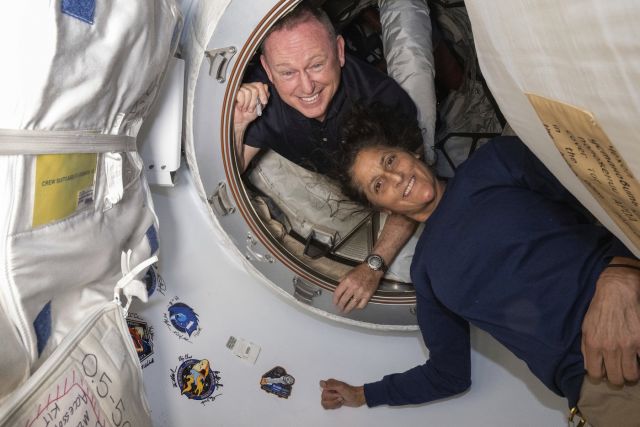
Astronaut Begins Recovery in Houston Following Nine Months Aboard ISS
NASA astronaut Sunita Williams touched down on Earth yesterday, March 18, 2025, concluding an extraordinary nine-month mission aboard the International Space Station (ISS). Landing in the Gulf of Mexico off the coast of Florida aboard SpaceX’s Dragon capsule with the Crew-9 mission, Williams and fellow astronaut Butch Wilmore were met with a hero’s welcome—and stretchers—as they readjust to life in Earth’s gravity.
Williams’ journey, originally slated for eight days, stretched into an unplanned 283-day orbital marathon due to technical setbacks with Boeing’s Starliner spacecraft. Now safely back, the veteran astronaut is undergoing routine medical evaluations and rehabilitation, a standard process for long-duration space travelers. After initial health checks near Tallahassee, Florida, she is expected to continue her recovery at NASA’s Johnson Space Center in Houston, Texas.
“Sunita’s resilience and dedication have been nothing short of inspiring,” said a NASA spokesperson. “Her safe return marks the end of a challenging chapter and the start of a well-earned recovery phase.”
The physical toll of nearly a year in microgravity—equivalent to 270 chest X-rays in radiation exposure, plus muscle and bone loss—necessitated immediate attention upon landing. Both Williams and Wilmore were carried from the capsule as a precaution, a common sight for astronauts re-entering Earth’s pull after extended missions. Early reports indicate Williams is in good spirits, with posts on X noting she “exited the hatch and is now headed for further medical checkups.”
At Johnson Space Center, Williams will embark on a tailored rehabilitation program, including walking therapy, coordination exercises, and nutritional support to rebuild strength and stability. While NASA has not flagged any specific health concerns beyond the expected effects of spaceflight, the agency’s rigorous post-flight protocol ensures her well-being as she transitions back to terrestrial life.
Williams’ mission, which included critical research and maintenance aboard the ISS, underscores NASA’s commitment to pushing the boundaries of human space exploration. Her return comes just in time for the agency to analyze data from her extended stay, informing future missions to the Moon, Mars, and beyond.
About NASA
The National Aeronautics and Space Administration (NASA) is America’s civil space program and the global leader in space exploration. From the International Space Station to deep space missions, NASA drives innovation and discovery for the benefit of humanity.