

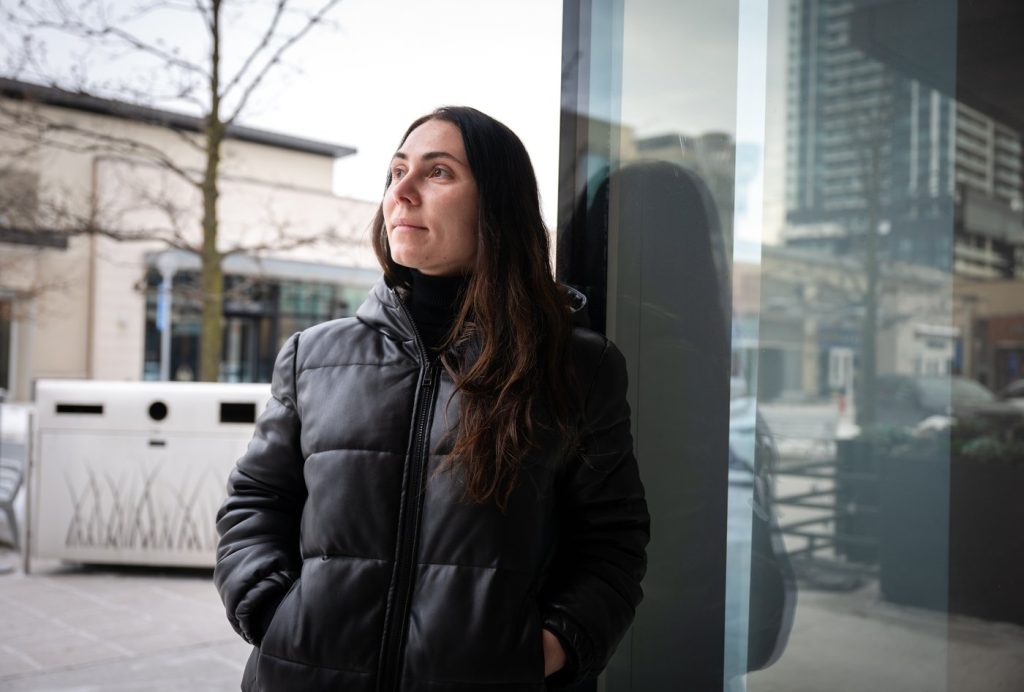
Roksolana Kryshtanovych never imagined building a life in Canada. Before Russia’s full-scale invasion of Ukraine, she had no plans to leave her country permanently. But the war changed everything, making it impossible for her to return home.
Nearly four years after the invasion began in 2022, Kryshtanovych says Canada has become her new home. She now lives in Toronto, works in financial services, and hopes to one day buy a house and start a family. Yet without a clear pathway to permanent residency, her future — like that of thousands of other Ukrainians — remains uncertain.
Kryshtanovych came to Canada under the Canada-Ukraine Authorization for Emergency Travel (CUAET), a program launched in 2022 that provided Ukrainians fleeing the war with three-year work or study permits. As the conflict drags on, many of the nearly 300,000 Ukrainians who arrived through the program are now facing limited options to remain in Canada long term.
Immigration Minister Lena Diab has acknowledged that many of these individuals are no longer in Canada temporarily.
“We now know it’s not temporary,” Diab said in January, noting that many Ukrainians have spent years working, raising children, and building lives here. She added that her department has extended their work and study status while the government considers what steps to take next.

Advocates are now pressing Ottawa to create a dedicated permanent residency pathway for all CUAET visa holders. Kryshtanovych is part of the United Ukrainians for Canada Foundation, which has launched a nationwide letter-writing campaign urging MPs to act. The group says more than 25,000 letters have been sent since September.
“It’s an awful situation,” she said. “People have jobs, pay taxes, have friends, but they cannot stay here legally.”
For many Ukrainians, applying through Canada’s regular immigration programs is difficult. The express entry system relies on a points-based formula that considers factors such as age, education, and language proficiency. Kryshtanovych says language testing and missing documents are major barriers for those who fled war zones suddenly.
In Ottawa, Daria Vahina has lived in Canada for nearly four years and works at a local restaurant. Her mother Viktoria joined her last year after the death of her husband. Neither qualifies for express entry.
“We know what we’re doing for these three years,” Daria said. “But after that, we don’t know what’s happening. You cannot settle your life or invest in anything.”
Viktoria, who works as a baker while learning English, also faces an uncertain future.
Their employer, Leanne Moussa, says she has tried to find immigration options for the family and other Ukrainians she employs, but has found no viable path.
“When people contribute so much to society, there needs to be a way for them to stay,” she said.
The federal government introduced a limited permanent residency pathway in 2023 for Ukrainians with close family ties in Canada, but broader access has not been offered. Those who arrived before March 31, 2024 must apply for extensions of their permits by that same date this year.
The Ukrainian Canadian Congress has urged the government to open permanent residency to all CUAET holders, estimating that around 100,000 would apply.
Diab has noted that Ukrainians can still apply through standard immigration streams and that provinces may nominate some through the Provincial Nominee Program. However, employers like Moussa argue that many workers do not meet eligibility requirements and that relying on provinces creates unnecessary hardship.
Canada’s immigration levels plan is also reducing the overall number of permanent residents admitted, placing greater emphasis on economic migrants.
Diab said it remains difficult to track where CUAET visa holders are working and living until they submit formal applications to remain in Canada. Still, she insisted the government is continuing to explore solutions.
“We know we have to, and we know it’s the right thing to do,” she said.
Meanwhile, Ontario Liberal MP Yvan Baker has sponsored a parliamentary petition calling for a temporary permanent residency pathway for CUAET holders. The petition has gathered more than 45,000 signatures and is set to close later this week.
As Russia’s war enters its fourth year, many Ukrainians in Canada feel increasingly rooted here — and increasingly anxious about what comes next.
“I have friends here. I have work here,” Kryshtanovych said. “I see my life here.”