

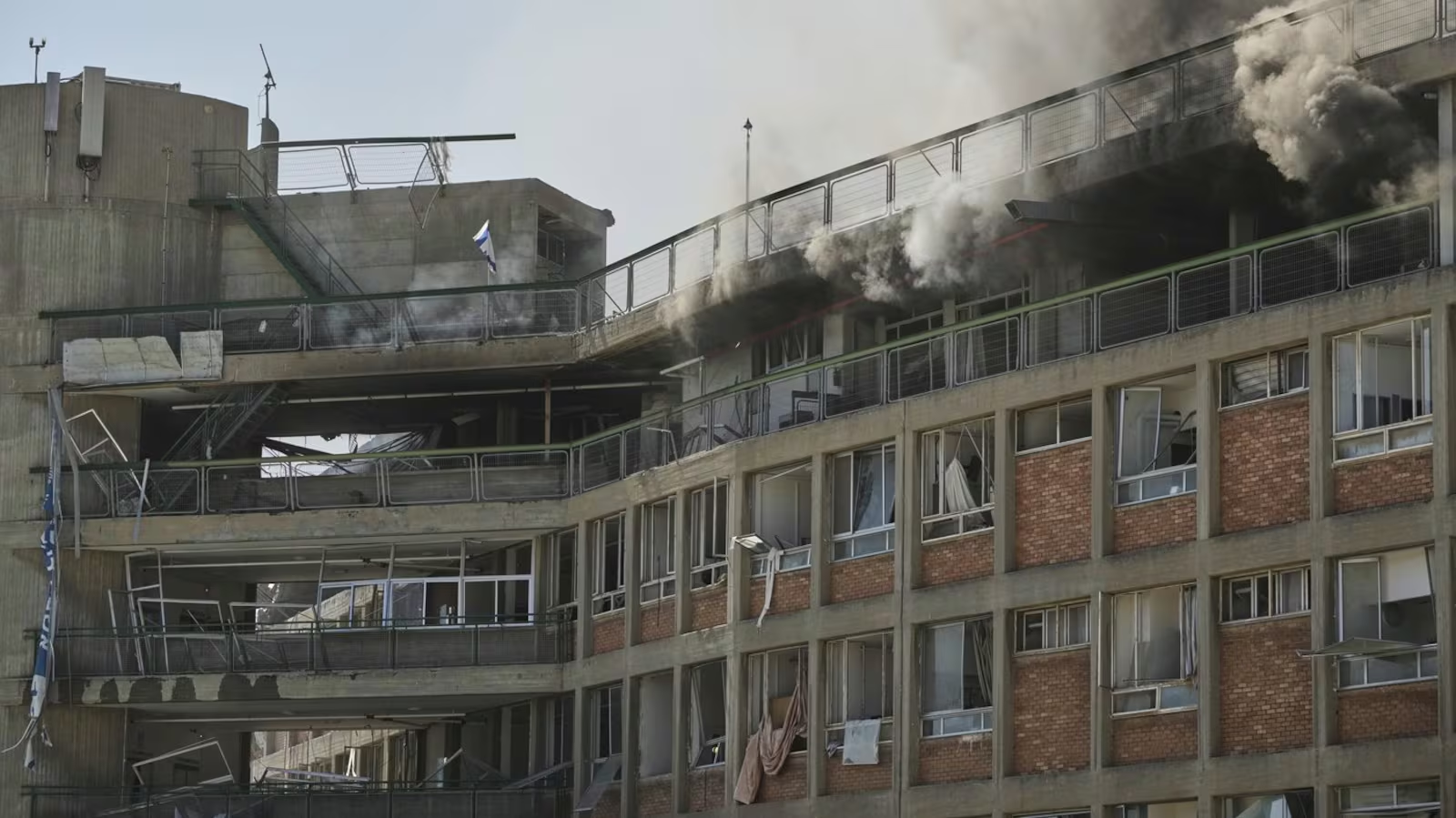
Israel has directly threatened Iran’s Supreme Leader Ayatollah Ali Khamenei following a missile strike from Iran that injured more than 240 people, including dozens at a major hospital in southern Israel. In retaliation, Israel launched a targeted airstrike on Iran’s Arak heavy water nuclear reactor — a facility central to its controversial nuclear program.
The crisis escalated dramatically after Iranian missiles hit the Soroka Medical Center in Beersheba early Thursday, injuring over 70 people at the facility and prompting emergency evacuations. Although the hospital’s main damage was confined to an older surgical wing already cleared of patients, the strike forced a halt to services except for life-threatening emergencies.
Following the attack, Israeli Defense Minister Yoav Gallant made Israel’s most explicit threat yet toward Iran’s leadership, stating that Khamenei “absolutely should not continue to exist” and indicating Israel’s military has been instructed to act accordingly. This comes as U.S. President Donald Trump reportedly vetoed an earlier Israeli plan to assassinate Khamenei, though he has not ruled out further involvement, stating only, “at least not for now.”
Israel’s airstrikes on Iran’s nuclear infrastructure—specifically the Arak reactor and an additional target near Natanz—mark a serious escalation in a conflict that erupted last Friday with Israel’s surprise attacks on military and nuclear-linked targets across Iran. According to a Washington-based Iranian human rights group, at least 639 people have been killed in Iran so far, including 263 civilians, with over 1,300 wounded. Iran’s response has included more than 400 missiles and drones, killing 24 and injuring hundreds in Israel.
At Soroka hospital, doctors described the moment the missile struck—just seconds after air raid sirens—causing an explosion heard from secure rooms inside. Israel’s Prime Minister Benjamin Netanyahu called the strike on a civilian hospital a red line, vowing to make Tehran’s leadership “pay the full price.”
Iran maintains that its nuclear program is for peaceful purposes, but its enrichment of uranium up to 60 per cent places it just short of weapons-grade capability. Israel, which is widely believed to possess nuclear weapons but does not officially acknowledge it, insists it will not allow Iran to cross that threshold. The Arak reactor was redesigned under the 2015 nuclear deal to limit plutonium production, but Israel says it still poses a future threat. The Israeli military stated that Thursday’s strike aimed to destroy a core component “intended for plutonium production.”
Iranian state media reported no radiation risk from the attack and claimed surrounding areas were evacuated safely. However, the International Atomic Energy Agency (IAEA) has warned against attacks on nuclear sites and confirmed it lost detailed visibility into Iran’s heavy water stockpile due to recent restrictions on inspections.
Meanwhile, hospitals across Israel have implemented emergency protocols, converting underground areas into makeshift wards and moving ventilated patients below ground. The country’s national blood bank—built into a fortified subterranean bunker—was also activated, echoing emergency steps taken after Hamas’s Oct. 7, 2023 attack in Gaza.
Iran has dismissed calls to abandon its nuclear ambitions, with Supreme Leader Khamenei warning the U.S. that military involvement would bring “irreparable damage.” Yet behind the scenes, diplomacy may be stirring. Iran’s Foreign Minister Abbas Araghchi is set to meet with British, French, and German leaders in Geneva, along with the EU’s top diplomat, suggesting that diplomatic efforts may still find space amid the spiraling violence.
As both nations brace for further attacks, international concern grows over a conflict that’s pushing the Middle East closer to the brink—with a nuclear edge more visible than ever.