

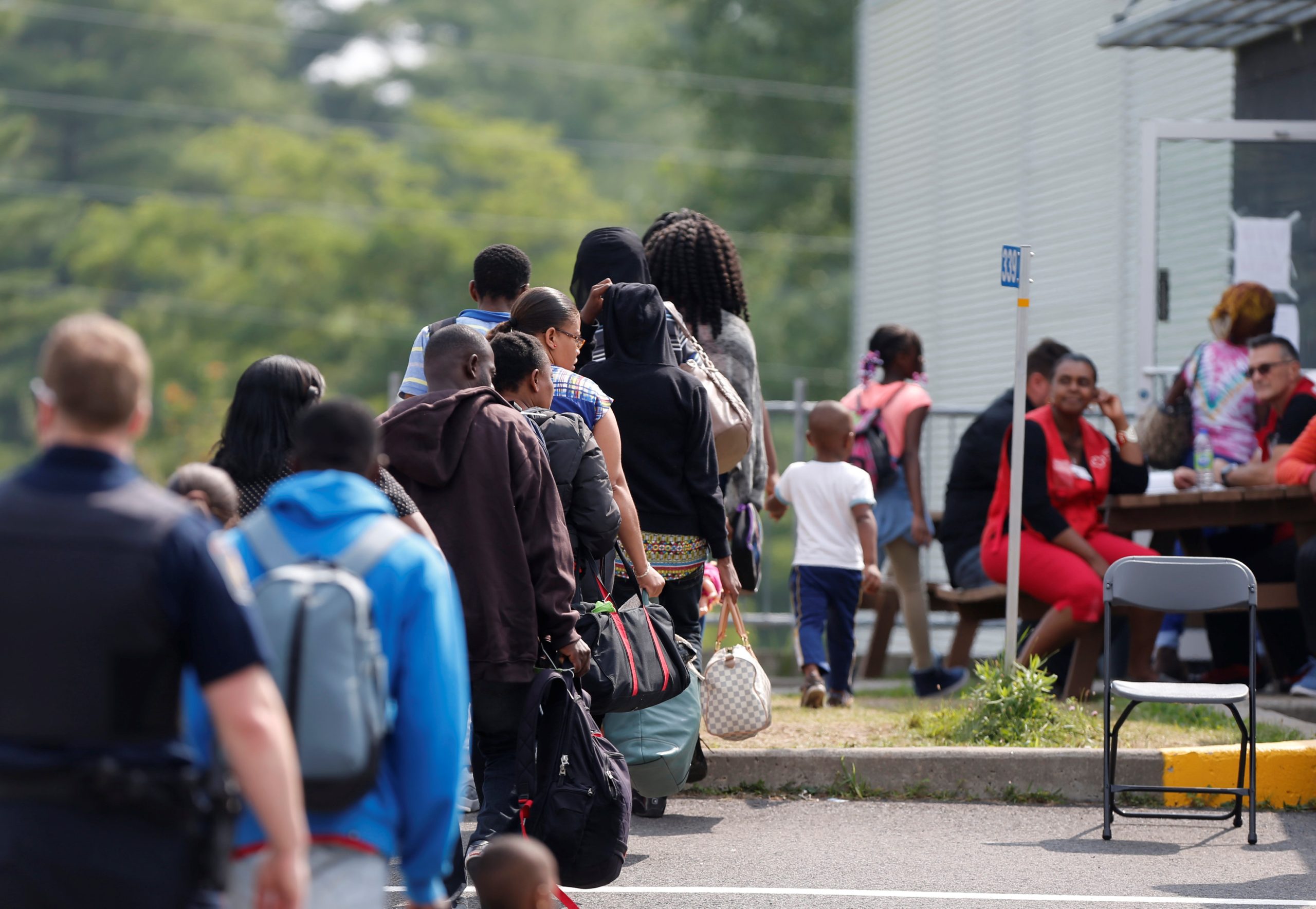
As the 2025 federal election unfolds, refugee policy has been pushed to the margins of the national conversation, eclipsed by economic anxieties and trade tensions with the United States. But a recent surge in asylum seekers arriving through a Quebec border crossing may force the issue back into the spotlight — a reminder that global upheaval continues to shape domestic policy.
Canada, a country home to millions of diaspora communities with deep ties to global conflict zones, will inevitably feel the impact of international displacement. From the war in Ukraine to the crisis in Gaza, and now the Trump administration’s decision to revoke temporary legal status for tens of thousands of Venezuelans and Haitians, the next prime minister will inherit a world in flux.
While immigration rarely takes center stage during this campaign, both leading candidates have taken positions on the matter. Liberal leader Mark Carney recently criticized the U.S. for allowing a spillover of asylum seekers into Canada, stating at a press event in Delta, B.C., that it’s “not acceptable for the United States to send us all their asylum seekers.” He pointed to the Safe Third Country Agreement as a possible mechanism for returning claimants.
On the same day, Conservative leader Pierre Poilievre launched a more aggressive critique, calling out what he described as fraudulent asylum claims and accusing the Liberal government of overseeing a broken immigration system. “If they are a fraudster, they will have to go,” Poilievre told reporters in Alberta, while reaffirming support for legal immigration.
Meanwhile, the Canada Border Services Agency is preparing contingency plans, including the possibility of opening a new processing centre along the Quebec–U.S. border to manage any increase in claimants. That site has already seen a spike in arrivals since March, linked to recent U.S. immigration rollbacks.
Although overall asylum claims are lower so far in 2025 than during the same period last year, the rise in arrivals at specific crossings — and Quebec’s warning that its capacity to host newcomers is stretched thin — adds urgency to the conversation. It’s a far cry from the welcoming images of Justin Trudeau greeting Syrian refugees at Pearson Airport in 2015, or his 2017 tweet proclaiming Canada’s open door as the U.S. imposed a travel ban.
Public sentiment has also shifted. A 2024 Environics Institute poll showed that 43 percent of Canadians, particularly in Ontario and the Prairies, questioned the legitimacy of many refugee claims — a notable jump from the previous year. The rise in skepticism coincided with headlines about international students filing asylum claims en masse, which the then-immigration minister deemed “alarming.”
Experts warn that such backlash risks becoming an overreaction. Dr. Yvonne Su, director of York University’s Centre for Refugee Studies, argues that media narratives play a powerful role in shaping public opinion. She pointed to sensational headlines referencing a “tsunami of illegal migrants” or border towns “bursting at the seams” as examples of harmful language that distorts reality and breeds fear.
Navigating the asylum process is no small feat. Refugee claimants must contend with language barriers, legal hurdles, and psychological trauma, while navigating a system that includes multiple government agencies, tribunals, and NGOs. Nicholas Fraser, a researcher at Toronto Metropolitan University, noted that the process is daunting even for experts, let alone people arriving with no legal knowledge or support.
Canada has long been a safe haven for people fleeing persecution — a tradition that goes back to the 1700s, when United Empire Loyalists resettled after the American Revolution. In more recent history, Canada welcomed refugees from Uganda, Vietnam, and Eastern Europe. But, as former immigration official Robert Vineberg notes, decisions about who gets in have not always been race-neutral.
Today, refugee communities continue to shape the Canadian social landscape, enriching the country’s cultural mosaic. While current debates reflect concerns about system abuse, many believe the core value of compassion still defines Canada. “We’re a generous society,” Vineberg said. “And when there’s a crisis in the world, we want to step up.”