

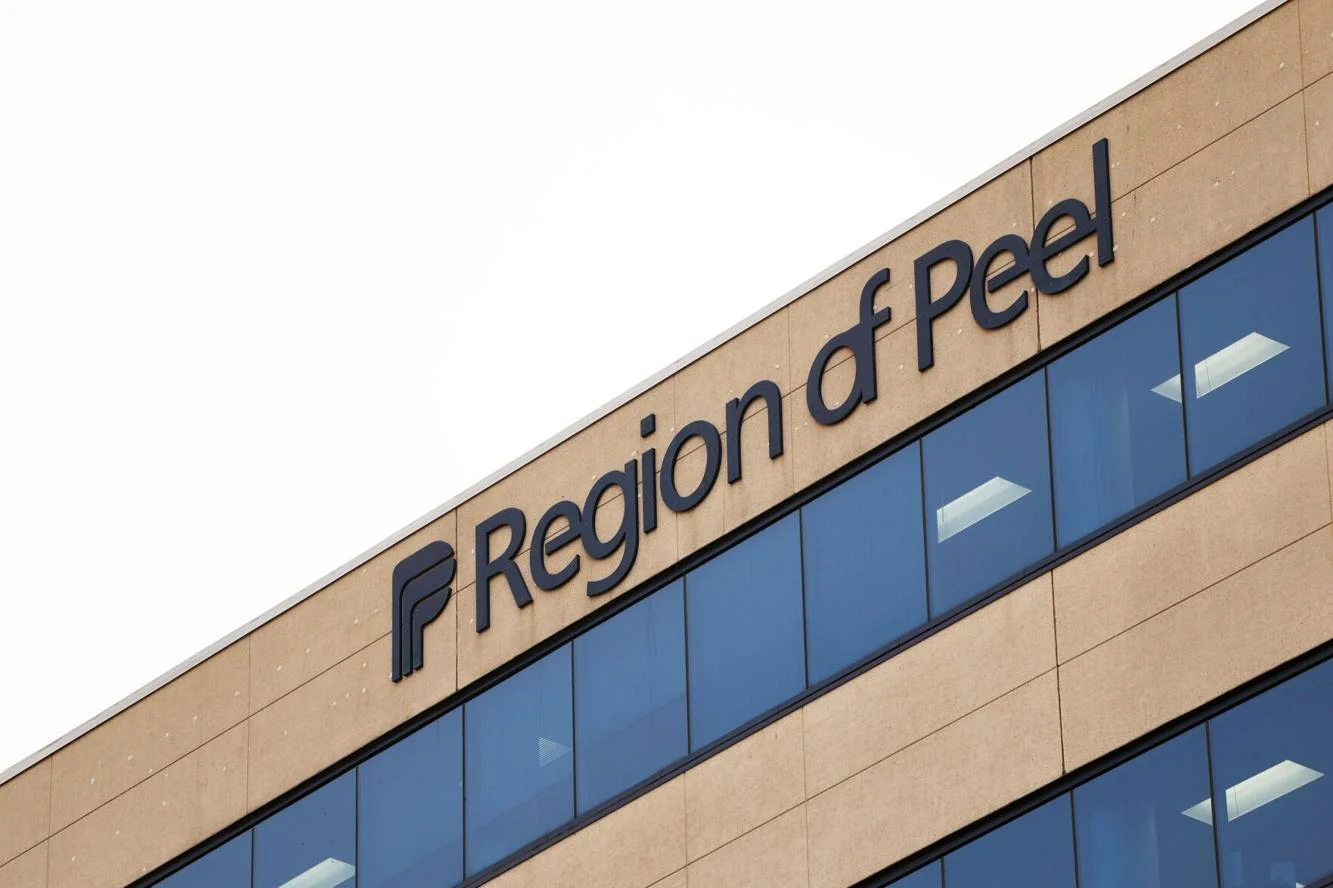
Homeowners across Brampton, Mississauga and Caledon could see a 4.2 per cent increase on next year’s regional portion of their property tax bills under Peel Region’s newly proposed 2026 budget. The plan, presented to regional council on Nov. 20, includes significant investments in policing, paramedic services, affordable housing and public safety.
A major driver of the increase is a proposed 9.9 per cent rise in the Peel Police budget, totalling $75.4 million, which would fund the hiring of 175 new police officers and 25 civilian staff. That alone accounts for roughly 2.2 percentage points of the regional tax hike.
Final tax bills for residents are expected to climb higher than 4.2 per cent once Brampton, Mississauga and Caledon set their local municipal tax rates in their own 2026 budgets. Property taxes are calculated using regional, local and school board levies.
Peel Region CAO Gary Kent said the proposed budget prioritizes services strained by rapid population growth, emphasizing housing, emergency services, infrastructure maintenance and community safety. “Our vision is to build a community for life,” Kent said. “This budget focuses on supporting population-driven service demand, building homes faster, enhancing community safety and managing funding shortfalls.”
The budget proposes $7.3 million in new operating expenses and $30 million in capital spending for paramedic services, including a new Brampton paramedic station and 40 additional paramedics. It also allocates $3.2 million to meet rising TransHelp ridership and $29.1 million to redevelop Peel’s integrated waste management and curing facility.
Housing affordability remains a central concern. The region plans to invest $11.9 million in new annual operating funds and $63.6 million in capital to expand deeply affordable housing options. That includes $44 million for transitional housing connected to homeless encampments, $15.3 million to complete Brampton’s Springbrook House Youth Shelter, investments in seniors’ residences, and $7.6 million to increase shelter capacity.
Additional investments include $6.2 million for public safety initiatives beyond policing, $1.2 million to catch up on vaccination record screening following pandemic disruptions, and $800,000 to expand Peel’s mobile dental clinic.
Kent said the region is increasingly prioritizing “buy Canadian” and supply-chain diversity to strengthen the local economy amid ongoing U.S. tariff pressures. “We’re leveraging Peel Region’s buying power to advance environmental and social well-being,” he added.
Water bills are also set to rise by 7.8 per cent, translating to roughly 21 cents per day for the average household and about 47 cents daily for commercial and industrial properties.
Kent cautioned that higher tax increases may be inevitable in future years as Peel continues to grow and faces funding gaps from provincial and federal governments. For 2026, the region plans to draw on reserves to soften the impact of rising costs. Peel will also establish a regional auditor general next year to strengthen oversight and accountability.
Council will continue budget deliberations on Nov. 27. Residents, businesses and community groups interested in speaking to council about the budget can learn more on the region’s website.