

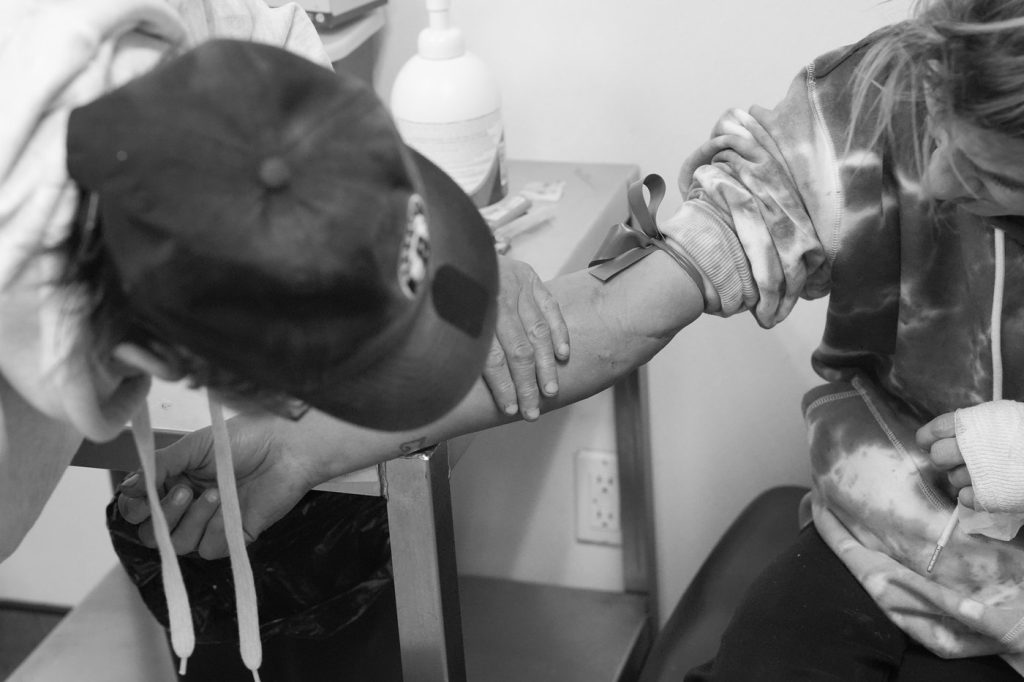
Advocates warn closures could spark surge in overdose deaths as April 1 deadline looms
A critical legal battle begins today in Ontario as a downtown Toronto supervised consumption site challenges a new provincial law that threatens to shut down ten existing locations across the province by April 1.
The Kensington Market Overdose Prevention Site, operated by The Neighbourhood Group, has filed a Charter challenge against the Ford government’s Community Care and Recovery Act, which prohibits consumption sites within 200 metres of schools or daycare centres.
The organization, along with two individuals who use the site, is seeking an injunction to delay the closures until the courts rule on whether the law violates constitutional rights, including the right to life, liberty, and security of the person.
“Safe consumption sites are not a perfect solution, but they are part of the solution,” said lawyer Carlo Di Carlo. “They save lives, prevent disease, and offer a chance at recovery.”
The challenge highlights that the ten impacted sites have reversed thousands of overdoses without a single death. Harm reduction advocates fear the province’s shift toward an abstinence-only model, replacing these sites with “HART hubs” (Homelessness and Addiction Recovery Treatment), will leave people vulnerable to fatal overdoses.
The province plans to convert nine of the sites into HART hubs and has approved 18 new hubs elsewhere, supported by $529 million in funding, including the creation of 540 supportive housing units.
But critics say the timing is dangerous. The City of Toronto’s Board of Health, the HIV Legal Network, Aboriginal Legal Services, and others have joined the legal fight, warning that reduced access to harm reduction services will lead to more preventable deaths.
“This is a very high cost for achieving the legislative objective,” the Board of Health stated in court filings.
Meanwhile, the province defends its policy, citing rising crime and safety concerns near existing sites. In legal documents, the government referenced eyewitness accounts of public drug use, violence, discarded needles, and even an elementary school lockdown due to drug activity nearby.
The legislation follows a tragic incident last summer when Karolina Huebner-Makurat, a mother of two, was struck by a stray bullet during a shooting near the South Riverdale Community Health Centre.
Local community groups, including Leslieville Neighbours for Community Safety, say they support the closures, pointing to disturbing incidents involving children exposed to drug paraphernalia or witnessing drug deals.
“There is fear in the community,” their statement reads. “Children have found baggies of fentanyl and seen violence unfold near their homes.”
However, public health experts argue the opioid crisis cannot be solved by shutting down life-saving services. Over 2,600 Ontarians died from opioid-related overdoses in 2023 alone, with deaths disproportionately impacting homeless populations.
With more than 80,000 Ontarians currently experiencing homelessness, the Association of Municipalities of Ontario estimates that $11 billion over the next decade will be required to end chronic homelessness in the province.
The outcome of this legal challenge could shape Ontario’s approach to harm reduction for years to come.