

The race to succeed Justin Trudeau as Liberal leader is gaining momentum, with candidates presenting their visions for the party’s future and vying to redefine its identity ahead of the next federal election.
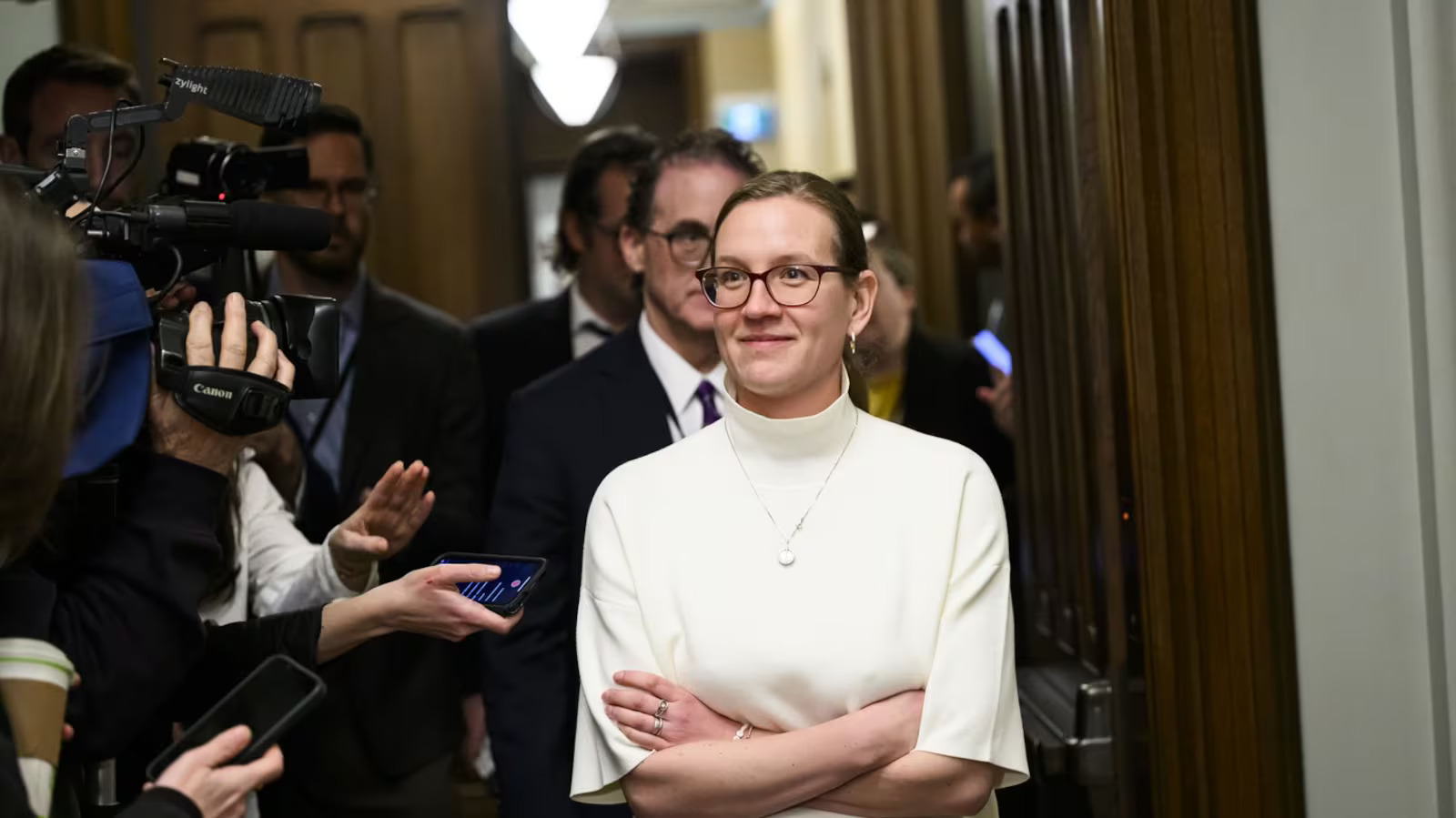
On Saturday, Karina Gould, the Government House Leader, officially entered the leadership contest, becoming the youngest candidate in the race. In her campaign launch video, the 37-year-old called for “a new generation of leadership,” pledging to restore trust in the party and rebuild its damaged brand.
“Canadians have lost faith in our party, and we have to earn back their trust,” Gould said. “I’m here for Canada and for you today, tomorrow, and for years to come.”
Gould’s announcement follows closely on the heels of Chrystia Freeland, former finance minister and deputy prime minister, who released her campaign video emphasizing her credentials as a “tough negotiator.” Freeland highlighted her role in renegotiating NAFTA during Donald Trump’s presidency, positioning herself as the candidate best equipped to handle a resurgent Trump White House.
“Donald Trump and his billionaire buddies think they can push us around,” Freeland declared in her video, pledging to fight back against what she described as Trump’s attempts to “take what isn’t his.”
Meanwhile, former Bank of Canada governor Mark Carney, who launched his campaign earlier this week, is framing himself as the candidate who can tackle Canada’s economic challenges. Carney, with his extensive experience in both public and private sectors, pledged to focus on getting the economy back on track while presenting himself as an outsider who was not part of the Trudeau government.
“If there’s one thing to remember about me, it’s that I’ll be completely focused on fixing our economy,” Carney said.
As candidates jockey for position, they share a common challenge: distancing themselves from Trudeau’s legacy while retaining the support of a party base deeply connected to his leadership. Trudeau’s controversial carbon pricing policy, which all candidates have supported at some point, remains a potential target for opposition attacks.
Conservative Leader Pierre Poilievre, who is favored to win the next federal election, looms large in the leadership debate. Freeland accused Poilievre of being willing to “bow down to Trump and sell us out,” while Carney characterized him as a dangerous populist with a lack of economic understanding.
Gould, however, avoided naming Poilievre or Trump directly, focusing instead on her ability to “stand up to bullies” and lead the party with resilience.
Ottawa MP Chandra Arya, former Montreal MP Frank Baylis, and Cape Breton MP Jaime Battiste have also signaled their intention to run. Arya recently announced he has gathered the required signatures and made the first $50,000 deposit to join the race.
As the race heats up, endorsements are proving crucial. Former northern affairs minister Dan Vandal has backed Freeland, while Emergency Preparedness Minister Harjit Sajjan has endorsed Carney. Former deputy prime minister Sheila Copps has publicly advocated for Gould, praising her as the voice of a new generation.
With the deadline to enter the race set for Thursday, January 25, candidates must move quickly to meet the requirements, including a steep $350,000 entry fee. This will be paid in three installments: $50,000 by January 30, $125,000 by February 7, and the remaining $125,000 by February 17.
Notably, several high-profile figures, including Foreign Affairs Minister Mélanie Joly and Finance Minister Dominic LeBlanc, have opted not to run, leaving their endorsements as sought-after prizes for remaining candidates.
As the Liberal Party prepares for its future, the leadership race marks a pivotal moment in determining how it will address challenges both within Canada and abroad, especially with the specter of another Trump presidency and a surging Conservative Party under Poilievre.