

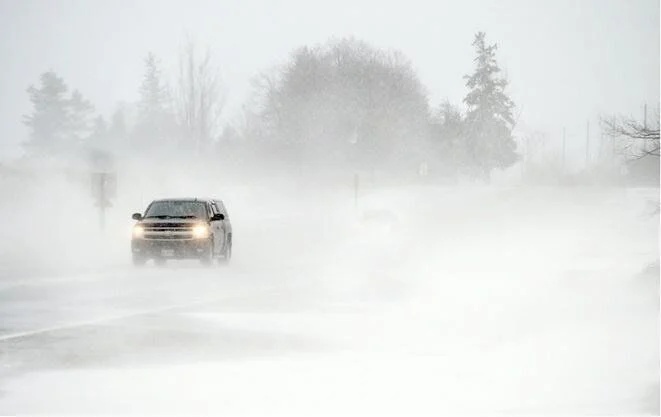
January is the most dangerous month of the year for Canadian drivers, according to new collision data from Allstate Insurance Canada, with winter driving conditions contributing to a spike in crashes nationwide.
An analysis of Allstate Canada automotive claims filed between October 2023 and September 2025 shows that January records the highest number of collisions, followed by December and February.
“Even seasoned drivers can forget winter driving basics,” the insurer said in a news release. “From shifting daylight hours to unexpected black ice, winter driving demands renewed attention and caution each year.”
The three most common winter collisions
The data identifies three types of crashes that account for the majority of winter collisions:
- Rear-end collisions
- Lane-change incidents
- Single-vehicle crashes
George Ljubicic, an agency manager with Allstate Canada, said rear-end collisions are often caused by congestion combined with unsafe following distances — a risk that is amplified on snow- or ice-covered roads.
“Slippery conditions make it much harder to stop quickly,” Ljubicic said. “Drivers often underestimate how much extra distance they need in winter.”
Single-vehicle crashes, he added, frequently occur when drivers travel too fast on lightly trafficked roads and unexpectedly encounter black ice.
“If somebody is in a single-vehicle crash, it could be because traffic is minimal and they’re going a little faster and suddenly lose control,” Ljubicic said.
Distraction and overconfidence play a role
Distracted driving remains a growing concern, particularly during winter when reaction times are already compromised. Ljubicic noted that advanced vehicle technology can sometimes lead to driver complacency.
“As cars get smarter, drivers can become less tuned in to what’s happening around them,” he said, recounting an incident in which a driver mistakenly relied on the wrong camera display and backed into another vehicle.
Insurance implications
Drivers involved in collisions — especially at-fault crashes — can expect consequences beyond vehicle damage. Ljubicic said insurance premiums typically rise the following year unless the policy includes accident forgiveness. In cases involving repeated collisions, drivers may even face policy cancellation.
Tips for safer winter driving
Allstate Canada recommends several steps to reduce collision risk during winter months:
- Install winter tires once temperatures fall below 7 C; in Ontario, November is a common benchmark
- Increase following distance well beyond the standard three-second rule on slippery roads
- Clear all snow, ice and frost from windows, lights and roofs before driving
- Check weather conditions and reconsider non-essential travel during storms
- Avoid passing snowplows, particularly when they are clearing all lanes
- Keep your vehicle well maintained to prevent mechanical issues
- Review insurance and roadside assistance coverage
- Carry a fully stocked winter emergency kit in case of breakdowns or delays
With January consistently topping the list for collisions, experts say winter driving requires patience, preparation and constant awareness — even for experienced motorists.